Produced by United Nations
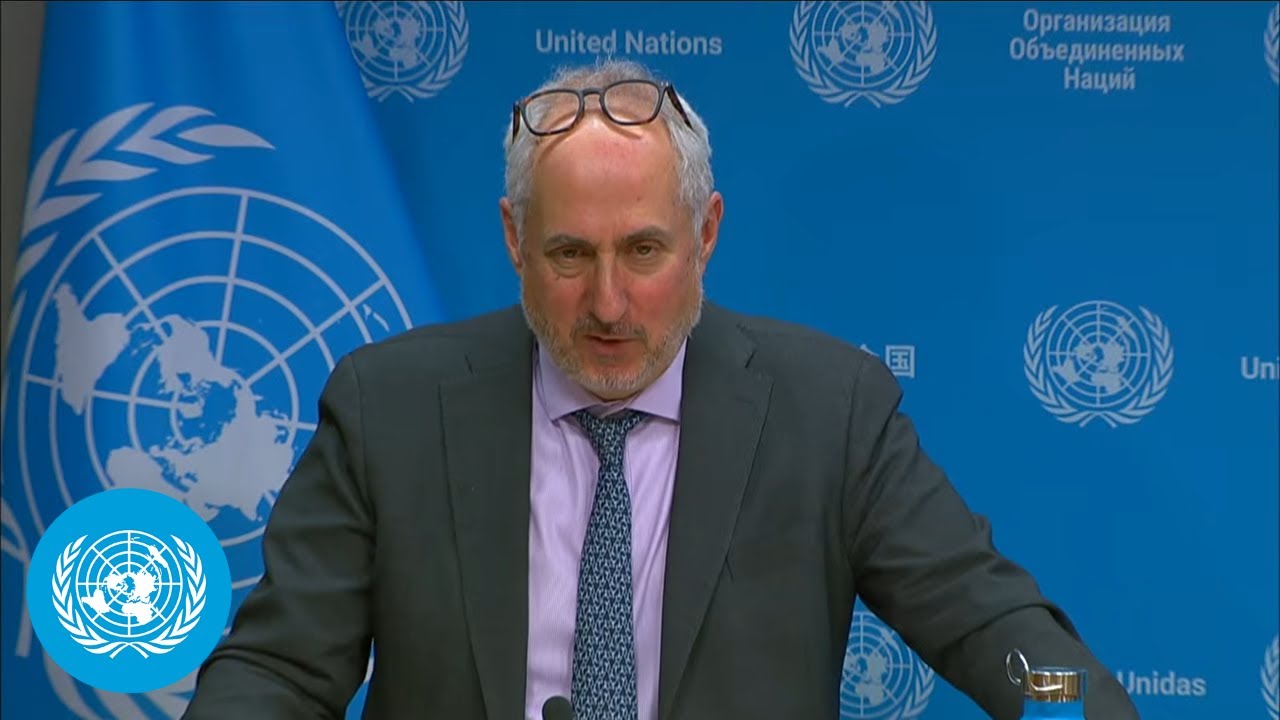
Noon briefing by Stéphane Dujarric, Spokesperson for the Secretary-General.
Highlights
Press Freedom/Women Journalists
Secretary-General/Iran
Security Council
Lebanon
Occupied Palestinian Territory
Somalia
South Sudan
Democratic Republic of the Congo
Cameroon
The Gambia
Solomon Islands/Micronesia
Senior Personnel Appointment – Colombia
Jazz Day
PRESS FREEDOM/WOMEN JOURNALISTS
Ahead of World Press Freedom Day, which falls on Sunday, a new analysis from UN Women and their partners, sheds light on a growing and deeply troubling reality. The toll of online violence on women in public life, especially women journalists and media workers.
The findings are stark. Nearly half of women journalists say they self-censor on social media, and more than one in five in their professional work, just to avoid abuse. Many report harassment ranging from non-consensual sharing of personal images to so-called “deepfakes” which are as you may know are AI-generated or AI-altered images, videos, or audio to that make it look like someone said or did something they never actually did. This abuse is often coordinated and designed to silence women’s voices and undermine their credibility, according to the analysis.
Beyond limiting expression, the impact is deeply personal. Significant numbers report anxiety, depression, and even post-traumatic stress linked to the violence they face online.
The report also underscores the serious gaps in legal protection, leaving billions of women and girls without adequate safeguards against cyber harassment. The full report is available online.
Also related to the World Press Freedom Day, UNESCO today announced the Sudanese Journalists Syndicate as the laureate of the UNESCO/Guillermo Cano World Press Freedom Prize. This in recognition of the role the Syndicate has played in condemning the deliberate targeting of journalists in the ongoing conflict in Sudan.
SECRETARY-GENERAL/IRAN
The Secretary-General this morning spoke to you about the continuing crisis in the Middle East, where, he said, the consequences grow dramatically worse with each passing hour.
Even in the best-case scenario, he said, this year’s global economic growth will still drop, from 3.4 to 3.1 percent, while inflation will climb from 3.8 to 4.4 percent. By contrast, in the worst scenario, inflation skyrockets past 6 percent, growth plummets to 2 percent, and immense suffering takes hold, especially among the world’s most vulnerable countries and people.
Mr. Guterres appealed to the parties: Open the Strait. Let all ships pass. Let the global economy breathe again.
He said that the Secretary-General of the International Maritime Organization, Arsenio Dominguez, is, as you know, developing a framework to securely evacuate ships and seafarers from the conflict zone, obviously, if it is safe to do so.
Meanwhile, Jorge Moreira da Silva, the head of the UN Office of Project Services (UNOPS), who is leading the Task Force for the Strait of Hormuz for the UN, will be heading to the region to continue his active consultations for a possible humanitarian corridor to be ready if the worst-case scenario materializes.
Full Highlights: https://www.un.org/sg/en/content/noon-briefing-highlight?date=2026-04-30
For more information or to watch video on YouTube, click here.