Produced by United Nations
The 1994 Genocide against the Tutsi in Rwanda remains one of the darkest chapters in human history. In just one hundred days, more than one million women, men, and children were murdered—overwhelmingly Tutsi. Long before the killing began, a wave of propaganda flooded the airwaves, spreading fear, normalizing hate, and stripping people of their humanity. Words came first—and words helped make the violence possible.
Diogène Ntarindwa, known by his stage name Atome, is a Rwandan playwright and comedian whose life has been shaped by this history. Born in Burundi to Rwandan parents who fled earlier massacres of the Tutsi, he later joined the Rwandan Patriotic Front and entered Kigali in 1994 while the genocide was still underway. He describes himself not as a survivor, but as a witness.
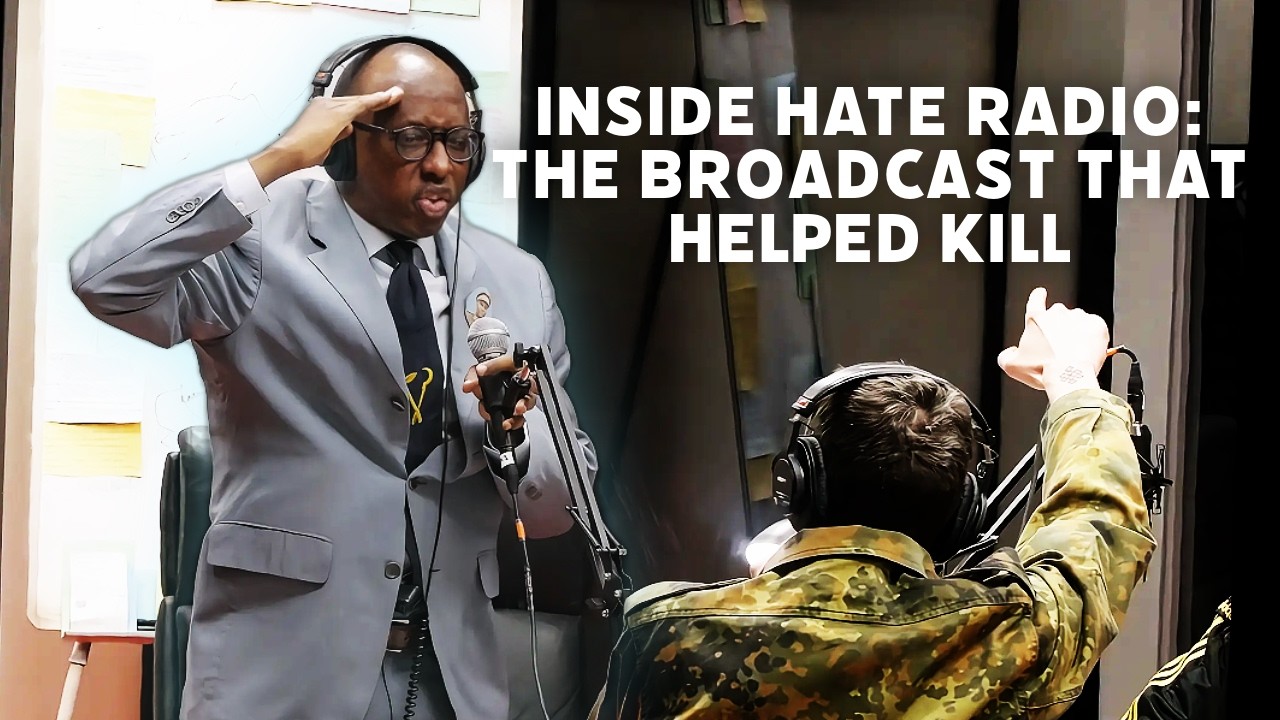
In Hate Radio, directed by Milo Rau and presented in its U.S. premiere at St. Ann’s Warehouse in February 2026, Diogène performs the role of Kantano, a real-life broadcaster for Radio Télévision Libre des Mille Collines (RTLM). The play places audiences inside the RTLM studio—often called “Radio Machete”—where hate speech was delivered through jokes, music, and chilling everyday banter.
RTLM played a critical role in inciting violence; its co-founder was later convicted by the UN International Criminal Tribunal for Rwanda. For Diogène, performing Hate Radio is an act of testimony. After more than 250 performances, carrying these words ensures their danger is never forgotten—and never repeated.
At UN Headquarters, Diogène sits with the Special Advisor on the Prevention of Genocide to discuss how language escalates from insult to incitement — and visits the “Kwibuka Flame of Hope,” a permanent memorial installed at UN Headquarters in New York in 2024 as a gift from Rwanda. It stands as a tribute to the victims and survivors of the 1994 Genocide against the Tutsi and as a reminder of our shared responsibility to confront hate before it takes root.
In recognition of 7 April 1994, the start of the genocide, this date is observed each year as the International Day of Reflection on the 1994 Genocide against the Tutsi in Rwanda.
In 2004, the United Nations established the Office of the Special Adviser on the Prevention of Genocide, on the basis of the lessons learned from the failures of prevention in Rwanda in 1994 and Srebrenica in 1995, to provide early warning, analysis, and advice to the Secretary‑General on prevention of genocide and other atrocity crimes.
LEARN MORE:
🔗 Outreach Programme on the 1994 Genocide against the Tutsi in Rwanda: https://www.un.org/en/preventgenocide…
🔗 Office of the Special Adviser on the Prevention of Genocide: https://www.un.org/en/genocide-preven…
🔗 International Day of Reflection: https://www.un.org/en/preventgenocide…
🔗 Kwibuka Flame of Hope: https://www.un.org/en/preventgenocide…
🔗 United Nations Audiovisual Library: https://media.un.org/avlibrary/en
0:00 — The Radio Broadcasts That Incited Genocide in Rwanda
0:29 — The 1994 Genocide Against the Tutsi: What Happened
0:56 — St Ann’s Warehouse: The Post-It That Waited 10 Years
1:35 — Diogène Ntarindwa: The Actor Who Was a Witness
2:25 — How Repetition and Propaganda Normalize Hate Speech
3:47 — From Incitement to Prevention: A Conversation at the United Nations
5:01 — The Kwibuka Flame: Rwanda’s Memorial at the United Nations
For more information or to watch video on YouTube, click here.