Produced by United Nations
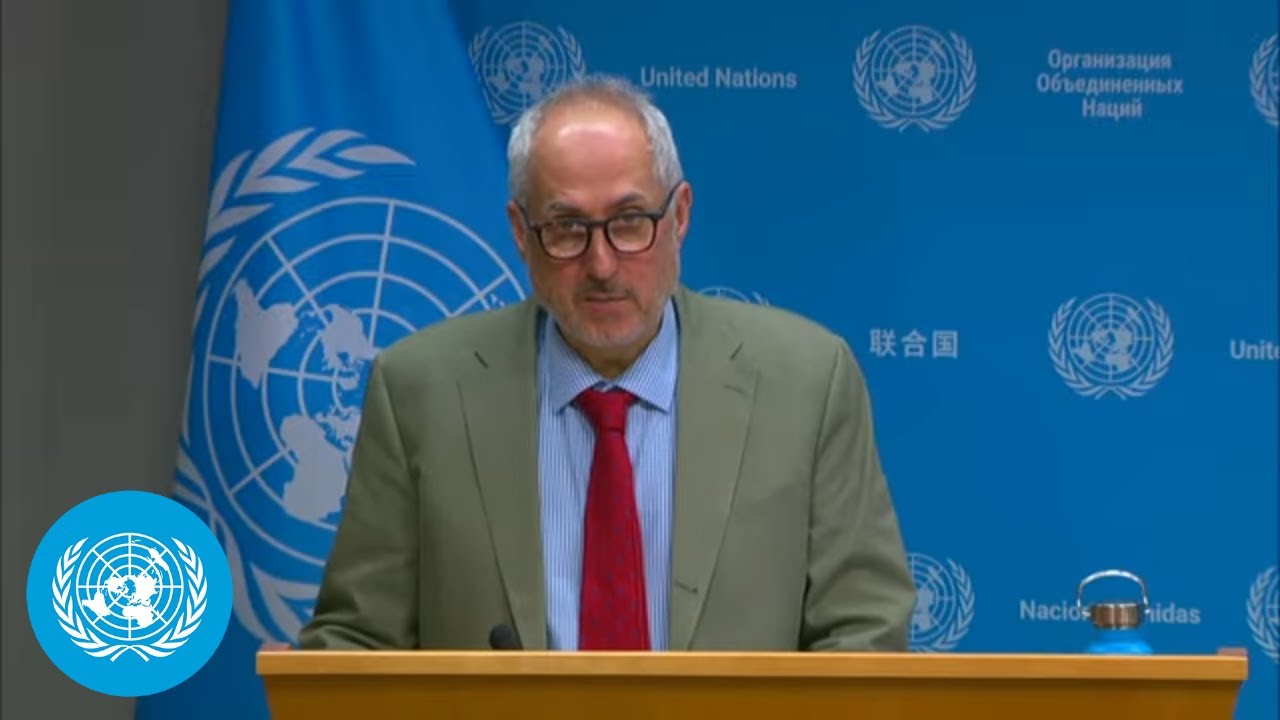
Noon briefing by Stéphane Dujarric, Spokesperson for the Secretary-General.
Highlights:
Deputy Secretary-General
Lebanon
UNIFIL
Occupied Palestinian Territory
West Bank
Iran
Yemen
Somalia
Sudan
South Sudan
Democratic Republic of the Congo/Peacekeeping
Democratic Republic of the Congo/Humanitarian
Information integrity
Victim’s Rights Advocate Report
Climate/Europe
International Day
DEPUTY SECRETARY-GENERAL
The Deputy Secretary-General is back in New York City, following her recent visits to Australia and Singapore earlier this week, in which she engaged with government leaders, civil society, the private sector, media, youth on advancing gender equality, multilateral cooperation and responses to global challenges.
In Singapore yesterday, the Deputy Secretary-General paid a courtesy call on the country’s President, Tharman Shanmugaratnam, and exchanged views on key international developments, UN80 reforms and Singapore’s leading role on artificial intelligence and new technology. She thanked the President for Singapore’s strong support for the United Nations and multilateral cooperation.
Prior to that, during a visit to Melbourne, the Deputy Secretary-General delivered the keynote address at the Opening Plenary of the Women Deliver 2026 Conference, underscoring that women’s rights are human rights and warned of a global rollback on gender equality amid conflict, climate shocks, shrinking resources and growing pushback against women’s autonomy.
LEBANON
The Office for the Coordination of Humanitarian Affairs tells us that the situation in Lebanon continues to be fragile and volatile given the insecurity, especially in the southern part of Lebanon. Lebanese authorities reported that three civil defence rescue workers were killed in the southern part of the country when two strikes hit a building in Tyre District. That took place yesterday. Authorities said the emergency teams were responding to people wounded in an earlier strike at the same place.
The incident underscores the risks faced by civilians, including emergency and humanitarian workers. According to the World Health Organization, since the start of the conflict, the number of attacks on healthcare has climbed to 149, with 100 deaths and 233 injured. Attacks on civilians and civilian infrastructure, and health workers are not only unacceptable, they are against international humanitarian law, as we keep saying.
All parties in this conflict have to observe their obligations under these laws.
Today, Israeli authorities issued a new displacement order south of the Litani River, covering 16 areas and instructing residents to move to the nearby town of Saida.
Women and children remain disproportionately affected. There are reports they are facing increased psychological distress and are bearing the brunt of the impacts of displacement, family separation, and economic hardship. Risks of gender-based violence remain high, particularly in overcrowded shelters.
We and our partners are responding to the mounting needs where access allows.
Compounding the situation, today our colleagues at the Food and Agriculture Organization and the World Food Programme warned that the sharp escalation in violence has reversed recent food security gains and pushed the country back into crisis. This is what the latest Integrated Food Security Phase Classification (IPC) for Lebanon tells us.
The projected analysis reveals that 1.24 million people, that’s nearly one in four of the population that was looked at, are expected to face food insecurity levels classified as Crisis or IPC Phase 3 or worse, between April and August of this year. IPC 3 means that people start skipping meals or start selling some of their [possessions] in order to buy food.
But despite these growing needs, the humanitarian response remains significantly underfunded. The Lebanon Flash Appeal has received just over $117 million, which is only 38 per cent of the money that we need, which is $308 million.
Full Highlights: https://www.un.org/sg/en/content/noon-briefing-highlight?date=2026-04-29
For more information or to watch video on YouTube, click here.