Produced by United Nations
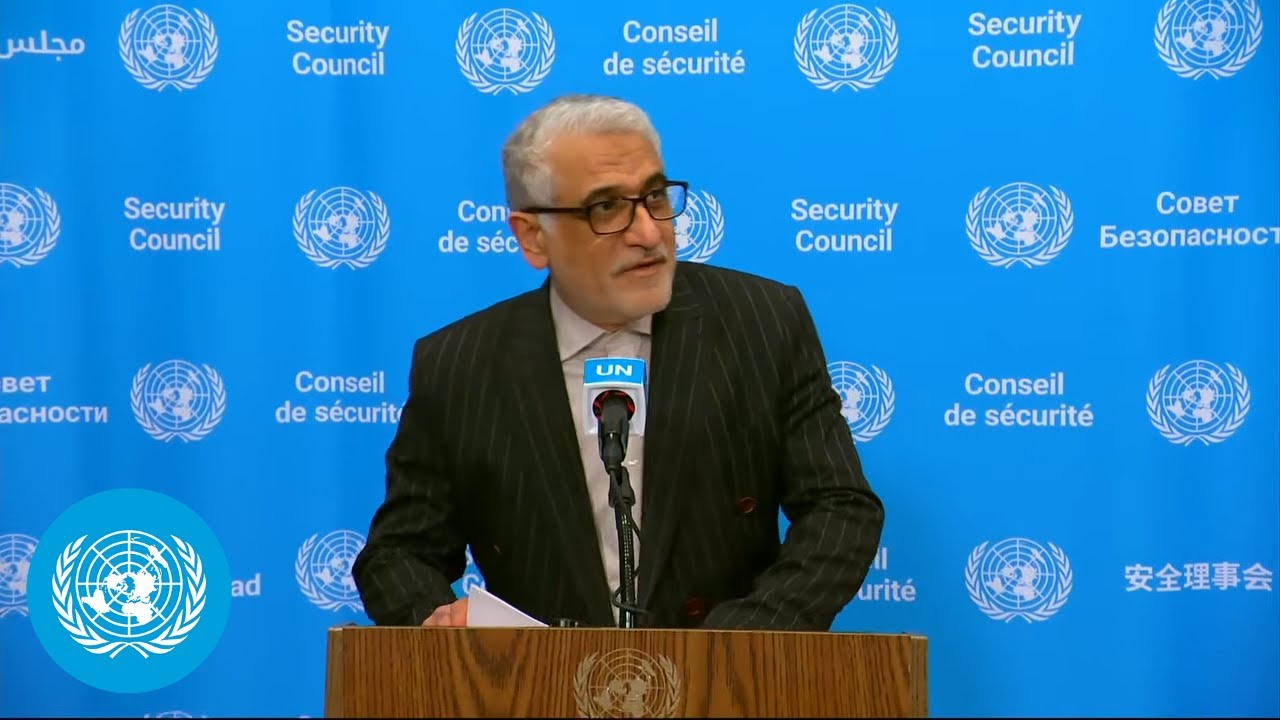
Iranian Ambassador Amir-Saeid Iravani told reporters in New York that “the only viable solution in the Strait of Hormuz is a permanent end to the war, the lifting of maritime blockade, and the restoration of normal passage,” and said a Security Council draft resolution tabled by the United States and Bahrain is “flawed, politically motivated” and drafted “under the pretext of freedom of navigation to advance its political agenda and legitimize unlawful actions, not to resolve the crisis.”
Iravani said, “the draft falsely accused Iran of violating the ceasefire of 8th April, while deliberately concealing material facts. It also attributes serious violations to Iran, including attacks on vessels and placement of sea mines without presenting credible and verified evidence.”
He said the text “ignores the unlawful maritime blockade imposed by the United States, as well as attacks on the seizure of Iranian vessels,” constituting “a material breach of the ceasefire, violation of the prohibition on the sea of force, and serious infringement of freedom of navigation.”
The Iranian Ambassador said, “the claim that the current situation constitutes a threat to international peace and security has no objective or credible basis” and the invocation of chapter seven of the UN Charter “is wholly unjustified, disproportionate and based on politically motivated allegation and it serves further military objectives.”
If adopted, he said, the resolution would “seriously damage the credibility and impartiality of the Security Council, it would politicize the Council’s enforcement power and establish a dangerous precedent for legitimizing unilateral coercive measures and unlawful action by the United States against the sovereignty and sovereign rights of coastal states.”
Iravani stressed that “Iran remains fully prepared to resolve normal maritime traffic and ensure freedom of navigation in the Strait of Hormuz, provided that the war is permanently ended, and the unlawful blockade is lifted.”
The question today before the Council members, he said, was, “why should a member state located thousands of miles away from the Persian Gulf and acting in a destabilizing manner, be permitted to use the Security Council to advance its political agenda in the Persian Gulf? while Iran, as a coastal state of the Strait of Hormuz, is denied its lawful rights to defend its security and sovereignty and is instead threatened with enforcement action on the chapter seven of the Charter.”
Iravani said, “the United States has neither the legal, political, nor moral standing to portray itself as a defender of freedom of navigation or maritime security” adding that it has “continued its internationally wrongful act by imposing a so-called maritime blockade, unlawfully seizing Iranian commercial vessels like pirates, and taking their crews hostage.”
For more information or to watch video on YouTube, click here.