Palestine, Syria, Humanitarian & other topics – Daily Press Briefing | United Nations
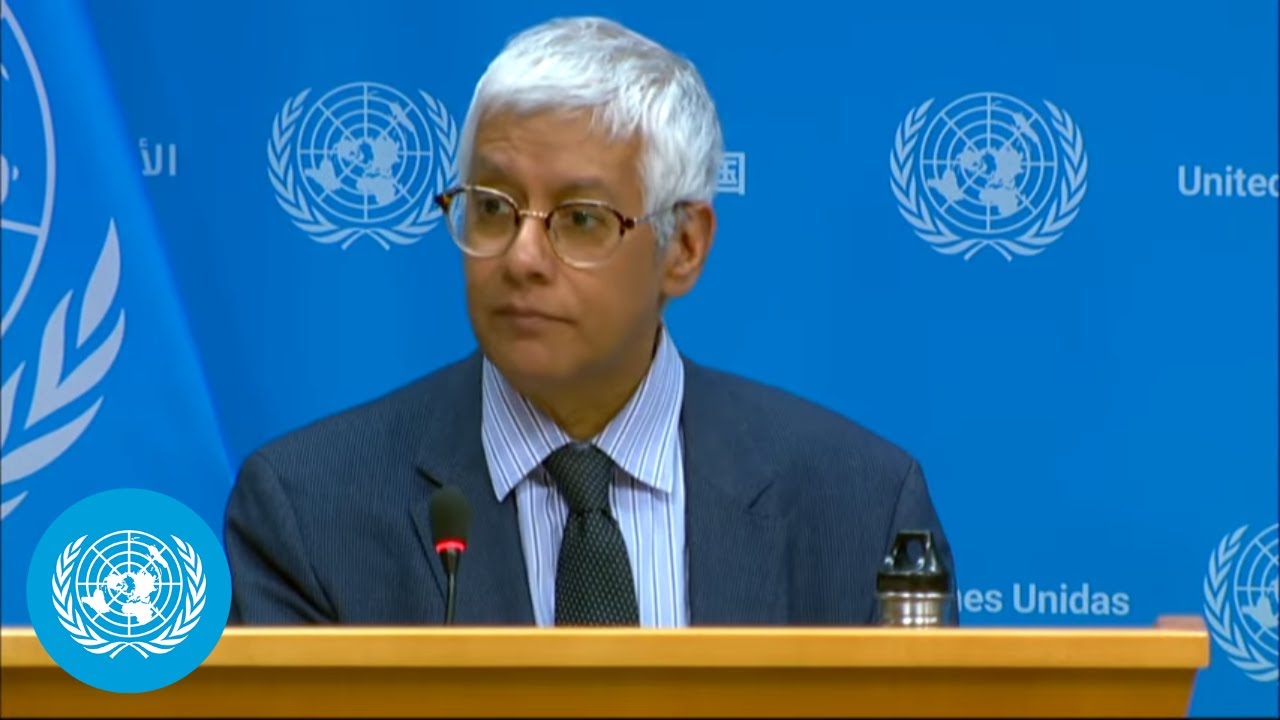
Noon briefing by Farhan Haq, Deputy Spokesperson for the Secretary-General.
Highlights:
Secretary-General/Palestine
Occupied Palestinian Territory
Food Systems Summit
Deputy Secretary-General
Security Council/Syria
Syria/Humanitarian
Lebanon/Israel
Ukraine
Democratic Republic of the Congo
Sudan
World Hepatitis Day
SECRETARY-GENERAL/PALESTINE
The Secretary-General will speak this afternoon at the opening session of the international conference on the implementation of the two-State solution.
He will say that the only realistic, just and sustainable solution for Israelis and Palestinians is two states, Israel and Palestine, living side by side in peace and security, within recognized borders, on the basis of the pre-1967 lines, with Jerusalem as the capital of both.
But he will warn that time is running out, with trust slipping every passing day while institutions are weakened and hopes are dashed.
At an earlier meeting this morning, he said that the wholesale destruction of Gaza is intolerable and must stop and that unilateral actions that would forever undermine the two-state solution are unacceptable.
The Secretary-General said that today’s conference is a rare and indispensable opportunity. We must ensure that it does not become another exercise in well-meaning rhetoric, Mr. Guterres added. It can and must serve as a decisive turning point – one that catalyzes irreversible progress towards ending the occupation and realizing our shared aspiration for a viable two-State solution.
OCCUPIED PALESTINIAN TERRITORY
Tom Fletcher, the Emergency Relief Coordinator, yesterday welcomed Israel’s decision to support a one-week scale-up of aid, including lifting customs barriers on food, medicine and fuel from Egypt and the reported designation of secure routes for UN humanitarian convoys. Some movement restrictions appear to have been eased on Sunday, he said, with initial reports indicating that over 100 truckloads were collected.
This is progress, Mr. Fletcher said, but vast amounts of aid are needed to stave off famine and a catastrophic health crisis. He said that we need sustained action, and fast, including quicker clearances for convoys going to the crossing and dispatching into Gaza; multiple trips per day to the crossings so we and our partners can pick up the cargo; safe routes that avoid crowded areas; and no more attacks on people gathering for food.
UN agencies and our partners have welcomed these measures. Yesterday, the World Food Programme(WFP) said that it has enough food in the region or on the way there to feed the starving population for about three months. The UN Relief and Works Agency (UNRWA) says that some 6,000 trucks in Jordan and Egypt are waiting for the green light to enter.
Meanwhile, the World Health Organization (WHO) said that July was the worst month of deaths linked to malnutrition, with more than 85 per cent of malnutrition related deaths recorded in 2025. Nearly one in five children under five in Gaza City is now acutely malnourished.
UN partners say that in July, more than 5,000 children under five have already been admitted for outpatient treatment of malnutrition. The only four specialized treatment centres in Gaza are overwhelmed, pushing an already fragile health system closer to collapse.
The UN and its partners stress the need for unimpeded access of humanitarian aid through all crossings and corridors to allow large-scale delivery of aid to the starving and exhausted population.
Yesterday, the Israeli authorities announced simplified movement procedures both from the crossings and within Gaza. Out of 17 missions requiring coordination with the Israeli authorities, eight were facilitated, including the collection of fuel and supplies from Kerem Shalom, while three have been denied, and two cancelled. Four missions, including the uplift of food cargo, were impeded but accomplished.
The long-standing restrictions on the entry of aid have created an unpredictable environment with a lack of confidence by communities that aid will reach them. This has resulted in many of our convoys being offloaded directly by starving, desperate people. Yesterday, hungry people offloaded food supplies before they could reach their intended destination.
As we have said before, the only way to mitigate for this situation is by having a sustained flow of aid over a period of time. This was evident during the ceasefire, when such incidents did not occur.
Meanwhile, airdrops have resumed in Gaza yesterday. While the UN welcomes all efforts to provide aid to the people who desperately need it, UN agencies and partners remind that airdrops are the last resort measure and carry risks for people on the ground. Injuries were reported yesterday when packages fell on tents.
Full highlights: https://www.un.org/sg/en/content/ossg/noon-briefing-highlight?date%5Bvalue%5D%5Bdate%5D=28%20July%202025
For more Information or to watch the video on YouTube, click here.