Palestine, IPC, Lebanon & other topics – Daily Press Briefing (29 July 2025) | United Nations
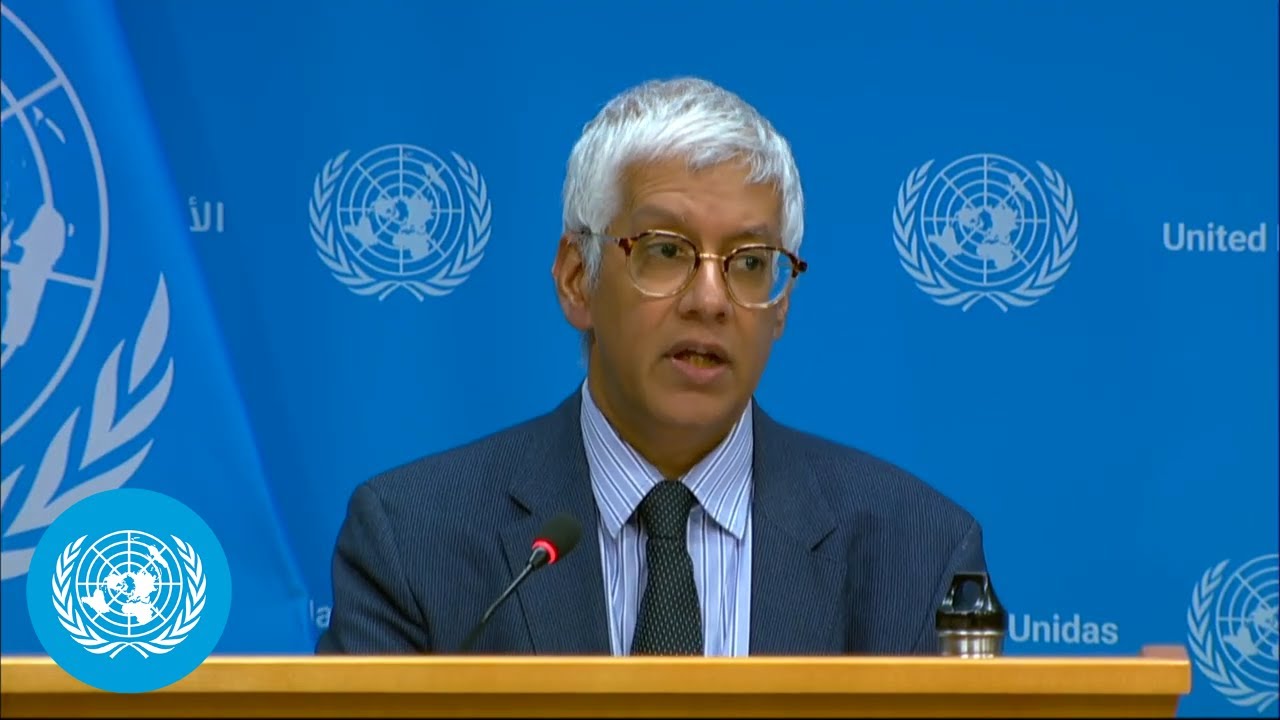
Noon briefing by Farhan Haq, Deputy Spokesperson for the Secretary-General.
Highlights:
IPC Report
IPC/Secretary-General
Occupied Palestinian Territory
Lebanon
Deputy Secretary-General
Security Council
Guatemala
Cambodia/Thailand
Dr. David Nabarro
Noon Briefing Guests
IPC REPORT
The World Food Programme (WFP) and UNICEF warned today that Gaza faces the grave risk of famine, as food consumption and nutrition indicators have reached their worst levels since the conflict began. That’s according to data shared in the latest Integrated Food Security Phase Classification (IPC) Alert.
The IPC Alert highlights that two out of the three famine thresholds have now been breached in parts of the territory.
Food consumption – the first core famine indicator – has plummeted in Gaza since the last IPC Update in May 2025. Data shows that more than one in three people (39 per cent) are now going days at a time without eating. More than 500,000 people – nearly a quarter of Gaza’s population – are enduring famine-like conditions, while the remaining population is facing emergency levels of hunger.
Acute malnutrition, the second core famine indicator, has risen in Gaza at an unprecedented rate. In Gaza City, malnutrition levels among children under five have quadrupled in two months, reaching 16.5 per cent. This signals a critical deterioration in nutritional status and a sharp rise in the risk of death from hunger and malnutrition.
Acute malnutrition and reports of starvation-related deaths, the third core famine indicator, are increasingly common, but collecting strong data under current circumstances in Gaza remains very difficult as health systems, already decimated by nearly three years of conflict, are collapsing.
IPC/SECRETARY-GENERAL
In response to the IPC alert, the Secretary-General said the following:
“The latest Integrated Food Security Phase Classification Alert confirms what we have feared: Gaza is on the brink of famine.
The facts are in — and they are undeniable.
Palestinians in Gaza are enduring a humanitarian catastrophe of epic proportions. This is not a warning. It is a reality unfolding before our eyes.
The trickle of aid must become an ocean. Food, water, medicine, and fuel must flow in waves and without obstruction.
This nightmare must end.
Ending this worst-case scenario will take the best efforts of all parties — now.
We need an immediate and permanent humanitarian ceasefire; the immediate and unconditional release of all hostages; and full, unfettered humanitarian access across Gaza.
This is a test of our shared humanity – a test we cannot afford to fail.”
OCCUPIED PALESTINIAN TERRITORY
Turning to Gaza, the Office for the Coordination of Humanitarian Affairs warns that we are making the most of the steps announced by the Israeli authorities to ease the delivery of aid into and across Gaza. We are collecting more supplies at the crossings and bringing more in from outside to restock.
Our colleagues in the ground say the Israeli-declared tactical pauses have reduced the intensity of hostilities, but not significantly enough, in times and areas where these are meant to apply. On Sunday and Monday – the two first days of the pauses – the UN and our partners were able to bring into Gaza more food, mainly wheat flour, alongside ready-to-use infant formula, high-energy biscuits, diapers, vaccines and much needed fuel. But OCHA says the volume of goods coming in is still far from enough.
Our colleagues say that most aid is still being offloaded by crowds before reaching where it’s supposed to go. But market monitoring shows prices for basic goods are starting to drop, which could point to better operating conditions if aid flows further increase and supplies saturate the area.
OCHA reminds us that commercial imports need to resume, sooner rather than later. No humanitarian operation can fully support 2.1 million people on its own. And for people to feel reassured that aid is flowing regularly, tactical pauses won’t cut it. What’s desperately needed is a full, permanent ceasefire.
Meanwhile, throughout most of the Gaza Strip, the UN and our partners are still required to coordinate humanitarian movements with the Israeli authorities. We’re seeing fewer outright denials by the Israeli authorities, but teams are still facing impediments on the ground.
Full highlights: https://www.un.org/sg/en/content/noon-briefing-highlight?date%5Bvalue%5D%5Bdate%5D=29%20July%202025
For more Information or to watch the video on YouTube, click here.