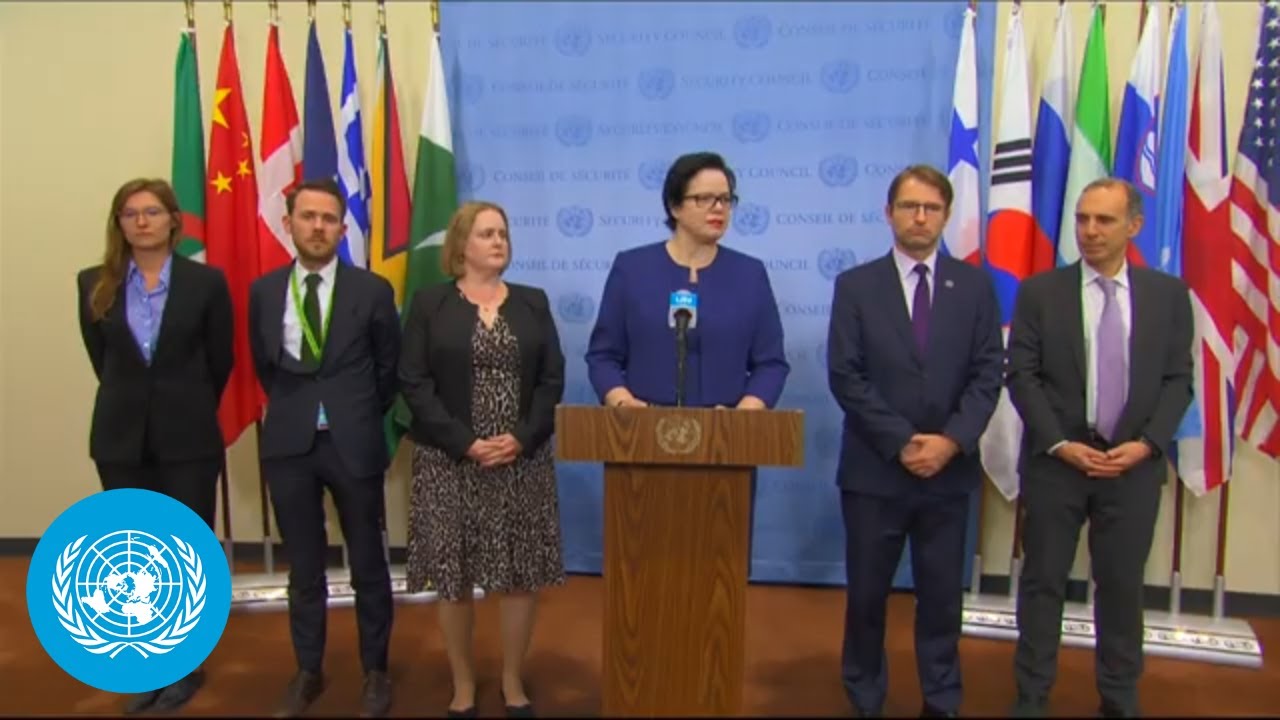
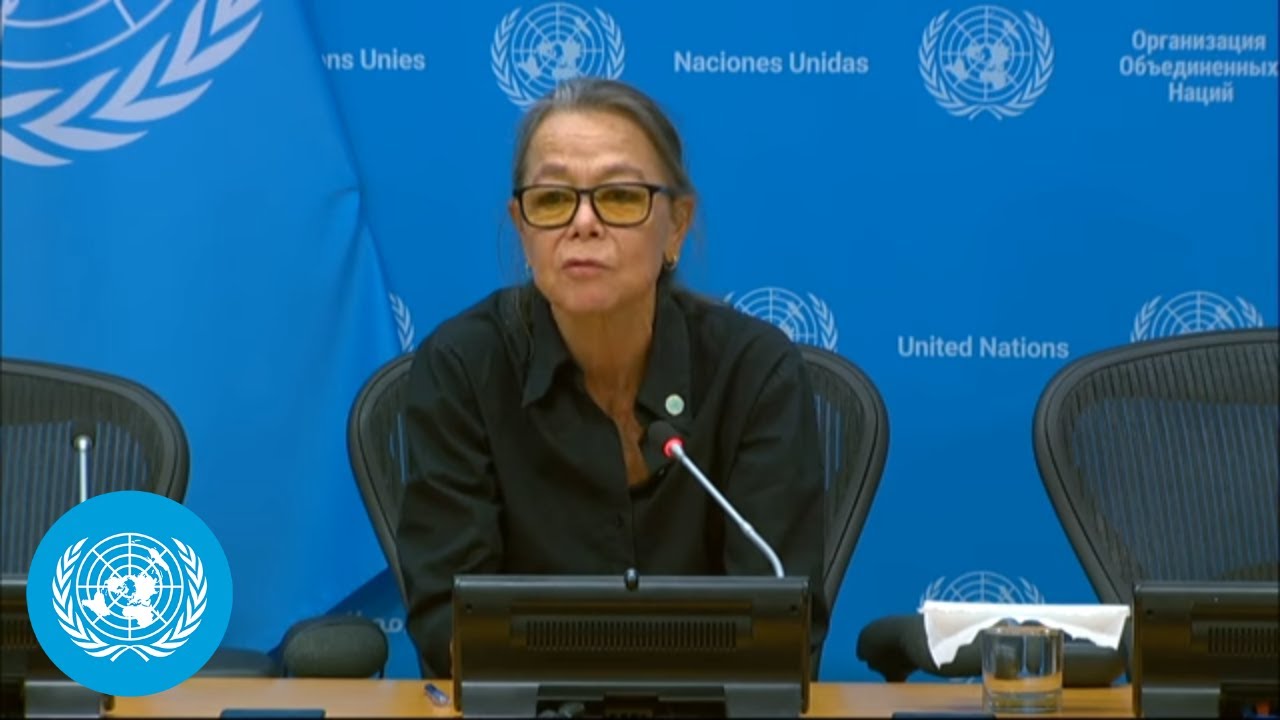
Joint press encounter by the E5 with statement read by Ms. Ondina Blokar Drobič, Deputy Permanent Representative of Slovenia to the United Nations, on the situation in Georgia – Security Council Media Stakeout.
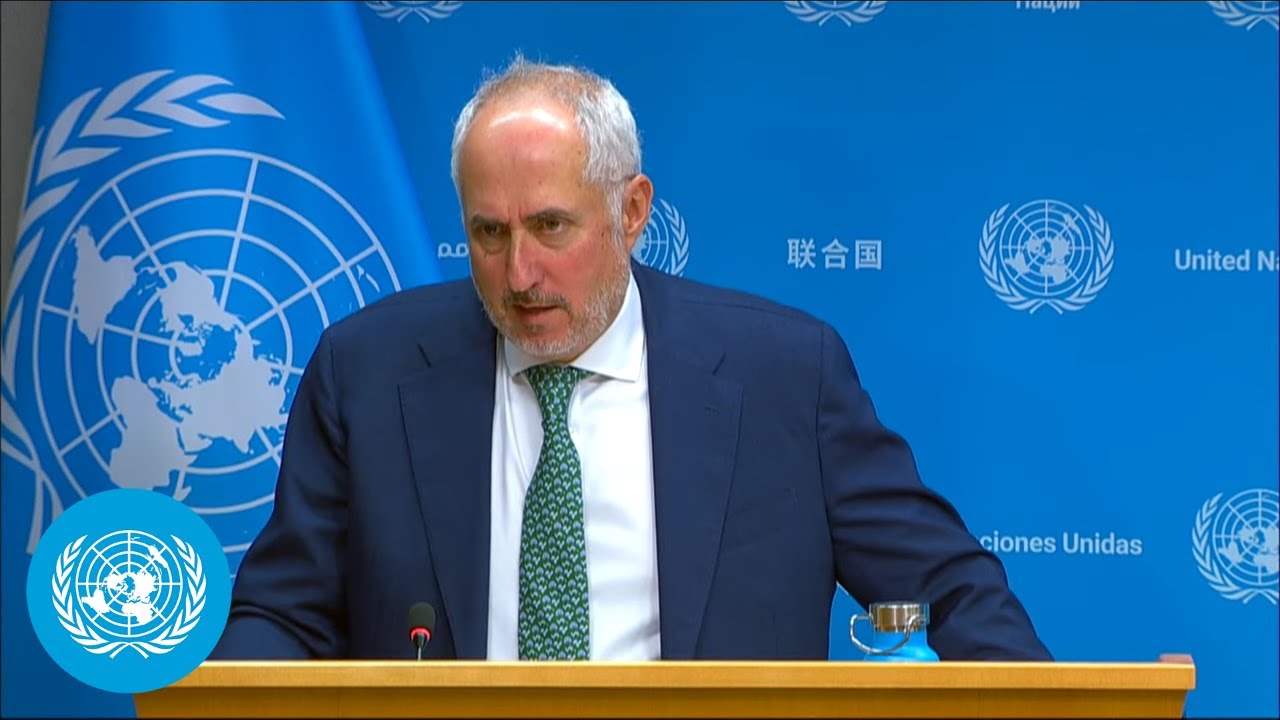
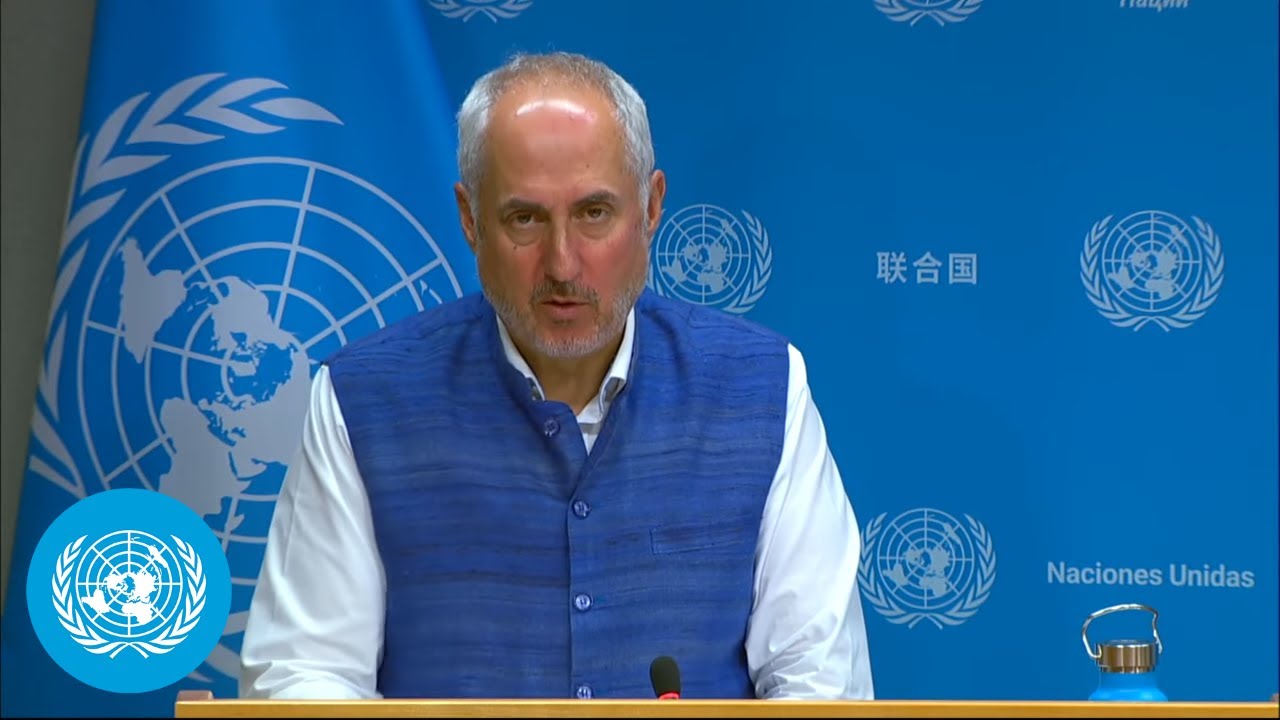
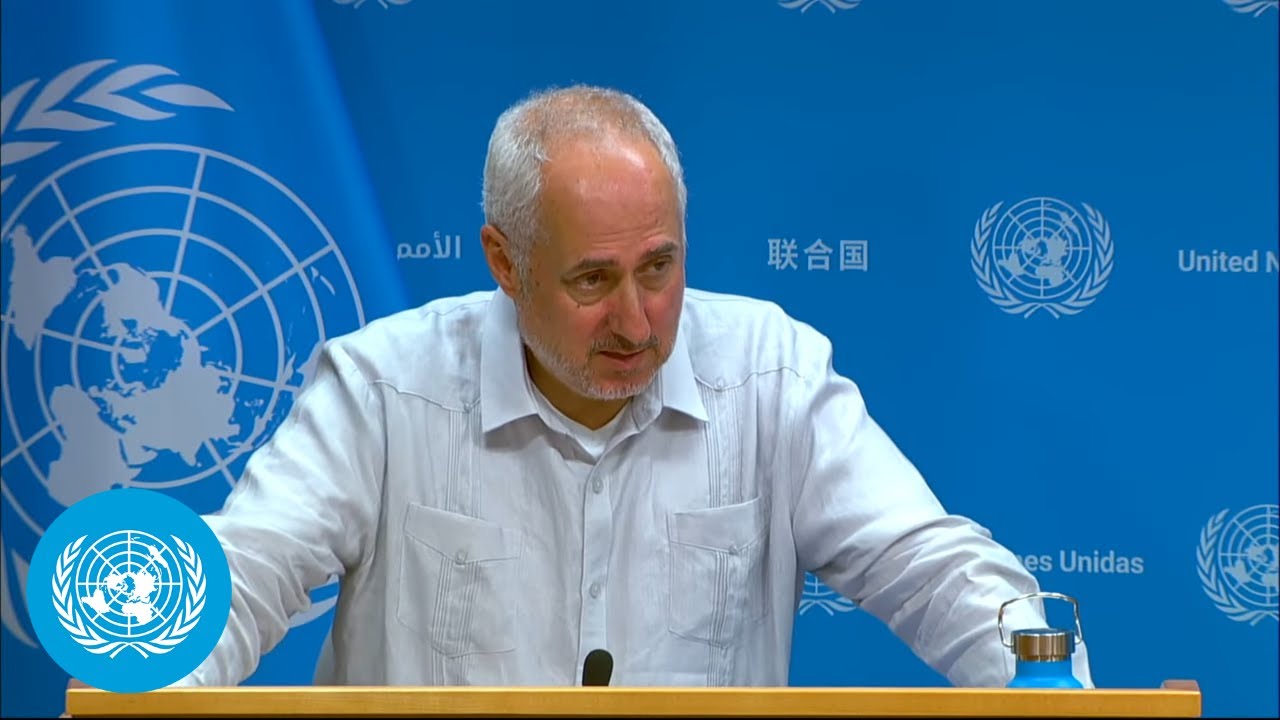
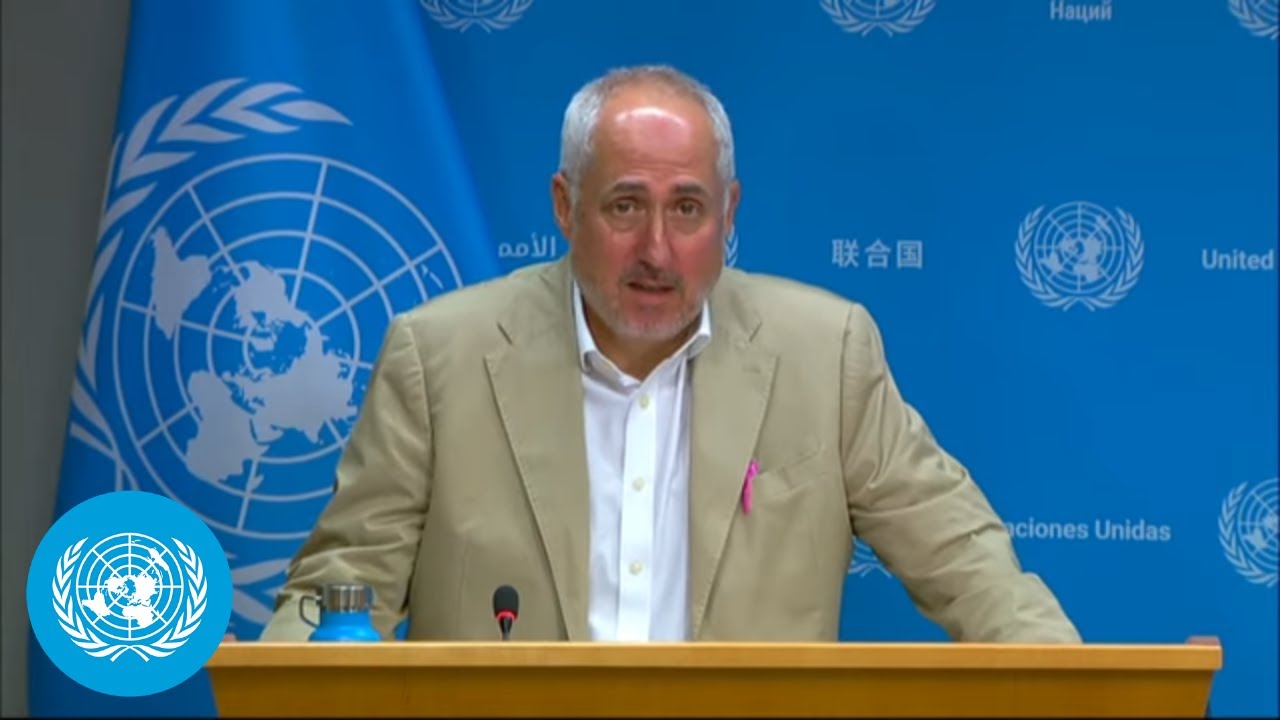
Noon Briefing by Stéphane Dujarric, Spokesperson for the Secretary-General.
Highlights:
Secretary-General/Travels
Occupied Palestinian Territory
Lebanon
Ukraine
Sudan
South Sudan
Secretary-General/Flooding in India and Pakistan
United Nations Support Office In Somalia (UNSOS)
Resident Coordinator
SECRETARY-GENERAL/TRAVELS
Today, the Secretary-General will leave New York for Japan to attend the Ninth Tokyo International Conference on African Development (TICAD 9) in Yokohama and the UN Special Day at Expo 2025 in Osaka.
Mr. Guterres is scheduled to hold a meeting with the Prime Minister of Japan, Shigeru Ishiba, as well as other officials including the Minister for Foreign Affairs of Japan, Iwaya Takeshi,
This will be the Secretary-General’s seventh visit to Japan. It will highlight the cooperative relationship between the UN and Japan. TICAD is also a very important platform to discuss ways to support Africa.
OCCUPIED PALESTINIAN TERRITORY
The Office for the Coordination of Humanitarian Affairs (OCHA) warns that the situation is beyond catastrophic in the Gaza Strip. Amid ongoing hostilities and extreme hunger, more deaths are recorded every day. Hunger-related deaths continue to be reported, including among children.
Partners say that, last week, in the north and the south of Gaza, more than 80 community kitchens were able to produce some 380,000 meals each day. Back in April, the daily tally of community kitchens was more than a million meals each day. Communities rely on hot meals once a day from these kitchens – but the amount they’re able to cook remains insufficient to meet the needs of the population in Gaza.
The World Food Programme (WFP) said that its teams are doing everything they can to deliver food to people. But the supplies remain far below standards – less than half of WFP daily target.
The agency said that organized distributions, WFP-supported hot meals, and bakeries, depend on far more aid that is actually getting into Gaza.
The Ministry of Health in Gaza said that five people, including two children, died over the past 24 hours due to malnutrition and starvation.
To prevent such deaths, and as we’ve been saying repeatedly humanitarians must be able to deliver food at scale, and consistently, through all available crossings and routes to reach the population of 2.1 million people, half of whom are children.
Yesterday, eight out of the 12 missions requiring coordination with Israeli authorities were facilitated without impediments. They included the transfer of nutritional supplies and fuel to the north.
One mission was to replace a water pipeline in Deir al Balah, and that mission was denied. Three others were impeded but eventually fully accomplished, including the collection of food aid from the Zikim crossing and the Kerem Shalom/ Karem Abu Salem crossing.
Movement restrictions also included holding points and long waiting lines inside the Strip, hinder the delivery of aid and supplies to people who are in desperate need.
We have seen the Israeli authorities’ announcement that they will lift the ban on shelter supplies, which have not been allowed to enter the Gaza Strip in five months. This is a welcome development, as the need for shelter and household items has increased. UN partners estimate that at least 1.35 million people need emergency shelter and some 1.4 million need essential household items. This represents an increase of about 4 and 8 per cent, respectively, compared with just June, a few months ago.
However, we are also concerned that the announcement by the Israeli authorities comes in connection with the looming announced expansion of the military activities in the Gaza city. This would displace thousands of people, once again, into an overcrowded area in the south of the Strip, which is almost devoid of the most basic infrastructure and services, including water, food and medical services.
Since early March, when the Israeli shelter ban came into force, more than 780,000 displacements have taken place. Existing shelters have deteriorated or been left behind amid repeated displacement orders.
Yet again, we repeat that it will not participate in any forced displacement of people. The UN and its partners reiterate our commitment to serve people wherever they are.
All civilians must be protected, whether they choose to stay or whether they choose to move. Those who decide to move must have their essential needs met, and they must be able to voluntarily return when the situation allows.
We also need unimpeded humanitarian access across all of Gaza, including community-based distributions and supplies entering at scale through all possible crossings, as we have been saying. All available supplies must be let into Gaza, including through the northern crossings.
Full highlights: https://www.un.org/sg/en/content/noon-briefing-highlight?date%5Bvalue%5D%5Bdate%5D=18%20August%202025
UNIFIL is in south Lebanon to support Lebanon and Israel in the implementation of Security Council resolution 1701 (2006), and to monitor and report violations of the resolution.
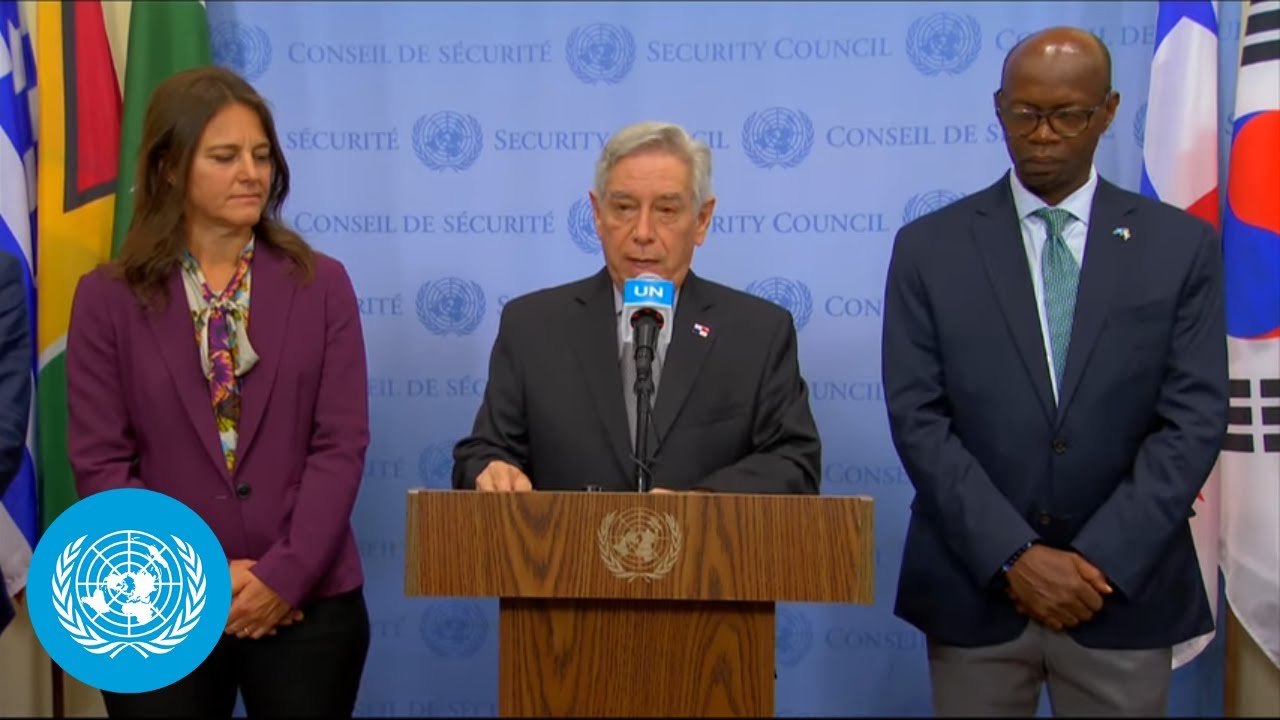
Joint press encounter by Security Council members who are pledges of CPS of Shared Commitments on Climate, Peace and Security (CPS) in South Sudan, led by Ambassador Eloy Alfaro de Alba, Permanent Representative of Panama to the United Nations, and President of the Security Council President for the month of August, at the Security Council Stakeout.
Noon Briefing by Stéphane Dujarric, Spokesperson for the Secretary-General.
Secretary-General / Plastic Pollution Treaty
Secretary – General / Trip Announcement
Trip Announcement / Peace Operations
Senior Personnel Appointment
Occupied Palestinian Territory
Ukraine
Afghanistan
Democratic Republic of the Congo
Central Emergency Response Fund
Financial Contribution
SECRETARY-GENERAL/PLASTIC POLLUTION TREATY
In a statement issued today, the Secretary-General said that he deeply regrets that, despite earnest efforts, negotiations to reach an international legally binding instrument on plastic pollution, including in maritime environment, concluded without achieving a consensus. The Secretary-General welcomed the determination of Member States in continuing to work to beat plastic pollution and keep engaged on the process, united in purpose, to deliver the treaty the world needs to tackle these monumental challenges to people and the environment.
OCCUPIED PALESTINIAN TERRITORY
The UN once again warns that the already dire situation could worsen without a reliable, rapid, safe and unrestricted flow of supplies into the Gaza Strip. The UN and its humanitarian partners report that ongoing delays and other impediments, including bottlenecks at holding points and interference in the loading process at the platforms, are impacting our efforts to collect supplies from the crossings and bring them to people in need.
Yesterday, five out of 12 missions requiring coordination with Israeli authorities were facilitated without impediments. They included the collection of supplies from Kerem Shalom/Karem Abu Salem and the transfer of fuel to the north. Four missions were canceled by the organizers and three others were impeded and only eventually fully accomplished – these included the collection of food aid from Zikim and Kerem Shalom crossings.
And on the starvation crisis in Gaza, more deaths are being reported, including many children, who are regularly admitted to hospitals for malnutrition. The World Health Organization (WHO) warns that many healthcare facilities have run out of bedspace to treat malnourished patients. Access to healthcare must be restored immediately.
The UN continues to receive extremely disturbing reports of aid seekers being killed and injured. Between May 27th and August 8th, the Red Cross Field Hospital in Rafah treated more than 4,500 wounded patients, most of whom reported that they were injured while trying to reach food distribution sites. People also report being injured in the crush of the crowd or being beaten and robbed of their supplies immediately after receiving them.
It is imperative that the UN and its humanitarian partners are enabled to deliver aid at scale, using community-based mechanisms to reach the most vulnerable.
Without these conditions in place, and if military operations continue or escalate, more deaths, forced displacement and destruction are inevitable, and this could prolong the ordeal of the hostages also being held in the Strip. The UN also calls again for their immediate and unconditional release.
One can only imagine that people in Gaza are gravely concerned by the potential impact of an expansion of operations in Gaza city. We reiterate that the UN will not participate in any forced displacement of the population. Fleeing civilians must be protected and the must have their essential needs met, and they must be able to voluntarily return when the situation allows. And if they choose to stay, they should not be threatened or put at risk.
And just to note that although the slight easing on the entry of commercial supplies has led to food price drops that we have been telling you, energy prices on the other hand have skyrocketed.
Cooking gas has not been available in markets for the past five months, and firewood has become even less affordable. More people are resorting to using waste and scrap wood as alternative fuel sources for cooking, which only makes worse health and protection risks, and causes environmental hazards. Partners working on food security warn that both the quantity and quality of supplies entering Gaza remain far below the minimum requirements to meet most people’s needs.
Full Highlihts: https://www.un.org/sg/en/content/noon-briefing-highlight?date%5Bvalue%5D%5Bdate%5D=15%20August%202025
@unitednations
▶ https://youtu.be/6UQcxNLPAnk
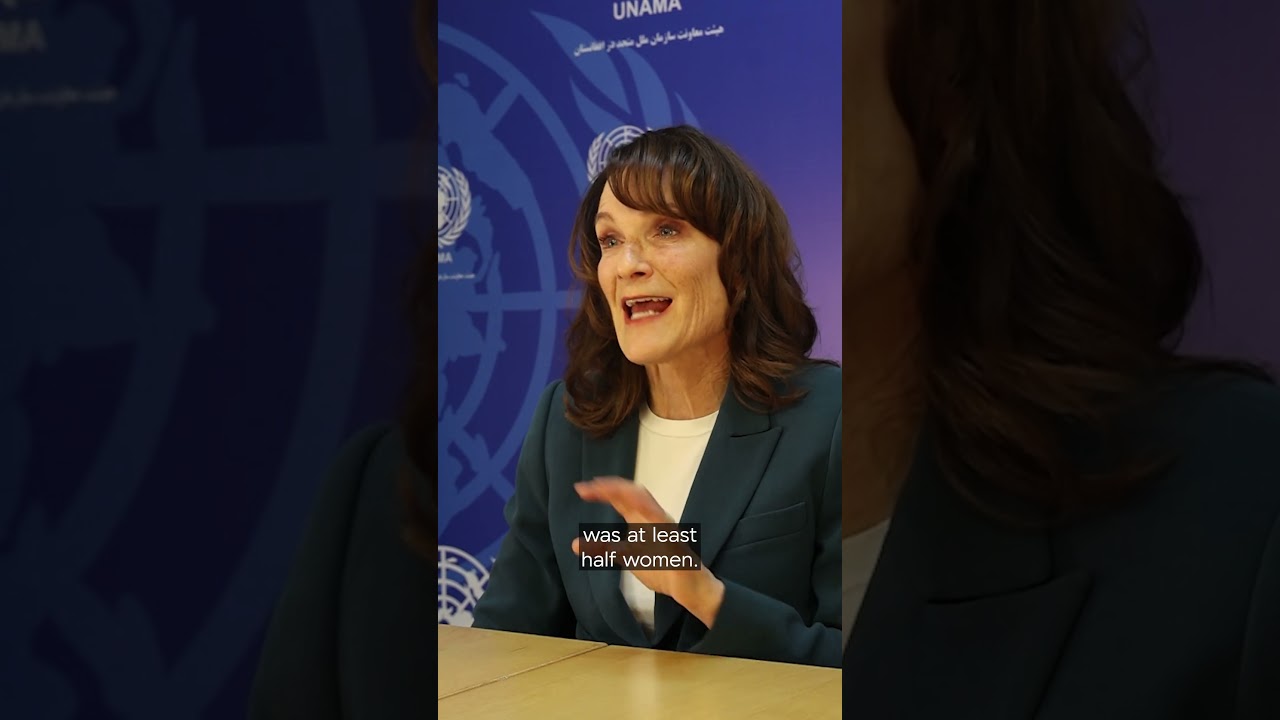
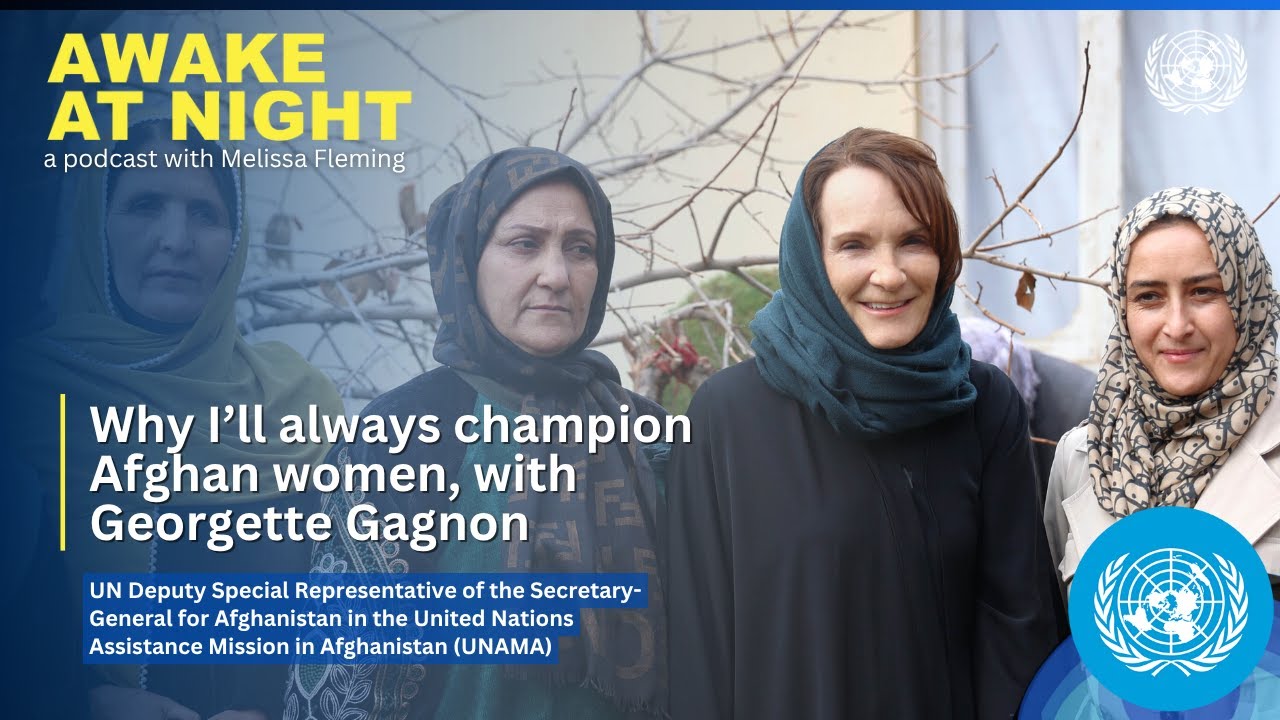
Why I’ll always champion Afghan women, with Georgette Gagnon | United Nations ‘Awake at Night’ podcast teaser
—
With her background in human rights law, Georgette Gagnon was once said to represent the conscience of war. Currently serving as the Secretary-General’s Deputy Special Representative for Afghanistan, she has been devastated by the sweeping loss of rights for women and girls there.
“You used to see across the country hundreds of girls going to school… Now, of course, you don’t see that, and it’s heartbreaking. It’s such a huge loss for the entire society,” she says.
Afghanistan has one of the highest numbers of people in need of humanitarian support, and drastic cuts to humanitarian assistance affect access to critical care for millions. In this episode, Georgette Gagnon shares her hopes and fears for a country close to her heart, and reflects on a career serving in some of the world’s toughest places, from Syria to Sudan and Libya.
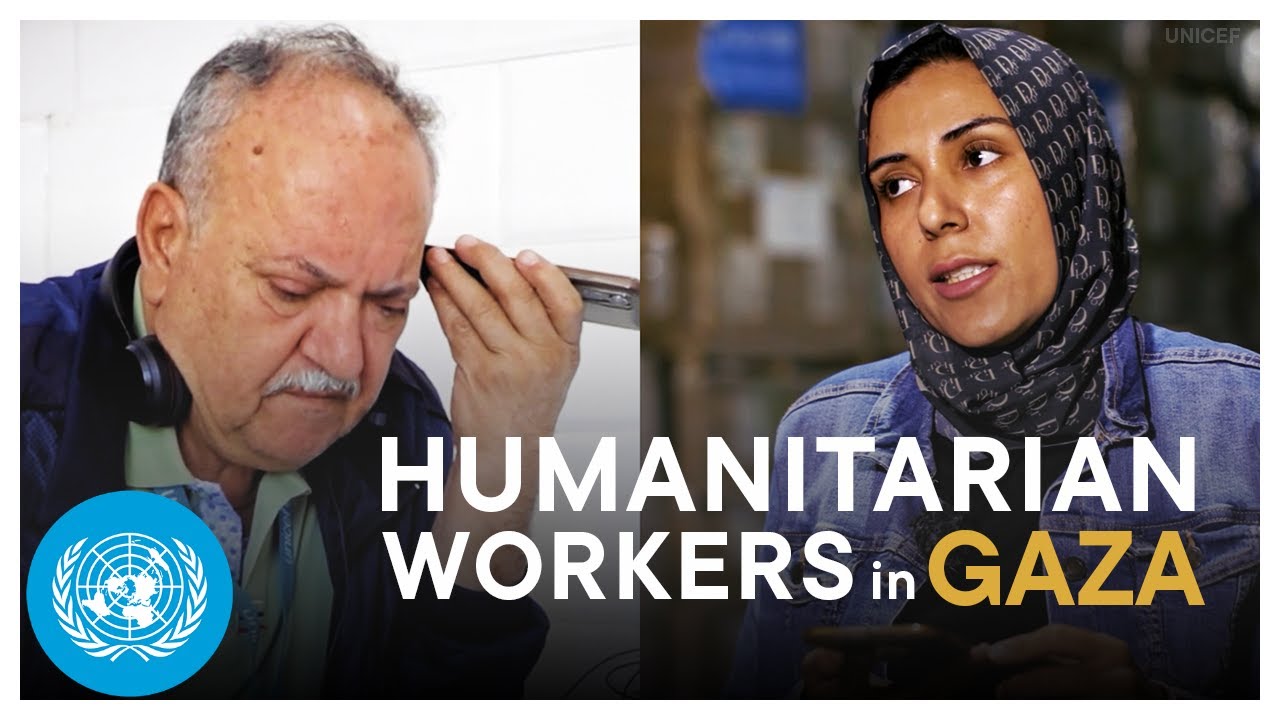
UNICEF’s documentary Gaza’s Silent Threat offers a powerful and rare glimpse into the challenges of conducting an emergency vaccination campaign in Gaza, through the personal accounts of two humanitarian workers, Dr. Younis Awadallah and Fairuz AbuWarda. The film highlights the profound direct and indirect impacts of conflict on children’s health and underscores the critical importance of a well-coordinated emergency response.
UN Video interviewed the director/producer of the filim, Ms. Maria Fernanda Lauret of UNICEF in time for the release of the documentary and for World Humanitarian Day 2025.
The 2024 polio vaccination campaign in the Gaza Strip was a collaborative effort of the Palestinian Ministry of Health, the United Nations Children’s Fund (UNICEF), the United Nations Relief and Works Agency for Palestine Refugees in the Near East (UNRWA), the World Health Organization (WHO), and countless humanitarian actors, health workers and social mobilizers on the ground.
CONFLICT-RELATED SEXUAL VIOLENCE REPORT
The Secretary-General’s 16th annual Report on Conflict-Related Sexual Violence has been published today.
The Report marks a staggering 25% increase from the previous year, with the highest number of cases recorded in the Central African Republic, the Democratic Republic of the Congo, Haiti, Somalia and South Sudan.
63 State and non-State parties are listed in the annex of the report, credibly suspected of committing or being responsible for patterns of rape or other forms of sexual violence in situations of armed conflict on the agenda of the Security Council.
The report also introduces, for the first time, an appendix whereby parties are put on notice for potential listing in the next report of the Secretary-General.
The consistent denial of access to United Nations monitors in the context of Israel and the Occupied Palestinian Territory and in temporarily occupied territories of Ukraine, has made it challenging to verify and definitively determine the patterns, trends and systematicity of sexual violence in these contexts.
The report also includes recommendations to the Security Council to address conflict-related sexual violence.
UKRAINE
Turning to Ukraine, the Coordination of Humanitarian Affairs says that as front lines shift, intense hostilities continue to inflict a heavy toll on civilians on a daily basis, causing widespread destruction and forcing thousands of people to flee their homes.
In the Donetsk Region, where fighting has escalated, Ukrainian authorities ordered the mandatory evacuation of families with children from over a dozen towns and villages. Between Monday and Wednesday this week, authorities report that more than 6,000 people fled high-risk communities along the front lines, either through organized evacuations or on their own.
Relentless attacks are also impeding both the evacuation of civilians and the delivery of aid to Pokrovsk Town, located just a kilometre from the front line.
Local authorities estimate that more than 1,000 people are still living there. Humanitarian access is also worsening in Kostiantynivka Town, where approximately 7,000 residents need urgent support.
Aid organizations are working around the clock to assist those fleeing the violence, providing transportation and other assistance at transit sites for newly displaced people.
The Humanitarian Coordinator for Ukraine, Matthias Schmale, is visiting the south of Ukraine today. He met with displaced people in a community centre in Mykolaiv and discussed urgent needs with our partners and the local authorities.
On its latest update, the UN Human Rights Monitoring Mission in Ukraine said that the number of civilian casualties in Ukraine reached another three-year high in July. With 286 civilians killed and 1,388 injured, the July casualty number was the highest since May 2022.
The UN Human Rights Monitoring Mission said that the high July casualty numbers continued a pattern of steadily increasing civilian casualties in 2025. Casualty numbers for the first seven months of 2025 were 48 per cent higher than in the same period in 2024.
full Highlihts: https://www.un.org/sg/en/content/noon-briefing-highlight?date%5Bvalue%5D%5Bdate%5D=14%20August%202025
Noon Briefing by Stéphane Dujarric, Spokesperson for the Secretary-General.
Highlights:
Sudan
Occupied Palestinian Territory
Syria
Sri Lanka
Guest tomorrow
SUDAN
One year ago, in August 2024, famine was confirmed in Zamzam camp and has since spread to areas in Darfur and Kordofan. Currently, 17 areas are classified as ‘at risk of famine’ including parts of Darfur, the Nuba Mountains, Khartoum, and Gezira.
Since then the situation, especially in El Fasher, has only gotten worse.
Our colleagues at the World Food Programme today called for humanitarian access to El Fasher that is facing starvation and remains cut off from humanitarian assistance.
WFP says that, as a coping mechanism, some residents are reportedly surviving on animal fodder and food waste.
WFP continues to provide digital cash support to roughly a quarter-million people in the city, allowing them to buy the dwindling food left in the markets. However, the escalating needs make it imperative to address hunger at scale.
We reiterate our concern about the ongoing conflict and renew our calls for all parties to end the violence, and resolve to dialogue and to put the interest of their people first.
OCCUPIED PALESTINIAN TERRITORY
Turning to Gaza, we continue our efforts to bring in goods and fuel into the Strip. Updates from today’s movements are yet to come to us. But I can tell you that yesterday our teams collected food and fuel from the Kerem Shalom and Zikim crossings. While more than half of 15 missions coordinated with the Israeli authorities were facilitated, the remaining ones were either denied, impeded or cancelled.
Meanwhile, the entry of goods has improved the market situation in terms of both prices and availability. For example, after peaking at 600 shekels per bag, that’s equivalent to about $175, in the past two weeks, the price of sugar has dropped to an average of 40 shekels, or $12. However, severe cash shortages are preventing families from being able to buy food, water and medicine.
As a reminder, the amount of aid and goods that can be brought into Gaza does not meet the minimum requirements of people who are starving. A ceasefire is critically needed to reach all those in need, along with a sustained and scaled-up flow of aid.
Today, the Ministry of Health in Gaza reported that eight people, including three children, died due to malnutrition and starvation over the past 24 hours. Such reports have become a daily occurrence, reflecting the deepening humanitarian crisis and the urgent need for sustained assistance.
Today, the World Health Organization conducted a refresher training at the Rantissi Children’s Hospital help staff members stay current with new information, focusing on the inpatient management of malnutrition. Rantissi is one of the five nutrition stabilization centres in Gaza, and one of only two located in Gaza city.
The recent surge in malnutrition cases among children has necessitated the establishment and scaling-up of these centres.
So far this year, more than 340 children have been admitted for malnutrition treatment at these centres in Gaza – and this year, as of August 5th, 49 validated child deaths from malnutrition have been reported, including 39 children under the age of 5.
Data collected by ourselves and our partners from over 900 households across Gaza in July indicated continuous trauma leading to mental health issues, including anxiety and depression. Many people are living in informal shelters that are overcrowded, unsafe and lack space and privacy, especially for women and children.
Care staff themselves are traumatized, and today, partners working on protection started providing mental health and psychosocial support for their teams in Gaza.
OCHA reminds us that shelter items are a priority, as supplies have run out, leaving people exposed to the summer heat and with nothing to protect them when winter comes. Many tents and tarpaulins need to be replaced, as they will not be able to withstand the elements.
Meanwhile, households continue to report poor sanitation and lack of clean water. In southern Gaza, the Israeli-supplied water pipeline has been damaged for almost a week now, impacting water supply for thousands of people in the area.
full Highlihts: https://www.un.org/sg/en/content/noon-briefing-highlight?date%5Bvalue%5D%5Bdate%5D=13%20August%202025
The United Nations Resident and Humanitarian Coordinator in Haiti, Ulrika Richardson, today (12 Aug) told reporters in New York that the situation is “strikingly horrific” in the country’s capital Port-au-Price with “3,000 people having been killed in gang related incidents since the beginning of the year.”
Briefing correspondents for the last time as the Deputy Special Representative of the Secretary-General for Haiti, Richardson said, “I often feel that I can’t even find words any longer to describe the situation. Is it alarming? Is it acute? Is it urgent? It’s all of that, and even more.”
She said, “we have 1.3 million people displaced currently, as a result of the gang violence, as the gangs have sort of rummaged the city. And half of them are children,” noting that 2 million people are in IPC four, meaning at an emergency level of food insecurity.
Richardson said, “all of that is just figures, in a way. And behind every figure there is, a woman, a mother, a child, a father, a young person.”
She said, “obviously children are particularly affected, particularly we have a malnutrition that is striking. We have children being recruited by the armed gangs. And of course, they fare really poorly, many of them also in terms of education. You can imagine, broken school years. We have generations that have not fulfilled an entire year of schooling.”
Richardson said, “we have a humanitarian response plan. It’s only funded 9 percent. It’s the lowest level of funding for any response plan in the world. And it’s 900 million. We are not talking about the biggest response plan either. So, that is of course a big frustration. But also, we have other; we have a sanctions regime that was introduced in 2022. We have an arms embargo, similarly, introduced in 2022. We have, the Multinational Security Support Mission that has been on the ground for a year but not given the tools or the sights needed to actually perform its role. So that is actually very frustrating. We have tools, but the response from the international community, is just not at par with the gravity on the ground.”
Secretary-General António Guterres appointed Richardson as his new Deputy Special Representative of the United Nations Support Mission in Libya (UNSMIL) and Resident Coordinator in Libya. She succeeds Aeneas Chuma of Zimbabwe.
She has been the Deputy Special Representative for the United Nations Integrated Office in Haiti (BINUH), Resident and Humanitarian Coordinator in Haiti since 2022, and was previously the Development Coordinator in Kosovo, working closely with the United Nations Interim Administration Mission in Kosovo (UNMIK) (2018-2022). Her earlier assignments include serving as the United Nations Resident Coordinator and Resident Representative of the United Nations Development Programme (UNDP), United Nations Children’s Fund (UNICEF) and United Nations Population Fund (UNFPA) in Cabo Verde (2013-2018), UNDP Resident Representative in Gabon (2012-2013), and Deputy Resident Representative in Türkiye (2007-2012) and in Cuba (2004-2007).
Since 2020, large parts of Bentiu in South Sudan have been submerged, leaving 300,000 people stranded on a narrow stretch of land.
To prevent further flooding, peacekeepers from the UN Mission in South Sudan (UNMISS) are working tirelessly to raise the dikes and monitor water levels weekly, providing early warnings to communities at risk.
As the climate crisis continues, peacekeepers, local authorities, and communities are joining forces to mitigate the impact and protect lives.
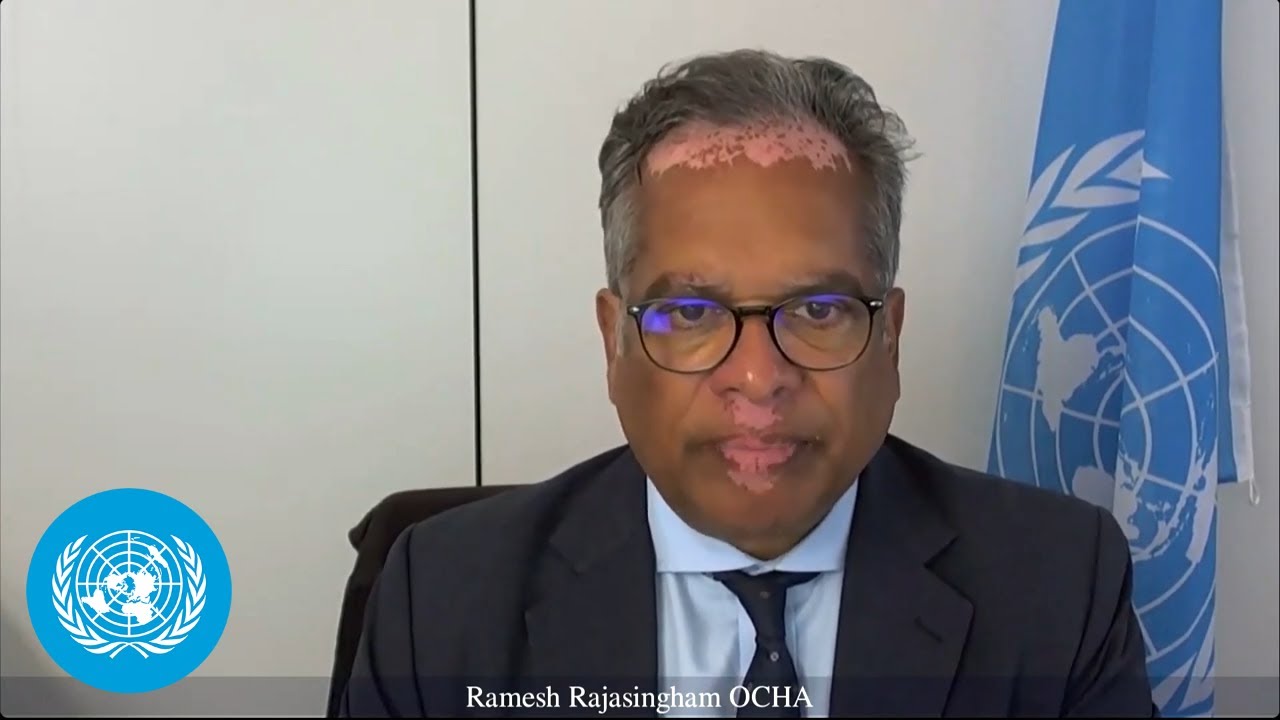
Ramesh Rajasingham, OCHA’s Director of the Coordination Division, told the Council that more than 17 million people, that’s nearly half of the population of Yemen, are estimated to be acutely hungry.
Rajasingham said, “Yemen is now one of the most food insecure countries in the world. As the economy continues to collapse and pressures on the food pipelines mount, many households with access to food can no longer afford it. Livelihoods across the public sector and agriculture and fisheries industries, among others, have been disrupted by ongoing conflict.”
He said, “half of the nation’s children under the age of 5 suffer from acute malnutrition, and nearly half suffer from stunting. This means developmental delays and infections, and a risk of death from common illnesses nine to 12 times higher than average. In a context where healthcare is desperately inadequate, and where support services are unavailable to many, this is a life-or-death gamble for children.”
Rajasingham told the Council that the Yemen Humanitarian Fund will be releasing $20 million to address the negative impacts of continuing food insecurity in Yemen.
Yemeni Ambassador Abdullah Ali Fadhel Al-Saadi said, “Yemen today is at the threshold of a difficult era. After 11 years of war waged by the terrorist Houthi militias against the country, the state and its constitutional bodies, a war that has destroyed the hopes and aspirations of a people that aspire for security, stability and dignity, justice and equality. A people that strives to build a civil state befitting of their glorious history and their status in the region.”
Al-Saadi said, “the Presidential Leadership Council and the Yemeni government are exerting efforts to push forth the peace process and to positively deal with international and regional efforts, and with the United Nations efforts through its Special Envoy to Yemen, to put an end to this conflict. However, the Houthi militias continue to obstruct all of these efforts and undermine any chances for peace.”
With her background in human rights law, Georgette Gagnon was once said to represent the conscience of war. Currently serving as the Secretary-General’s Deputy Special Representative for Afghanistan, she has been devastated by the sweeping loss of rights for women and girls there.
“You used to see across the country hundreds of girls going to school […] Now, of course, you don’t see that, and it’s heartbreaking. It’s such a huge loss for the entire society.”
Afghanistan faces the second biggest humanitarian crisis in the world today, while drastic cuts to humanitarian assistance will leave millions of vulnerable people without access to critical medical care.
In this episode, Georgette Gagnon shares her hopes and fears for a country close to her heart, and reflects on a career serving in some of the world’s toughest places, from Syria to Sudan and Libya.
[00:00] Introduction
[01:09] Returning to Afghanistan
[02:45] Halted humanitarian funding and its’ impact
[05:19] What keeps Georgette awake at night
[07:26] Girls’ determination to learn
[11:20] Navigating complexities
[13:22]The economic argument for women’s rights
[15:18] What brought Georgette back
[17:02] Working and living under restrictions
[17:48] A harrowing encounter in Syria
[19:46] Cautious hope for Syria
[21:10] The importance of accountability
[22:29] Bearing witness in conflict zones
[23:29] Georgette’s journey to the UN
[26:43] Family support and sacrifice
[30:04] What keeps Georgette going
[30:36] Closing remarks
Listen to more Awake at Night episodes: https://music.youtube.com/playlist?list=PLwoDFQJEq_0b6hu1e8oxsch9W0D7vkNqt
About Awake at Night
Hosted by Melissa Fleming, UN Under-Secretary-General for Global Communications, the podcast ‘Awake at Night’ is an in-depth interview series focusing on remarkable United Nations staff members who dedicate their career to helping people in parts of the world where they have the hardest lives – from war zones and displacement camps to areas hit by disasters and the devastation of climate change.
For more info, please visit: https://www.un.org/en/awake-at-night
Noon Briefing by Stéphane Dujarric, Spokesperson for the Secretary-General.
Highlights:
Occupied Palestinian Territory
Sudan
Yemen
Myanmar
Colombia
Youth Advisory Group on Climate Change
UN General Assembly High-Level Week 2025
OCCUPIED PALESTINIAN TERRITORY
The World Food Programme (WFP) today warned that starvation and malnutrition are at the highest levels in Gaza since the conflict began in October 2023. Meanwhile, the Ministry of Health in Gaza reported that five people died over the past 24 hours due to malnutrition and starvation, bringing the total number of malnutrition-related deaths to 227 people, including 103 children. And again, those numbers are since October 2023.
Against this backdrop, humanitarian supplies entering Gaza remain far below the minimum required to meet people’s immense needs.
The UN and its humanitarian partners continue to do everything possible to bring assistance into Gaza. However, humanitarian movements still face significant delays and other impediments that prevent the UN from delivering aid at the scale that is needed.
Yesterday, the UN has requested to coordinate with the Israeli authorities 16 missions, including the collection of food, medical supplies and fuel – from the two operational crossings, Kerem Shalom and Zikim. Other missions involved moving goods and personnel within Gaza, from south to north and within the southern part of Gaza.
Out of the 16 missions, four were facilitated and three were denied; another four were impeded but eventually were fully accomplished.
Of the remaining five missions, two were cancelled by the respective organizations; another two missions that involved collection of food and health supplies from Kerem Shalom were impeded and unable to be completed, while another one was impeded but is still ongoing.
Efforts to coordinate humanitarian movements often drag on for hours due to unpredictable clearances by the Israeli authorities, wasting precious time.
In the West Bank, the United Nations Office for the Coordination of Humanitarian Affairs (OCHA) said that yesterday, another Palestinian Bedouin community was displaced due to violence by Israeli forces and settlers.
Israeli forces raided the community of Ein Ayoub in Ramallah governorate and ordered the immediate eviction of its approximately 100 Palestinian residents. OCHA reports that a lot of the evacuated residents have no alternative shelter.
SUDAN
The UN is deeply alarmed by reports of a large-scale attack yesterday on the El Fasher area, the besieged capital of North Darfur State. That also affected the adjoining Abu Shouk displacement camp.
The attack has been attributed by local sources to fighters from the Rapid Support Forces. According to them at least 40 civilians have been killed within Abu Shouk, and another 19 injured.
under siege and cutting them off from safety and aid. The situation remains tense and highly fluid, with insecurity displacing at least 500 people from Abu Shouk to other locations in North Darfur. That’s according to the International Organization for Migration (IOM).
The Acting Humanitarian Coordinator in Sudan said that the immediate provision of safe and unhindered passage for people seeking to flee El Fasher and other areas of active hostilities is critical. He also reiterated the Secretary-General’s repeated calls for a humanitarian pause in and around the city to allow for the delivery of food, delivery of water, delivery of medicine and other life-saving supplies that are so desperately needed. Those that are trapped in those areas are facing acute hunger and starvation.
Meanwhile, the UN also remains concerned about the situation and the violence in the Kordofan region. In South Kordofan State, the International Organization for Migration estimates that more than 3,000 people fled Kadugli town between August 6th and August 10th due to intensified insecurity. Humanitarian access to the town remains extremely limited, with virtually no road access. The primary supply route from Al Obeid in North Kordofan State is inaccessible due to active hostilities. This has worsened the already dire economic conditions and is leading to even more shortages of vital goods.
OCHA reminds all those engaged in the conflict of their obligations under international humanitarian law.
They must not direct attacks against civilians or civilian objects and must take constant care to spare them in all circumstances. They must also facilitate unimpeded humanitarian access to everyone in need of assistance.
Full Highlights: https://www.un.org/sg/en/content/noon-briefing-highlight
Cookies are used on our website to make your use as comfortable as possible. These so-called essential cookies are stored in your browser because they are essential for the basic functions of the website.
We also use third-party cookies for online advertising on our sites. These cookies are only stored in your browser with your consent. By clicking here you agree to the use of these additional cookies or you can reject them:
This website uses cookies to improve your experience while you navigate through the website. Out of these, the cookies that are categorized as necessary are stored on your browser as they are essential for the working of basic functionalities of the website. We also use third-party cookies that help us analyze and understand how you use this website. These cookies will be stored in your browser only with your consent. You also have the option to opt-out of these cookies. But opting out of some of these cookies may affect your browsing experience.
Necessary cookies are absolutely essential for the website to function properly. These cookies ensure basic functionalities and security features of the website, anonymously.
Cookie
Duration
Description
cookielawinfo-checkbox-analytics
11 months
This cookie is set by GDPR Cookie Consent plugin. The cookie is used to store the user consent for the cookies in the category "Analytics".
cookielawinfo-checkbox-functional
11 months
The cookie is set by GDPR cookie consent to record the user consent for the cookies in the category "Functional".
cookielawinfo-checkbox-necessary
11 months
This cookie is set by GDPR Cookie Consent plugin. The cookies is used to store the user consent for the cookies in the category "Necessary".
cookielawinfo-checkbox-others
11 months
This cookie is set by GDPR Cookie Consent plugin. The cookie is used to store the user consent for the cookies in the category "Other.
cookielawinfo-checkbox-performance
11 months
This cookie is set by GDPR Cookie Consent plugin. The cookie is used to store the user consent for the cookies in the category "Performance".
viewed_cookie_policy
11 months
The cookie is set by the GDPR Cookie Consent plugin and is used to store whether or not user has consented to the use of cookies. It does not store any personal data.
Functional cookies help to perform certain functionalities like sharing the content of the website on social media platforms, collect feedbacks, and other third-party features.
Performance cookies are used to understand and analyze the key performance indexes of the website which helps in delivering a better user experience for the visitors.
Analytical cookies are used to understand how visitors interact with the website. These cookies help provide information on metrics the number of visitors, bounce rate, traffic source, etc.
Advertisement cookies are used to provide visitors with relevant ads and marketing campaigns. These cookies track visitors across websites and collect information to provide customized ads.