Syria: Political transition on ‘a knife-edge’ – Special Envoy Briefing | United Nations

Syria: Political transition on ‘a knife-edge’ – Special Envoy Briefing | United Nations

Hier klicken, um den Inhalt von YouTube anzuzeigen.
Learn more in YouTube’s privacy policy.

Briefing by Mr. Geir Pedersen, the Special Envoy of the Secretary-General for Syria, on the situation on the Middle East – Security Council, 9983rd meeting.

——————
The UN Special Envoy for Syria briefed the Security Council on Thursday, saying that amid a strained ceasefire and military skirmishes in Syria, the political transition “remains on a knife’s edge”.

Geir Pedersen told ambassadors that in Sweida governate, where sectarian violence in July also spurred conflict in the capital Damascus, the 19 July ceasefire has come under strain, but the conflict has not resumed so far.

However, “we are still seeing dangerous hostilities and skirmishes on the margins of Sweida, and violence could resume at any moment,” he said.

In northeast Syria, efforts to implement the 10 March agreement between the interim security forces and the mostly-Kurdish Syrian Democratic Forces (SDF) continue. Just this month, there have been spikes in violence between the two militaries in the Aleppo governorate.

While attempts to convene the two sides outside of the country have been unsuccessful, Mr. Pedersen welcomed reports of contacts between officials.

Despite these security incidents, Mr. Pedersen stressed that the situation has been relatively calm this month, applauding the efforts of those who have worked to tamp down hostilities.

However, in terms of the political situation, “the country remains deeply fragile and the transition remains on a knife-edge.”

After 13 years of civil war, Mr. Pedersen underscored the need for an inclusive, Syrian-led political transition that enables the Syrian people determine their own future peacefully, independently and democratically.

“Syrians need to feel that this transition is not a series of ad hoc arrangements and isolated institutions, but a clear and comprehensive path, based on inclusion and transparency, to implement the principles of resolution 2254,” he said.

To encourage the voluntary, safe return of refugees and internally displaced persons, Mr. Pedersen stressed the need for coordinated support to repair Syria’s depleted infrastructure.

“The best way to secure such support is through a genuine political transition that lays the path for long-term stability and sustainable governance. Indeed, without credible reforms, stronger institutions, and a firm commitment to the rule of law, international support risks being squandered or misdirected,” he stressed.

For more Information or to watch the video on YouTube, click here.
Japan, Gaza & other topics – Daily Press Briefing (21 August 2025) | United Nations

Japan, Gaza & other topics – Daily Press Briefing (21 August 2025) | United Nations

Hier klicken, um den Inhalt von YouTube anzuzeigen.
Learn more in YouTube’s privacy policy.

Noon Briefing by Daniela Gross, Associate Spokesperson for the Secretary-General.

Highlights:
Secretary-General/Japan
Secretary-General/Israeli Settlements
Deputy Secretary-General
Occupied Palestinian Territory
Ukraine
Security Council
Libya
Lebanon
Sudan
Democratic Republic of the Congo
International Day of Remembrance and Tribute to the Victims of Terrorism

SECRETARY-GENERAL/JAPAN
The Secretary-General continues his visit to Japan. Today, he held a press conference in Yokohama on the sidelines of the 9th Tokyo International Conference on African Development. He reiterated the importance of reaching immediately a ceasefire in Gaza, and the unconditional release of all hostages held in the Strip, and to avoid the massive death and destruction that a military operation against Gaza City would inevitably cause.
On the TICAD Summit, Mr. Guterres said that discussions at the conference focused on how partnership with Africa can strengthen solutions the whole world needs – in peace, in global governance, finance, climate action, and digital transformation.
Today, the Secretary-General also held meetings with the Minister for Foreign Affairs, Iwaya Takesh, and separately with the Mayor of Yokohama.
While in Yokohama, Mr. Guterres met with the President of the Republic of Ghana, John Dramani. They discussed cooperation between Ghana and the UN, as well as the situation in the region.
The Secretary-General also met with the Head of State and Head of Government of the Republic of Kenya, William Ruto. They discussed the Haiti Mission, and exchanged views on the regional situation in the Great Lakes, East Africa and the Horn of Africa.
The Secretary-General is currently on his way to Osaka where the EXPO is being held.

SECRETARY-GENERAL/ISRAELI SETTLEMENTS
In a statement issued yesterday evening, the Secretary-General condemned the decision of the Higher Planning Committee to grant approval for more than 3,400 housing units in the E1 area of the occupied West Bank. He notes that Israeli settlements in the occupied West Bank, including East Jerusalem, are a violation of international law and run directly counter to UN resolutions.
The Secretary-General said that the advancement of this project is an existential threat to the two-State solution. It would sever the northern and southern West Bank and have severe consequences for the territorial contiguity of the Occupied Palestinian Territory.
He reiterated his call on the Government of Israel to immediately halt all settlement activity and to comply fully with its obligations under international law and to act in accordance with relevant United Nations resolutions and in line with the International Court of Justice in its Advisory Opinion of 19 July 2024.

DEPUTY SECRETARY-GENERAL
The Deputy Secretary-General will depart later today for Abuja, Nigeria, to attend the inaugural Regional Security Conference of African Defence Chiefs entitled the “African Defence Chiefs Summit”. The Summit will bring together defence leaders from across the continent to discuss collective approaches to peace and security and stability in Africa. At the Summit, she will highlight that sustainable development and peace and security are mutually reinforcing and must be advanced together to tackle today’s complex security challenges. While in Abuja, the Deputy Secretary-General will also meet with senior government officials of ECOWAS (Economic Community of West African States), and other key stakeholders to advance cooperation on sustainable development, peace and security, and humanitarian priorities.
Following her visit to Nigeria, the Deputy Secretary-General will travel to Santiago, in Chile, to participate in the World Summit on Teachers where she will underscore the central role of teachers in advancing the SDG4 and the global education agenda. The Summit builds on the outcomes of the 2022 Transforming Education Summit and advances the recommendations of the Secretary-General’s High-level Panel on the Teaching Profession, reinforcing the urgent need to invest in, and support, teachers worldwide. While in Chile, she will also meet with senior government officials, the UN Country Team, and other stakeholders to discuss national progress on the Sustainable Development Goals.
The Deputy Secretary-General will return to New York on Friday, 29 August.

Full highlights: https://www.un.org/sg/en/content/noon-briefing-highlight?date%5Bvalue%5D%5Bdate%5D=21%20August%202025

For more Information or to watch the video on YouTube, click here.
Gaza Medical Crisis | United Nations

Gaza Medical Crisis | United Nations

Hier klicken, um den Inhalt von YouTube anzuzeigen.
Learn more in YouTube’s privacy policy.

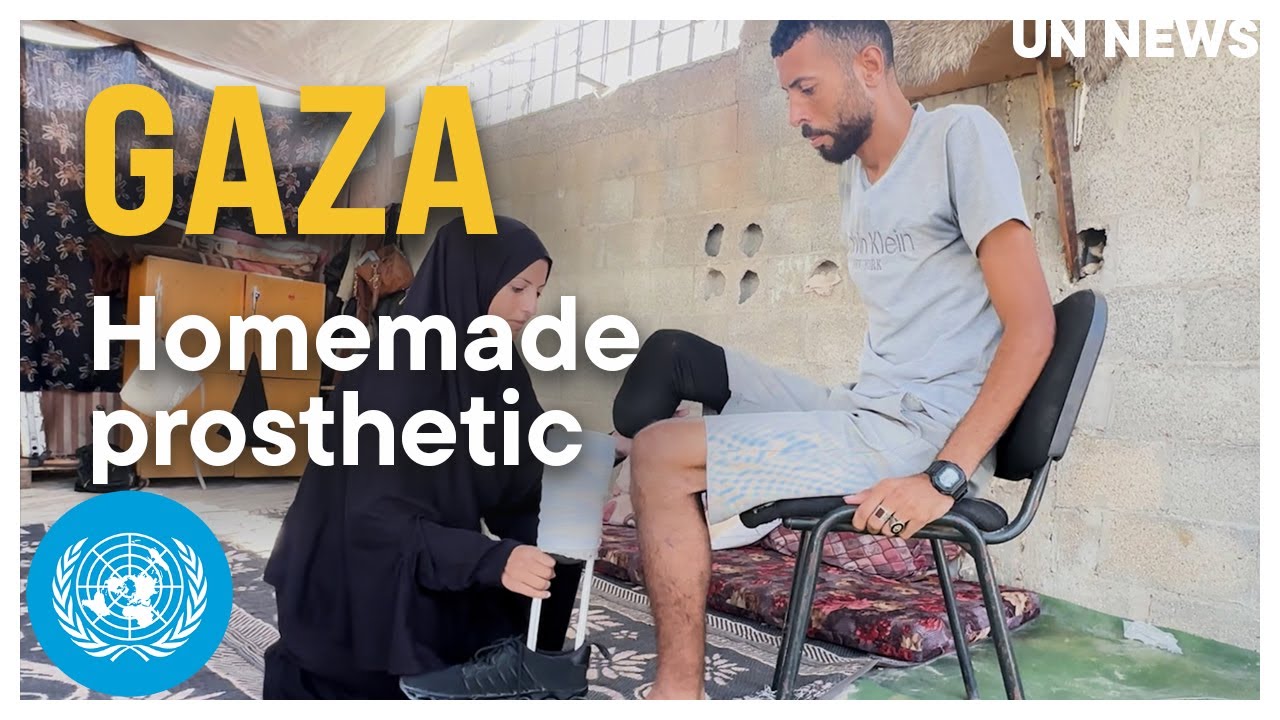
Blurb: Thousands of Palestinians in Gaza, including a record number of children, are living with amputations amid severe shortages of medical care and supplies. Gaza has the world’s largest population of child amputees, many facing dire health conditions and limited access to treatment or rehabilitation. Amputations are often performed as life-saving measures due to the lack of medical resources. Ongoing evacuation orders in parts of Gaza City, combined with escalating violence, have forced residents into increasingly small areas, adding immense pressure on hospitals. Al-Shifa Hospital is operating at nearly 300 percent capacity, with a constant influx of complex trauma injuries.

For more Information or to watch the video on YouTube, click here.
Around the world ‘war rages – from Gaza to Sudan to Ukraine & beyond’ – UN chief, TICAD in Japan

Around the world ‘war rages – from Gaza to Sudan to Ukraine & beyond’ – UN chief, TICAD in Japan

Hier klicken, um den Inhalt von YouTube anzuzeigen.
Learn more in YouTube’s privacy policy.

With intensifying Israeli activity in and around Gaza City reportedly continuing Thursday, Secretary-General António Guterres renewed his urgent call for a ceasefire, as Palestinians fled intense airstrikes, artillery shelling and gunfire.

Speaking today (21 Aug) at a press conference on the sidelines of the International Conference on African Development (TICAD) in Yokohama, Japan, the UN Chief said, “I must reiterate that it is vital to reach immediately a ceasefire in Gaza, and the unconditional release of all hostages and to avoid the massive death and destruction that a military operation against Gaza City would inevitably cause.”

Guterres also condemned the Israeli Government’s decision to approve a long-shelved settlement expansion project in the occupied West Bank. He said, “the decision by the Israeli authorities to expand illegal settlement construction, which would divide the West Bank, must be reversed.” He added that all settlement construction “is a violation of international law.”

The UN chief also noted that around the world, “war rages – from Gaza to Sudan to Ukraine and beyond,” adding that “climate chaos is destroying lives and livelihoods.”

He also said that economies are straining under debt, uncertainty, and inequality. Guterres added, “in this time of fracture and fragility, we need collective action to restore trust and deliver global progress.”

Guterres also told reporters that discussions at the TICAD Summit focused on how partnership with Africa can strengthen solutions the whole world needs “ – in peace, in global governance, finance, climate action, and digital transformation.”

For more Information or to watch the video on YouTube, click here.

Da’esh remains resilient amid global pressure, Africa is now epicentre of activity | United Nations

Da’esh remains resilient amid global pressure, Africa is now epicentre of activity | United Nations

Hier klicken, um den Inhalt von YouTube anzuzeigen.
Learn more in YouTube’s privacy policy.

“The threat posed by Da’esh remains volatile and complex,” UN counter-terrorism chief Vladimir Voronkov told the Security Council, as members convened to discuss the Secretary-General’s latest report on the extremist group.

The Council met today (Aug 20) for a briefing on António Guterres’ 21st biannual strategic-level report on Da’esh (S/2025/496), which concludes that the group remains resilient despite sustained counter-terrorism pressure. The report highlights Africa as the epicentre of Da’esh activity, with Islamic State West Africa Province (ISWAP) estimated to have 8,000 to 12,000 fighters and Islamic State in the Greater Sahara (ISGS) consolidating itself in the Niger-Nigeria border area.

Voronkov said affiliates are demonstrating “resilience despite sustained counter-terrorism efforts,” noting a resurgence in ISGS activity and ISWAP’s growing propaganda output, which has drawn in foreign fighters. He added that reports suggesting Da’esh is seeking to recruit cyber security experts are “gravely concerning.”

The Secretary-General’s report also warns that Da’esh-Khorasan, with some 2,000 fighters, remains one of the most serious threats in Afghanistan and Central Asia, while in Iraq and Syria the group maintains up to 3,000 fighters and has staged major attacks, including a June assault on a church in Damascus that killed more than 80 people. Camps in northeastern Syria continue to house nearly 35,000 people, mostly women and children, under dire conditions that the UN says risk becoming incubators of radicalization.

“Focusing solely on the leadership of groups such as Da’esh is not sufficient,” Voronkov told the Council. “Prioritizing long-term, principled responses that tackle the drivers of terrorism and the conditions conducive to its spread remain the most effective response.”

Natalia Gherman, head of the Counter-Terrorism Committee Executive Directorate, warned of Da’esh’s exploitation of artificial intelligence. “Da’esh’s use of artificial intelligence and social media for recruitment, fundraising and propaganda demands innovative responses,” she said, while stressing the same tools could help states disrupt terrorist activities.

Elisa De Anda Madrazo, President of the Financial Action Task Force, said the financing threat has shifted dramatically since 2001 but remains central to countering terrorism. “By turning off the money tap, we can cut off the blood supply of terrorism,” she said. She added that digital platforms are increasingly abused for financing and that younger lone actors are relying on microfinancing and “technology-enabled methods, including gambling online” use of social media.

For more Information or to watch the video on YouTube, click here.

Opening of the Int’l Conference on African Development TICAD9 – UN Chief | United Nations

Opening of the Int’l Conference on African Development TICAD9 – UN Chief | United Nations

Hier klicken, um den Inhalt von YouTube anzuzeigen.
Learn more in YouTube’s privacy policy.

UN Secretary-General Antonio Guterres attends and speaks at the opening of the ninth Tokyo International Conference on African Development (TICAD) in Yokohama, Japan.

For more Information or to watch the video on YouTube, click here.
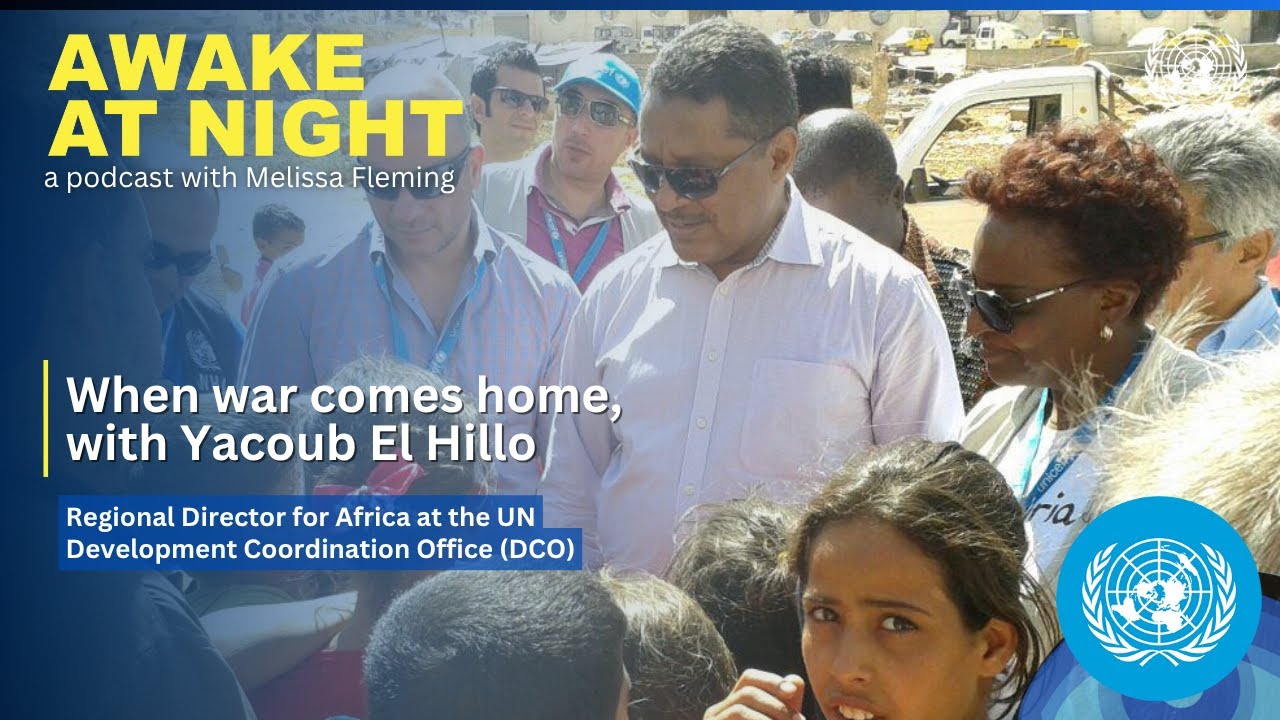
When war comes home, with Yacoub El Hillo | Regional Director for Africa at UN DCO | Awake at Night

When war comes home, with Yacoub El Hillo | Regional Director for Africa at UN DCO | Awake at Night

Hier klicken, um den Inhalt von YouTube anzuzeigen.
Learn more in YouTube’s privacy policy.

Yacoub El Hillo spent more than thirty years serving refugees and displaced people in some of the world’s worst conflict zones. But when cataclysmic war erupted in his hometown of Khartoum, Sudan, the Regional Director for Africa at the United Nations Development Coordination Office (DCO) had to help his own family flee the violence.

“I don’t think there’s any home in Khartoum that was spared … the assumption is that everything is gone.”

Having served in more than 16 duty stations, from Liberia to Syria, Somalia and Afghanistan, Yacoub El Hillo has rarely seen any conflict as devastating as the one currently decimating Sudan.

In this episode, he reflects on the scale of the human suffering there, looks back on a rich and varied career with the UN, and shares why all nations deserve a chance to strive for a brighter future.

[00:00] Introduction
[01:21] A war like no other
[06:04] When war comes home
[11:21] His family’s flight to safety
[15:27] What’s left behind
[16:28] What keeps Yacoub awake at night
[17:36] Holding onto hope
[19:08] Returning to serve after retirement
[21:23] Yacoub’s starting point
[23:54] A mission, not a job
[24:50] Liberia’s transformation
[27:26] Darkest days in Syria
[30:38] Taking risks to save lives
[32:45] His hopes for Syria’s future
[33:59] Family and sacrifice
[37:36] Closing remarks

Listen to more Awake at Night episodes https://music.youtube.com/playlist?list=PLwoDFQJEq_0b6hu1e8oxsch9W0D7vkNqt

About Awake at Night
Hosted by Melissa Fleming, UN Under-Secretary-General for Global Communications, the podcast ‘Awake at Night’ is an in-depth interview series focusing on remarkable United Nations staff members who dedicate their career to helping people in parts of the world where they have the hardest lives – from war zones and displacement camps to areas hit by disasters and the devastation of climate change.

For more Information or to watch the video on YouTube, click here.
Palestine, Sudan & other topics – Daily Press Briefing (20 August 2025) | United Nations

Palestine, Sudan & other topics – Daily Press Briefing (20 August 2025) | United Nations

Hier klicken, um den Inhalt von YouTube anzuzeigen.
Learn more in YouTube’s privacy policy.

Noon Briefing by Stéphane Dujarric, Spokesperson for the Secretary-General.

Highlights:
Secretary-General/Travels
Occupied Palestinian Territory
Sudan
Democratic Republic of the Congo
Security Council
Financial Contribution

SECRETARY-GENERAL/TRAVELS
This morning, the Secretary-General addressed the 9th Tokyo International Conference on African Development, which is taking place in Yokohama this year. The Secretary-General said that for more than three decades TICAD, as the Conference is known, has embodied the spirit of multilateralism grounded in mutual respect, shared responsibility and a deep belief in Africa’s potential.
This meeting, he added, comes at a time of interconnected crises and deep inequalities. Tackling these crises, he said, “requires a clear focus not only on development for Africa, but development with Africa.”
On the sidelines, he met with the Prime Minister of Japan, Ishiba Shigeru. They exchanged views on a number of issues, including global and regional issues.
Mr. Guterres also met with Dr. Tanaka Akihiko, the President of the Japan International Cooperation Agency, which is the organizer of the Conference.
In all his meetings and exchanges, the Secretary-General emphasized that enhanced cooperation needs to focus on areas where strategic partnerships can drive inclusive growth in Africa, creating decent jobs and accelerating progress towards Agenda 2063 and the Sustainable Development Goals (SDGs).
His schedule for tomorrow in Yokohama includes more bilateral meetings with attendees of the Conference, and a press encounter in Yokohama.

OCCUPIED PALESTINIAN TERRITORY
The Office for the Coordination of Humanitarian Affairs (OCHA) says that the situation in the Occupied Palestinian Territory is increasingly dire, with children and adults killed, injured and displaced every single day. Starvation and malnutrition continue to deepen.
And as an example, the UN Relief and Works Agency for Palestine Refugees in the Near East (UNRWA) has just shared the latest malnutrition data. They are the largest provider of nutrition screening and treatment in Gaza. They have, since March of this year, when the ceasefire collapsed, UNRWA has screened over 95,000 children aged 6 months to 5 years old for malnutrition across the Gaza Strip. The prevalence of acute malnutrition has risen 15.8 per cent in the first half of August. This means that according to UNRWA’s data, malnutrition has tripled across the Gaza Strip since the ceasefire collapsed. And in Gaza City, acute malnourishment has reached 28.5 per cent, meaning more than one in four children in Gaza City is now considered malnourished.
According to UNRWA screenings, malnutrition in Gaza City is now almost six times the level it was since the ceasefire.
But despite the impediments and the systematic restrictions, the UN and its partners are sparing no effort to bring critical food and supplies into the Gaza Strip to avoid an even further deterioration of the situation.
Today, OCHA released an update on what we delivered in Gaza between August 3rd and 16th. A few highlights:
On food: Teams brought in about 12,000 metric tons of wheat flour and other supplies and supported more than 80 community kitchens providing over 400,000 meals every day.
That’s twice as much as in late July but less than half of what we were able to bring in April.
On nutrition: the UN Children’s Fund (UNICEF) brought in enough therapeutic food for 30,000 acutely malnourished children for one month; infant formula sufficient for 1,250 babies; and over 3,500 cartons of high-energy biscuits. Partners also continued screening thousands of children for malnutrition.

Full Highlights: https://www.un.org/sg/en/content/noon-briefing-highlight?date%5Bvalue%5D%5Bdate%5D=20%20August%202025

For more Information or to watch the video on YouTube, click here.

Sexual Violence in Conflict Cases Surge 25% in 2024 – Security Council Briefing | United Nations

Sexual Violence in Conflict Cases Surge 25% in 2024 – Security Council Briefing | United Nations

Hier klicken, um den Inhalt von YouTube anzuzeigen.
Learn more in YouTube’s privacy policy.

“In the course of 2024, more than 4,600 cases of conflict-related sexual violence, including as a tactic of war, torture, terror and political repression, were documented, marking a staggering 25 percent increase from 2023, which was itself a 50 percent increase from the previous year,” the UN’s envoy on sexual violence in conflict told the Security Council.

Briefing the Council today (Aug 19), Pramila Patten, the Special Representative of the Secretary-General, warned that even as needs rise, funding for women’s frontline organizations is collapsing. “We are told there is no money for lifesaving aid, even as military expenditure soars, and the world spends more in 24 hours on arms than it does in a year on addressing gender-based violence in conflict,” she said.

Patten’s remarks drew on the Secretary-General’s latest annual report on conflict-related sexual violence, published on 14 August and covering the period from January to December 2024.

She noted that women and girls accounted for 92 percent of verified cases last year, with victims ranging in age from one to 75 years old. “Sexual violence against children increased by a shocking 35 percent over the past year, with incidents of gang-rape rising dramatically, inflicting enduring, generational harm,” she said.

From Darfur, Ikhlass Ahmed of the Darfur Advocacy Group described how sexual violence remains widespread. “Hardly a day goes by without a new report of rape of a woman or girl,” she told the Council, adding that more than 30 women and girls have been detained by the Rapid Support Forces in El Fasher for over seven months. “These stories and these numbers are just the tip of the iceberg, as survivors often remain silent due to stigma and fear of retaliation,” she said.

Ahmed also reported at least 174 attacks on health providers and facilities since the conflict began, including clinics serving survivors of sexual violence. “In April, the RSF burned down a women-led community kitchen in Zamzam Camp, deliberately killing volunteers Hasanat Musa, who was pregnant, and Nana Bahar Idris,” she added.

Before the debate, the signatories to the Shared Commitments on Women, Peace and Security – Denmark, France, Greece, Guyana, Panama, the Republic of Korea, Sierra Leone, Slovenia, the UK, and the US – delivered a joint statement on conflict-related sexual violence, at a stakeout ahead of the meeting.

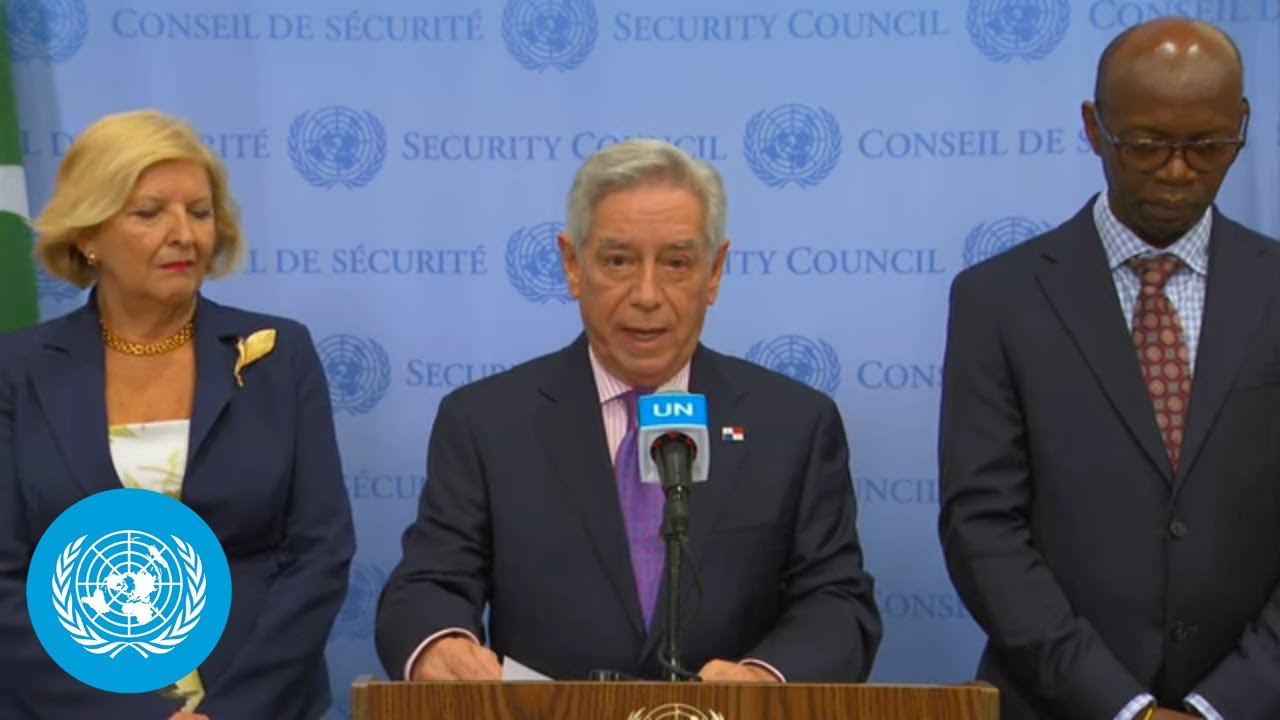
Speaking on behalf of the group, Panama’s ambassador to the UN, Eloy Alfaro de Alba, called for accountability and greater support for survivors. “We call for an end to impunity for sexual and gender-based violence and demand accountability as the norm for these crimes,” he said. “We stress the urgent need for sustained, flexible and predictable funding for victims and survivor-centered responses, including through a multi-partner Trust Fund on CRSV.”

For more Information or to watch the video on YouTube, click here.

Wreath-laying ceremony for the observance of the 22nd anniversary of the bombing of UNHQ in Baghdad

Wreath-laying ceremony for the observance of the 22nd anniversary of the bombing of UNHQ in Baghdad

Hier klicken, um den Inhalt von YouTube anzuzeigen.
Learn more in YouTube’s privacy policy.

The commemoration of the bombing of the United Nations headquarters in Baghdad will be observed with a brief ceremony organized by the UN Staff Union’s Standing Committee on the Security and Independence of the International Civil Service.

Mr. Atul Khare, Under-Secretary-General, Department of Operational Support (accompanied by survivors of that bombing) will lead the Wreath-laying ceremony, he will lay a wreath in front of the plaque honouring those who lost their lives in Baghdad, followed by a moment of silence.

The ceremony also marks the observance of World Humanitarian Day designated by the General Assembly in 2008 to coincide with the date of the bombing in Baghdad. The Day also honours humanitarian aid workers who have been killed or injured in the course of their work.

For more Information or to watch the video on YouTube, click here.
World Humanitarian Day 2025 – USG Message | United Nations

World Humanitarian Day 2025 – USG Message | United Nations

Hier klicken, um den Inhalt von YouTube anzuzeigen.
Learn more in YouTube’s privacy policy.

On World Humanitarian Day, USG Gilles Michaud speaks from Gaza, honoring humanitarian workers and calling for their protection. Local colleagues—who make up 90% of the workforce—are the backbone of life-saving operations worldwide.

For more Information or to watch the video on YouTube, click here.
Conflict-Related Sexual Violence – Joint Security Council Media Stakeout | United Nations

Conflict-Related Sexual Violence – Joint Security Council Media Stakeout | United Nations

Hier klicken, um den Inhalt von YouTube anzuzeigen.
Learn more in YouTube’s privacy policy.

Comments to the media by Eloy Alfaro de Alba, Permanent Representative of Panama to the United Nations, and Security Council President for the month of August, on behalf of the signatories of the Shared Commitments on Women, Peace and Security (WPS), on Conflict-Related Sexual Violence.

For more Information or to watch the video on YouTube, click here.
World Humanitarian Day: Attacks on aid workers hit new records

World Humanitarian Day: Attacks on aid workers hit new records

Hier klicken, um den Inhalt von YouTube anzuzeigen.
Learn more in YouTube’s privacy policy.

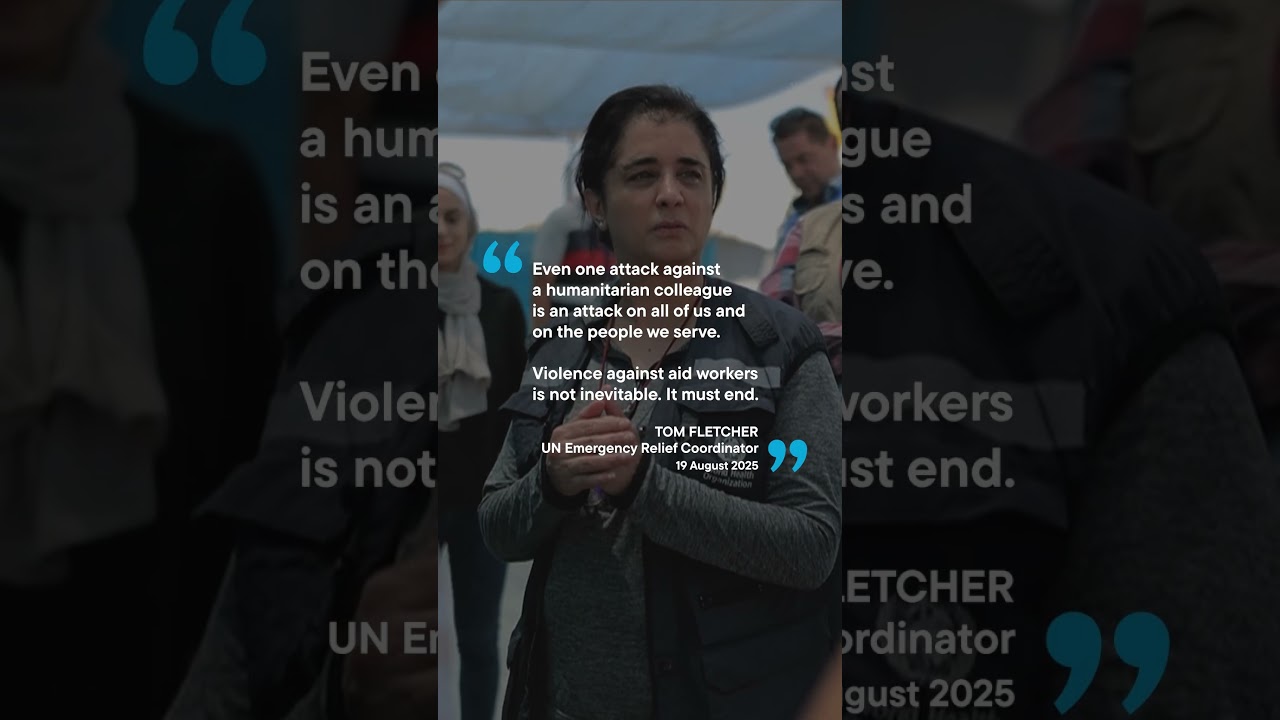
On this World Humanitarian Day, aid workers and their supporters commemorate those killed and stand in solidarity with those serving people in need, demanding urgent protection for civilians and aid operations.

Attacks on humanitarian workers, assets and operations violate international humanitarian law and undermine the lifelines that sustain millions of people trapped in war and disaster zones.

For more Information or to watch the video on YouTube, click here.
World Humanitarian Day 2025 – UN Chief message | United Nations

World Humanitarian Day 2025 – UN Chief message | United Nations

Hier klicken, um den Inhalt von YouTube anzuzeigen.
Learn more in YouTube’s privacy policy.

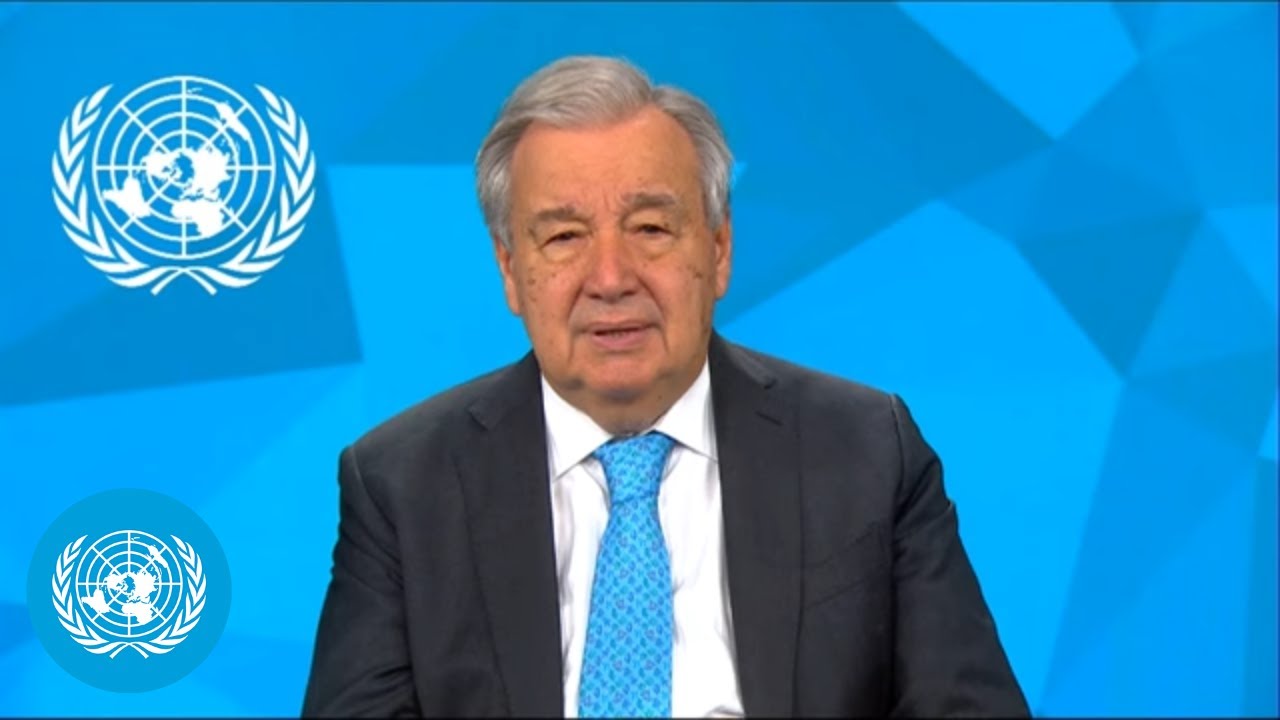
Video message by António Guterres, Secretary-General of the United Nations, on World Humanitarian Day 2025.

“Humanitarian workers are the last lifeline for over 300 million people caught in conflict or disaster.
Yet, funding for that lifeline is drying up.

And those who provide humanitarian aid are increasingly under attack.
Last year, at least 390 aid workers – a record high – were killed across the world.

From Gaza to Sudan to Myanmar and beyond.
International law is clear: humanitarians must be respected and protected. They can never be targeted.

This rule is non-negotiable and is binding on all parties to conflict, always and everywhere.
Yet red lines are crossed with impunity.

Governments have pledged action – and the Security Council has laid out a path to protect
humanitarians and their lifesaving work.

The rules and tools exist. What is missing is political will – and moral courage.

On this World Humanitarian Day, let’s honour the fallen with action:

To protect every aid worker – and invest in their safety.
To stop the lies that cost lives.

To strengthen accountability and bring perpetrators to justice.
To end arms flows to parties that violate international law.

Together, let us say in one voice: An attack on humanitarians is an attack on humanity.
And let’s ”.

More info: https://www.un.org/en/observances/humanitarian-day

For more Information or to watch the video on YouTube, click here.
Sudan/South Sudan: Escalating Violence & Stalled Peace Process | United Nations

Sudan/South Sudan: Escalating Violence & Stalled Peace Process | United Nations

Hier klicken, um den Inhalt von YouTube anzuzeigen.
Learn more in YouTube’s privacy policy.

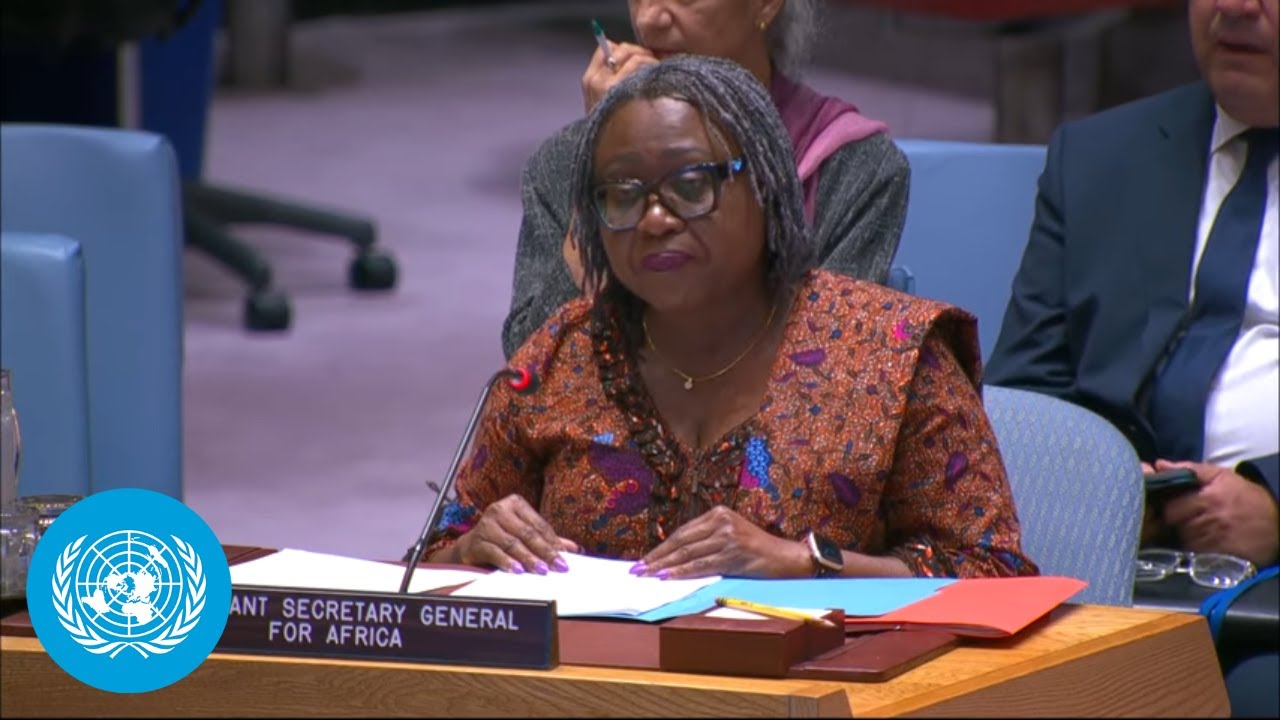
The Assistant Secretary-General for Africa Martha Ama Akyaa Pobee today (18 Aug) told the Security Council that there has been “a continued erosion of the gains previously made in the peace process” in South Sudan, including “an escalation of political and subnational violence and stagnation in the implementation of the Peace Agreement.”

Pobee said the international community has “repeatedly called for a cessation of hostilities, de-escalation and return to dialogue. However, she added, they “have not yielded any concrete response” and instead, “a pattern of violations and unilateral actions persists, which continues to undermine the ability of the Government of national unity to implement the Agreement.”

If this trend continues, she said, “it will likely lead to a shift in conflict dynamics, from subnational and community-based violence to a more complex landscape shaped by ethnic divisions involving signatory parties and other actors, including those from neighbouring countries.”

Pobee called on the parties “to unblock the current political deadlock by fully recommitting to the Cessation of Hostilities Agreement, releasing the political detainees, engaging in direct high-level dialogue, and recommit implementing an inclusive peace process, particularly on key issues such as transitional security arrangements, transitional justice, constitution-making, and elections.”

The Interim Chairperson of the Reconstituted Joint Monitoring and Evaluation Commission (RJMEC) George Aggrey Owinow, briefing remotely from Juba, said, “the current situation and trajectory of the country, if not urgently addressed, risks to reverse all that has been gained and may lead to a collapse” of the peace agreement, “which could return the country back to an armed conflict.”

The RJMEC and its partners, Aggrey Owinow said, “have repeatedly called for constructive dialog, de-escalation of tensions, addressed the issues of detainees and returned to full and implementation” of the agreement.

For his part, South Sudan’s Ambassador Sabino Edward Nyawella Amaikweytold the Council that “South Sudan remains committed to ensuring that any obstacles – real or perceived – to and UNMISS operations are addressed in good faith and without delay.”

Nyawella Amaikweytold confirmed that “any such situations could either be attributed to our efforts to ensuring safety of the mission’s assets and or personnel, or they are merely due to lack of information sharing, or the capacity of the individuals involved. It is never a policy of the government of the Republic of South Sudan to hinder UNMISS mandate.”

The Agreement on the Roadmap to a Peaceful and Democratic End of the Transitional Period of the Agreement on the Resolution of the Conflict in the Republic of South Sudan (R-ARCSS) was concluded and signed on 12 September 2018 and was scheduled to end after a period of 44 months.

For more Information or to watch the video on YouTube, click here.