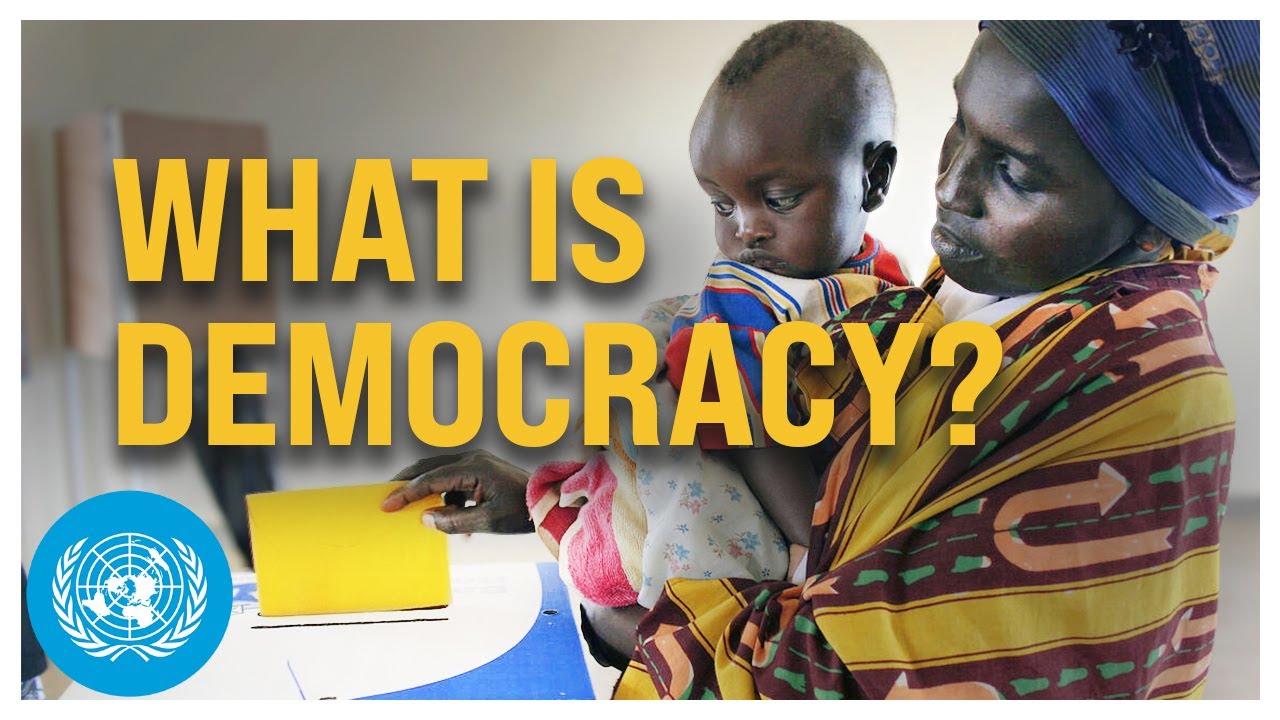
Today, democracy faces mounting challenges: mis and disinformation, shrinking media freedom, and weakening accountability. The remedy is engagement—vote, participate, and follow up with representatives so that promised policies guide governance. The United Nations has upheld democratic principles from the Charter and the Universal Declaration of Human Rights to the Sustainable Development Goals. Through the United Nations Democracy Fund, the UN has supported more than 1,000 projects in over 130 countries, from voter education to civic monitoring. Democracy is not a destination; it is a daily act.
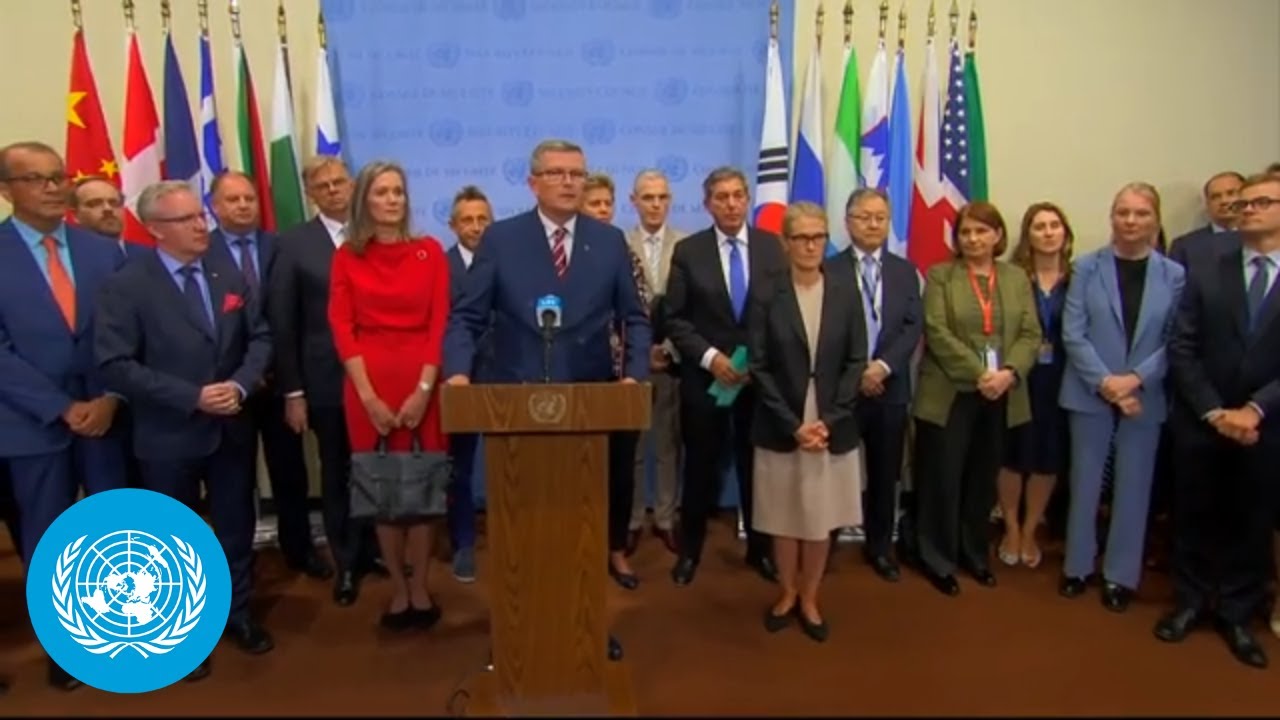
Joint Press Encounter ahead of the Security Council Meeting on “Threats to International Peace and Security”, delivered by Marcin Bosacki, Deputy Minister of Foreign Affairs of Poland.
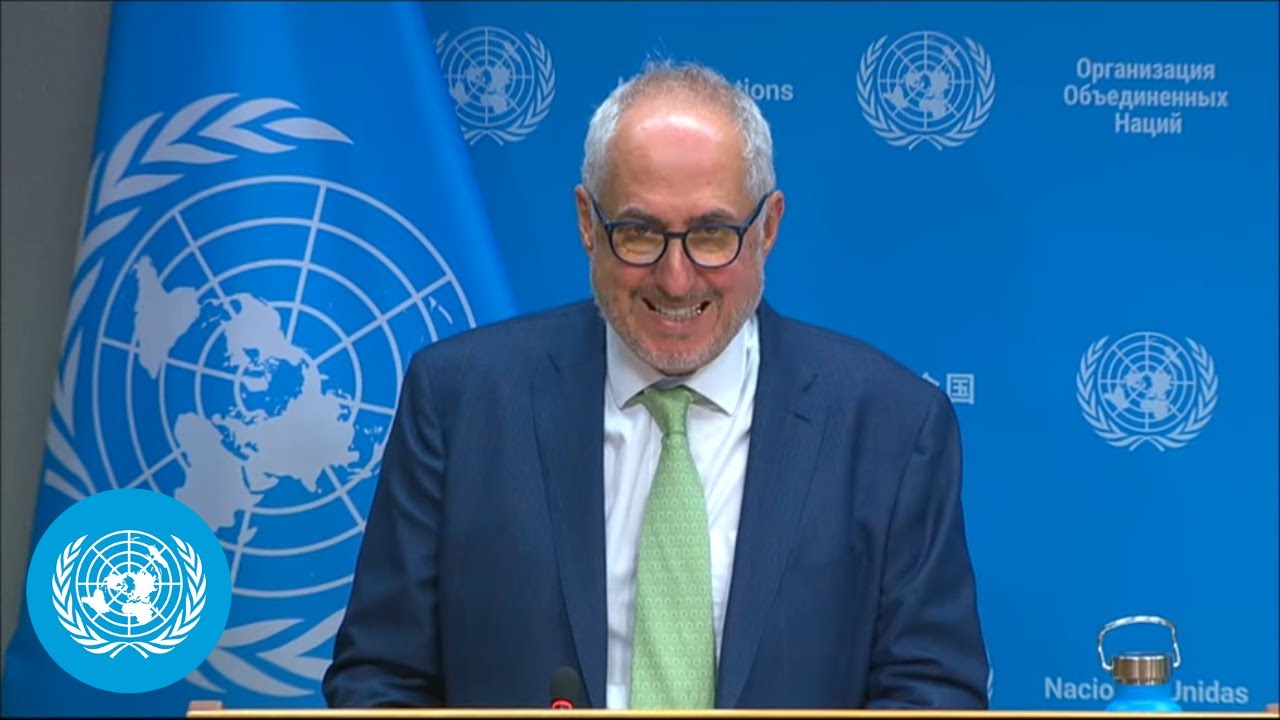
Noon Briefing by Stéphane Dujarric, Spokesperson for the Secretary-General.
Highlights:
– Peace Bell
– Occupied Palestinian Territory
– UNIFIL
– Ukraine
– Security Council/Afternoon
– Syria/Security Council
– South Sudan
– Afghanistan
– Myanmar
– Democratic People’s Republic of Korea
– South-South Cooperation
– Financial Contribution
PEACE BELL
The Secretary-General this morning rang in the 80th session of the General Assembly by ringing the Peace Bell at UN Headquarters.
He warned that today, peace is under siege. Conflicts are multiplying. Civilians are suffering. Human rights and international law are being trampled.
He said that we must act to silence the guns and amplify diplomacy.
Mr. Guterres said that the Peace Bell reminds us that even the smallest contributions can forge something enduring. Even in a fractured world, we can come together to let peace ring, he said.
OCCUPIED PALESTINIAN TERRITORY
The Office for the Coordination of Humanitarian Affairs reports that heavy strikes continue across Gaza City, hitting buildings, houses and tents, and further adding to the already devastating toll on civilians. Over a span of 24 hours – by yesterday at 2 p.m. local time – colleagues monitoring population movements counted almost 11,000 people moving from northern Gaza southwards.
Along those displacement routes, our teams are stationed at three points, providing direct support or referral services to children who have been injured, orphaned or separated from their caregivers.
While multiple sites providing services have had to suspend operations or relocate, we are helping humanitarian partners keep community kitchens open, distribute clean water, and provide healthcare to people in Gaza city and elsewhere across the Strip.
Yesterday, a UN team successfully delivered fuel to a series of critical service providers in Gaza City. This included hospitals and other health facilities, as well as installations supporting water pumping, trucking and desalination, and the management of solid waste.
OCHA says that the humanitarian community remains committed to serving people in need wherever they are, based on what they need, and regardless of whether parties have labelled the area they’re sheltering in as “dangerous,” “humanitarian” or otherwise.
In a statement today, UNICEF reported that over 10,000 children in Gaza City have been diagnosed with acute malnutrition in the past two months alone. The agency warned that if disconnected from their treatment, there is a high risk some of the 2,400 children currently being treated for severe acute malnutrition in the area could starve to death.
U.N.I.F.I.L.
In southern Lebanon, following request from the Government of Lebanon, UNIFIL deminers started humanitarian demining in two minefields this week, near Blida and Maroun ar-Ra’s. Together, these minefields spread across 18,000 square metres. Such operations are crucial in minimizing risks to civilians who live in or visit areas close to the Blue Line.
As part of the Mission’s ongoing efforts to build capacity of the Lebanese Armed Forces, UNIFIL Maritime Task Force ships started hosting Lebanese Navy officers this week for maritime operations. In another training activity this week, Lebanese Army personnel learned about detecting and handling unexploded ordnance, improvised explosive devices and other landmines.
UNIFIL peacekeepers yesterday discovered an unauthorized sub-munition and a 120mm grenade in Sector East.
Earlier this week peacekeepers found a weapons cache in Sector East, containing an artillery canon, sub-munitions, aviation bombs and explosives. All of them were referred to the Lebanese Armed Forces.
UNIFIL peacekeepers continue to observe daily Israel Defense Forces military activities in the area of operations. Yesterday, they observed 71 Israel Defense Forces vehicles moving near Aarab el Louaize. They also reported direct fire across the Blue Line from Israeli positions, impacting in Markaba and Houla in Sector East.
Full Highlights: https://www.un.org/sg/en/content/noon-briefing-highlight?date%5Bvalue%5D%5Bdate%5D=12%20September%202025
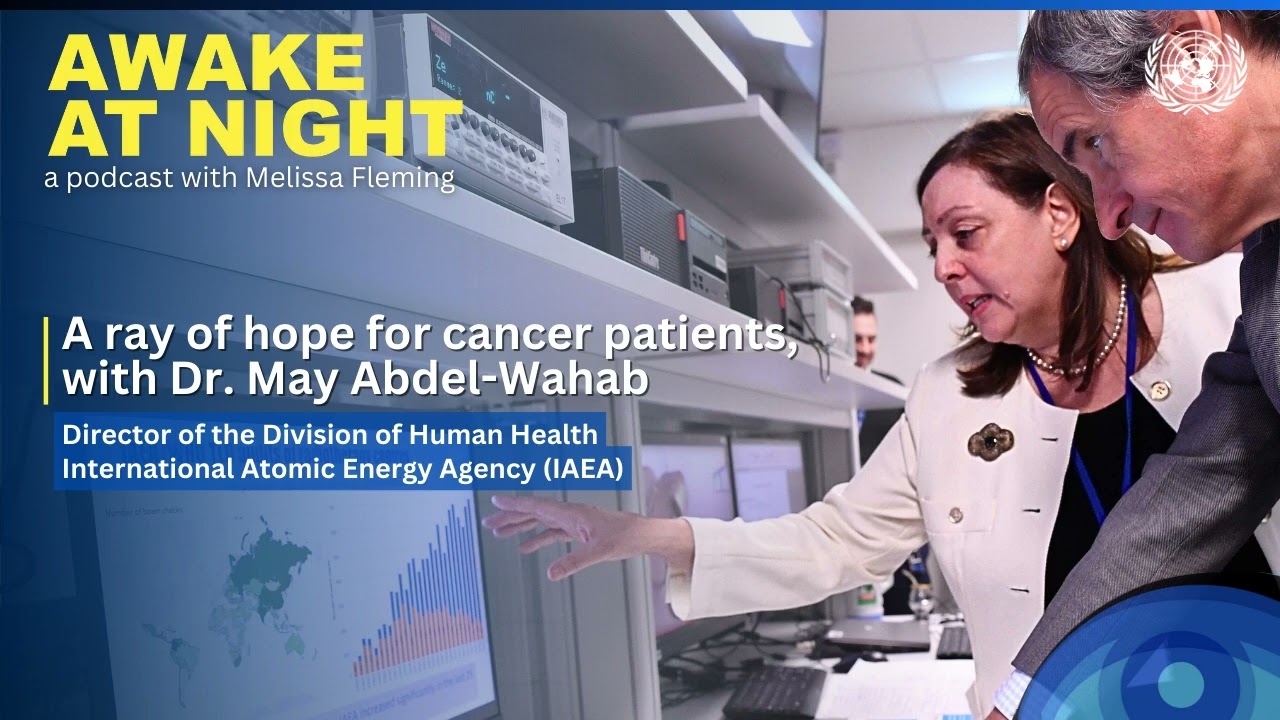
Whenever a new cancer patient entered her office in the U.S., Dr. May Abdel-Wahab knew she could probably save their life. Now, as Director of the Division of Human Health at the International Atomic Energy Agency (IAEA), she delivers hope to patients in places where treatment has until now been unavailable.
“So much can be done to treat cancer, but too many people in the developing world have no access to care. It’s unthinkable. It’s unfair.”
With global cancer cases expected to mount in the next two decades, the IAEA is equipping low- and middle income countries with training and radiotherapy to help more people survive the disease. In this episode, Dr. May Abdel-Wahab reflects on the outlook for cancer outcomes around the world, the challenges of anchoring new treatment centres, and shares how her upbringing taught her to see the world as one human family.
“Every person that walks through the door is a new person, a new friend […] if they leave the exam room with a smile and feeling hope, then you’ve done a good job.”
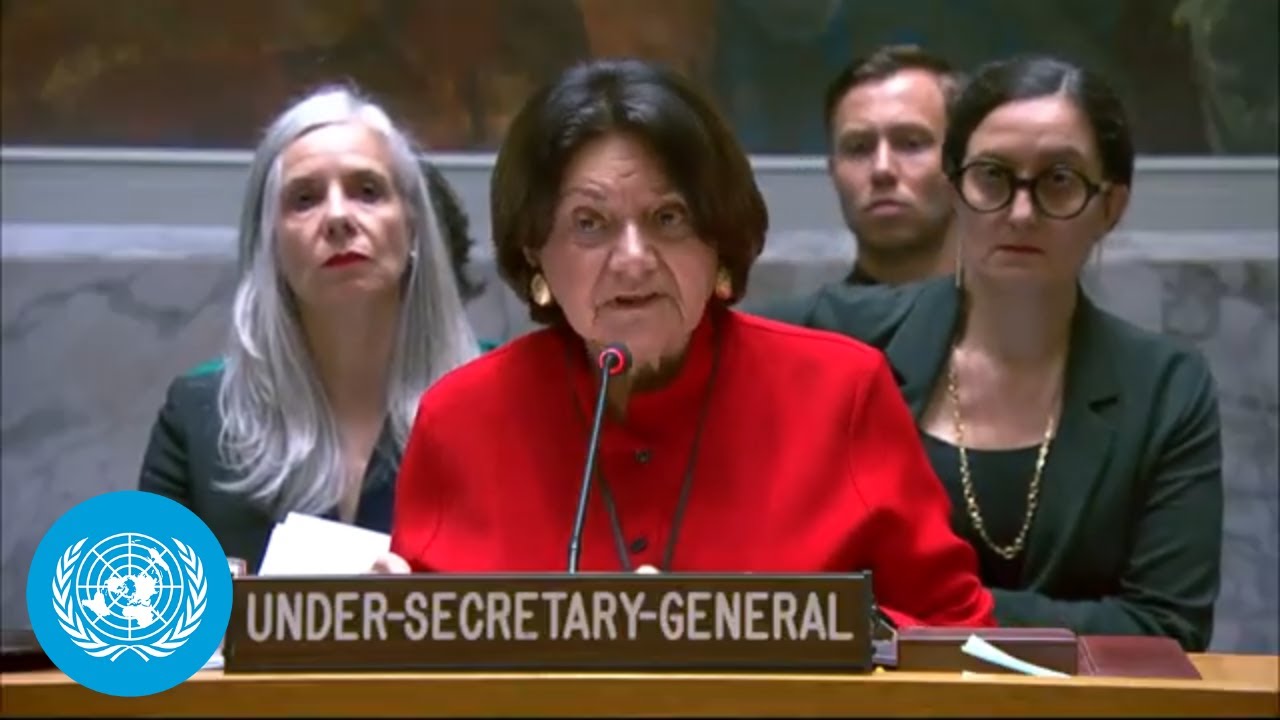
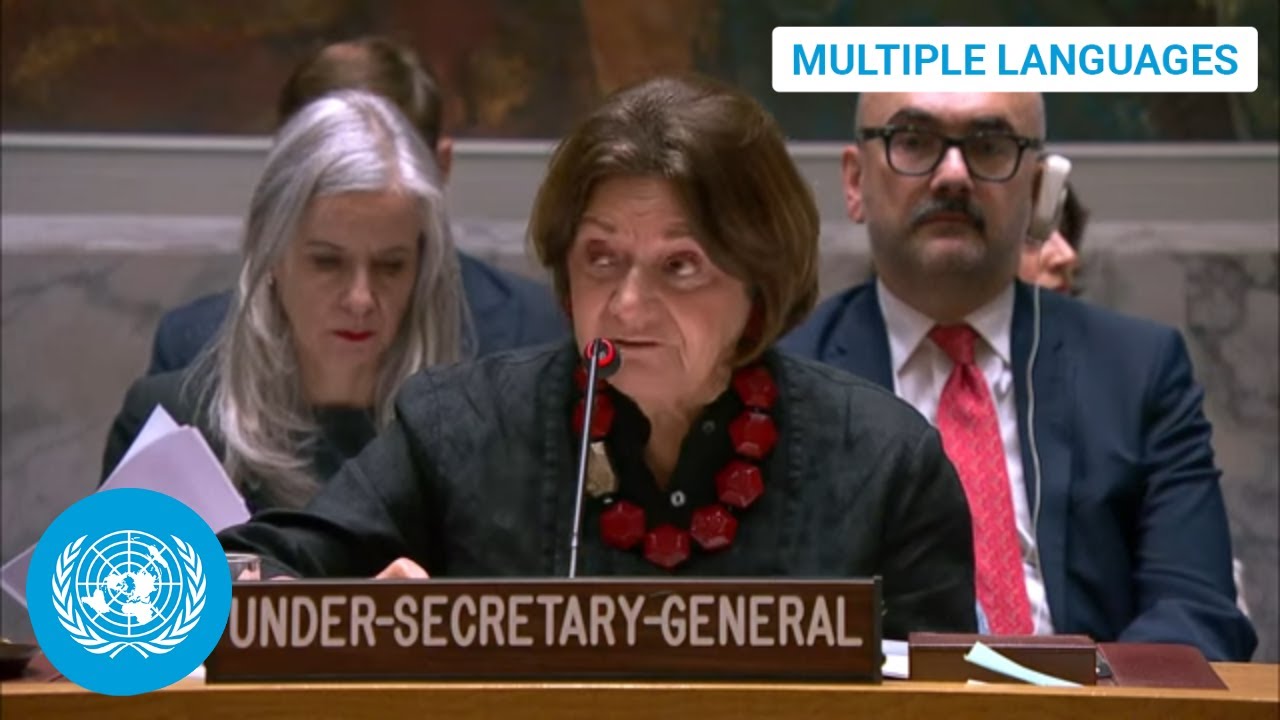
Briefing by Rosemary DiCarlo, Under-Secretary-General for Political and Peacebuilding Affairs, on the situation in the Middle East.
—————–
Also addressing the Council today, Rosemary A. DiCarlo, United Nations Under-Secretary-General for Political and Peacebuilding Affairs, said, “Israel’s airstrikes in Doha, Qatar, shocked the world. This alarming escalation, which struck individuals reportedly gathered to discuss a ceasefire and hostage release deal, constitutes a violation of Qatar’s sovereignty and territorial integrity.”
Ms. DiCarlo stressed, “Any action that undermines mediation and dialogue weakens confidence in the very mechanisms we depend on for conflict resolution. Preserving the integrity of negotiation channels is crucial to fostering trust and safeguarding the norms that underpin diplomacy.”
She further warned, “The Israeli attack on Doha potentially opens a new and perilous chapter in this devastating conflict, seriously threatening regional peace and stability.”
The Under-Secretary-General emphasized, “Durable and just solutions to the crises in the Middle East will not come out of more violence and more fighting. The urgency of a ceasefire and hostage release deal in Gaza has never been greater.”
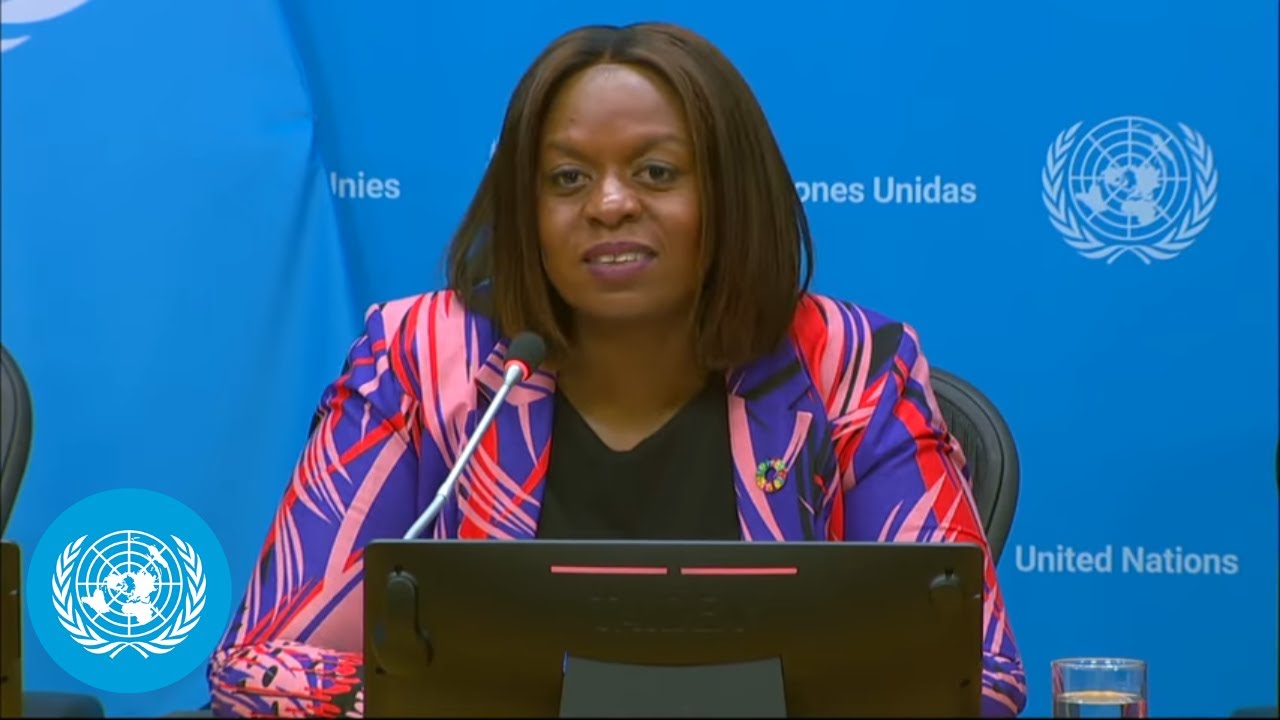
Press Conference by Sanda Ojiambo, Assistant Secretary-General of UN Global Compact, in advance of the flagship event of the Global Africa Business Initiative (GABI), which is taking place on Sunday and Monday 21-22 September at the Marriot Marquis in Times Square. This year’s Unstoppable Africa event will feature half a dozen Heads of State, CEOs, investors, creative stars of sports and screen and will be opened by the Secretary-General and the Chairperson of the African Union.
Join us LIVE for the 80th United Nations General Assembly debate! From 23 – 27 and 29 September 2025. Heads of State and Government, ministers and advocates come together to explore solutions to intertwined global challenges to advance peace, security, and sustainable development.
The theme for the general debate of the 80th session of the General Assembly is “Better together: 80 years and more for peace, development and human rights”.
Join us LIVE for the 80th United Nations General Assembly debate! From 23 – 27 and 29 September 2025. Heads of State and Government, ministers and advocates come together to explore solutions to intertwined global challenges to advance peace, security, and sustainable development.
The theme for the general debate of the 80th session of the General Assembly is “Better together: 80 years and more for peace, development and human rights”.
Join us LIVE for the 80th United Nations General Assembly debate! From 23 – 27 and 29 September 2025. Heads of State and Government, ministers and advocates come together to explore solutions to intertwined global challenges to advance peace, security, and sustainable development.
The theme for the general debate of the 80th session of the General Assembly is “Better together: 80 years and more for peace, development and human rights”.
Whenever a new cancer patient entered her office in the U.S., Dr. May Abdel-Wahab knew she could probably save their life. Now, as Director of the Division of Human Health at the International Atomic Energy Agency (IAEA), she delivers hope to patients in places where treatment has until now been unavailable.
“So much can be done to treat cancer, but too many people in the developing world have no access to care. It’s unthinkable. It’s unfair.”
With global cancer cases expected to mount in the next two decades, the IAEA is equipping low- and middle income countries with training and radiotherapy to help more people survive the disease. In this episode, Dr. May Abdel-Wahab reflects on the outlook for cancer outcomes around the world, the challenges of anchoring new treatment centres, and shares how her upbringing taught her to see the world as one human family.
“Every person that walks through the door is a new person, a new friend […] if they leave the exam room with a smile and feeling hope, then you’ve done a good job.”
[00:00] Introduction
[01:13] Peaceful uses of nuclear science
[02:37] Confronting inequality in cancer care
[08:06] Health is a human right
[09:50] What keeps Dr. May awake at night
[12:41] Harnessing AI for cancer treatment
[13:58] Using nuclear science to tackle malnutrition
[16:39] From chemotherapy under a tree to modern centres
[19:03] Transitioning from patient care to global cancer work
[23:38] Early inspirations and familial influences
[25:27] Choosing radiation oncology
[27:21] Finding hope in every case
[28:37] The importance of human connection in medicine
[29:55] Coping with loss and limitations
[32:42] Hope for unity and progress
[34:04] Closing remarks
Listen to more Awake at Night episodes: https://music.youtube.com/playlist?list=PLwoDFQJEq_0b6hu1e8oxsch9W0D7vkNqt
About Awake at Night
Hosted by Melissa Fleming, UN Under-Secretary-General for Global Communications, the podcast ‘Awake at Night’ is an in-depth interview series focusing on remarkable United Nations staff members
Press conference by Carmen Burbano, WFP’s Director of School Meals and Social Protection and Professor Donald Bundy, co-editorial lead for The State of School Feeding Worldwide report, Director of the Research Consortium for School Health and Nutrition, Professor of Epidemiology and Development at the London School of Hygiene & Tropical Medicine, and Senior Adviser to the UN World Food Programme on school meals.
Noon Briefing by Stéphane Dujarric, Spokesperson for the Secretary-General.
Highlights:
– Occupied Palestinian Territory
– Gaza
– Ukraine
– Haiti
– Afghanistan
– Sudan
– Democratic Republic of the Congo
– Burkina Faso and Nigeria
– Nepal
– Health
– Financial Contribution
OCCUPIED PALESTINIAN TERRITORY
Turning to the situation in Gaza, the Office for the Coordination of Humanitarian Affairs says that the Israeli military reportedly hit more buildings in Gaza City today. Families gathered in the open after being warned that one of those buildings would be hit. While the Israeli military had instructed them to move south to Khan Younis, OCHA says many of them were unsure where to go next.
Since yesterday, the entire city has been under a blanket displacement order. Issuing displacement orders does not absolve parties to a conflict of their responsibilities to protect civilians in the conduct of their hostilities.
Today and yesterday, our colleagues tracking the movement of people in Gaza recorded more than 10,000 displacements from northern to southern areas, mostly in the direction of Khan Younis. People are using any means possible, including donkey carts.
As some families flee, many others are unable to do so because of health and safety concerns or high transportation costs.
Today, several primary healthcare centres and outpatient therapeutic feeding programs in Gaza City had to suspend services amid ongoing strikes. And the UN Population Fund warns that some 55,000 women are having to navigate pregnancy and childbirth amid perilous and traumatic conditions. Midwives continue to provide care, often under fire and with only the light of a mobile phone.
OCHA reiterates that under international humanitarian law, civilians and civilian infrastructure must always be protected and should never be a target. Civilian sites must also never be used to shield military operations.
GAZA
The Humanitarian Country Team in the Occupied Palestinian Territory, which brings together UN agencies and more than 200 NGOs, today said that we are witnessing a dangerous escalation in Gaza city, where Israeli forces have stepped up their operations and ordered everyone to move south.
The team says that nearly one million people are now left with no safe or viable options – neither the north nor the south offers safety.
Leaving northern Gaza means paying prohibitive costs for transport and safe passage, navigating roads that are barely passable, finding a place to sleep either in the open air or in overcrowded displacement sites, and continued struggles to secure food, water, medical care, and shelter.
The Humanitarian Country Team adds that amid ongoing Israeli impediments, the current levels of humanitarian support are wholly insufficient.
Humanitarian access must be expanded and sustained to include direct routes to both the north and the south.
UKRAINE
The Secretary-General is following with great concern the reports that Russian military drones entered Poland overnight, in violation of Poland’s airspace, resulting in damage to residential areas in the country.
The incident, which reportedly took place during another large-scale Russian drone and missile attack on Ukraine, again underlines the regional impact and real risk of expansion of this devastating conflict. There is an urgent need for a full, immediate and unconditional ceasefire and for a just, comprehensive, and sustainable peace in Ukraine – one that fully upholds Ukraine’s sovereignty, its independence and its territorial integrity, in line with the Charter of the United Nations, international law and relevant UN resolutions.
Full Highlights: https://www.un.org/sg/en/content/ossg/noon-briefing-highlight?date%5Bvalue%5D%5Bdate%5D=10%20September%202025
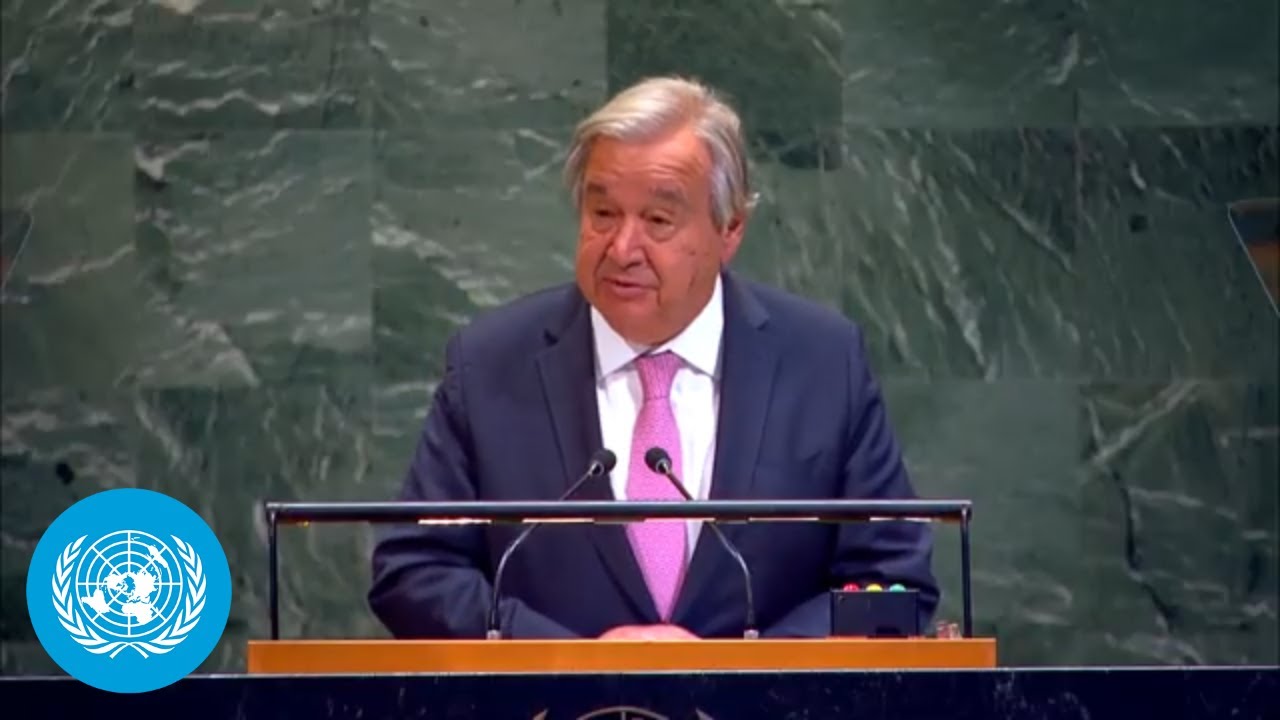
Remarks by Mr. António Guterres, Secretary-General of the United Nations, at the 1st plenary meeting of the 80th session of the General Assembly.
—–
Secretary-General António Guterres congratulated on Baerbock’s election — which holds added significance as she became only the fifth woman in history to be elected to this important role.
Addressing the General Assembly, Guterres said, “The United Nations provides the place. The Charter provides the tools. And the Pact for the Future, adopted last September, provided a shot in the arm for the multilateral system and the values that have defined this organization from day one.”
“The Pact reminds us that, eight decades on, we can and must continue rising above division and working together. To make our world a better, more peaceful and prosperous place for all,” he added.
The Secretary-General called on all Member States to “summon the same resolve and spirit of determination that brought delegates to San Francisco in 1945.”
“Let’s live up to their vision — and most importantly, to the expectations and hopes of today’s people around the world,” he concluded.
The debate of the 80th session will open on Tuesday, 23 September, continue through Saturday, 27 September, and conclude on Monday, 29 September 2025.
Briefing by Rosemary DiCarlo, Under-Secretary-General for Political and Peacebuilding Affairs, on the future of Peace Operations.
—-
Also addressing the Council today, Rosemary A. DiCarlo, UN Under-Secretary-General for Political and Peacebuilding Affairs, said, “There is one fundamental fact that no review, no matter how extensive or ambitious, can change: the failure or weak implementation of mandates is often related to the lack of political support for such operations – in the countries where they are deployed, among regional countries and in the Council, itself. We will therefore need to engage with a laser like focus on bringing the emphasis back to the political questions at the heart of each conflict and finding multilateral responses to them.”
Cookies are used on our website to make your use as comfortable as possible. These so-called essential cookies are stored in your browser because they are essential for the basic functions of the website.
We also use third-party cookies for online advertising on our sites. These cookies are only stored in your browser with your consent. By clicking here you agree to the use of these additional cookies or you can reject them:
This website uses cookies to improve your experience while you navigate through the website. Out of these, the cookies that are categorized as necessary are stored on your browser as they are essential for the working of basic functionalities of the website. We also use third-party cookies that help us analyze and understand how you use this website. These cookies will be stored in your browser only with your consent. You also have the option to opt-out of these cookies. But opting out of some of these cookies may affect your browsing experience.
Necessary cookies are absolutely essential for the website to function properly. These cookies ensure basic functionalities and security features of the website, anonymously.
Cookie
Duration
Description
cookielawinfo-checkbox-analytics
11 months
This cookie is set by GDPR Cookie Consent plugin. The cookie is used to store the user consent for the cookies in the category "Analytics".
cookielawinfo-checkbox-functional
11 months
The cookie is set by GDPR cookie consent to record the user consent for the cookies in the category "Functional".
cookielawinfo-checkbox-necessary
11 months
This cookie is set by GDPR Cookie Consent plugin. The cookies is used to store the user consent for the cookies in the category "Necessary".
cookielawinfo-checkbox-others
11 months
This cookie is set by GDPR Cookie Consent plugin. The cookie is used to store the user consent for the cookies in the category "Other.
cookielawinfo-checkbox-performance
11 months
This cookie is set by GDPR Cookie Consent plugin. The cookie is used to store the user consent for the cookies in the category "Performance".
viewed_cookie_policy
11 months
The cookie is set by the GDPR Cookie Consent plugin and is used to store whether or not user has consented to the use of cookies. It does not store any personal data.
Functional cookies help to perform certain functionalities like sharing the content of the website on social media platforms, collect feedbacks, and other third-party features.
Performance cookies are used to understand and analyze the key performance indexes of the website which helps in delivering a better user experience for the visitors.
Analytical cookies are used to understand how visitors interact with the website. These cookies help provide information on metrics the number of visitors, bounce rate, traffic source, etc.
Advertisement cookies are used to provide visitors with relevant ads and marketing campaigns. These cookies track visitors across websites and collect information to provide customized ads.