Me at the zoo | YouTube

If you only have one dimension available, things can get tiresome quickly. But maybe this coin has two sides. The creativity must not be limited. And that was exactly the idea when a couple of friends had something to discuss: Steve Chen, Chad Hurley, and Jawed Karim, who were all early employees of PayPal. Hurley had studied design at Indiana University of Pennsylvania, and Chen and Karim studied computer science together at the University of Illinois at Urbana–Champaign.

The inspiration for a new kind of video website obviously first came from Janet Jackson’s role in 2004 Super Bowl incident when her breast was exposed during her performance, and later from the 2004 Indian Ocean tsunami. Karim could not easily find video clips of either event online, which led to the idea of a video sharing site. Hurley and Chen said that the original idea was a video version of an online dating service, and had been influenced by the website Hot or Not. They created posts on Craigslist asking attractive women to upload videos of themselves to YouTube in exchange for a $100 reward. Difficulty in finding enough dating videos led to a change of plans, with the site’s founders deciding to accept uploads of any type of video.

Hurley and Chen developed the idea during the early months of 2005, after they had experienced difficulty sharing videos that had been shot at a dinner party at Chen’s apartment in San Francisco.

The domain name www.youtube.com was activated on February 14, 2005, and the website was developed over the subsequent months. The first YouTube video, titled Me at the zoo, shows co-founder Jawed Karim at the San Diego Zoo. The video was uploaded on April 23, 2005.

You never know where things are going. But maybe it is worth adding a new location to this story. So there is a new department of the ASTROCOHORS CLUB:

ASTROCOHORS CLUB Videos,

starting with a simple visit at the zoo. Because the elephants, you know…

But…

What will you do, when they get you?

What will you do, when they break you?

If you continue, what will you… become?
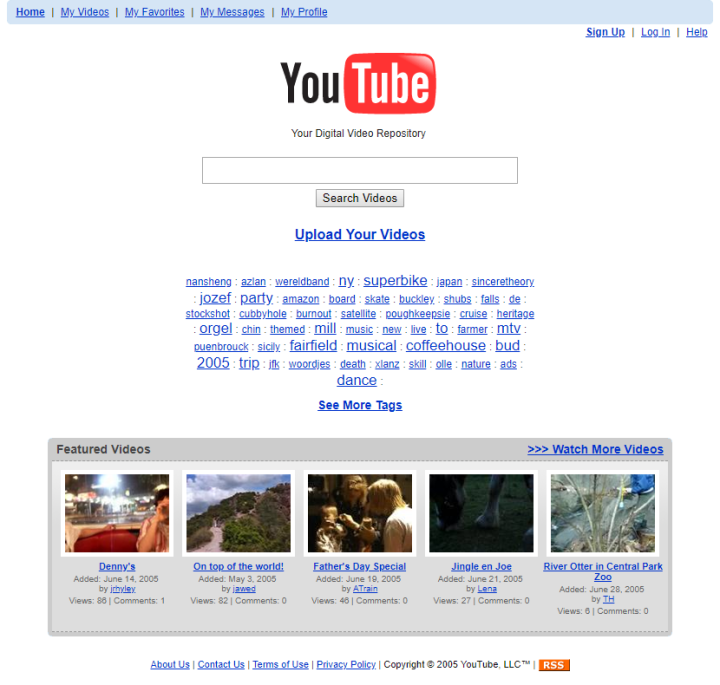

(c) 2005 YouTube

Parts of this article contains information from the Wikipedia article “YouTube“. Text is available under the Creative Commons Attribution-ShareAlike License; additional terms may apply.

Freezing Torture

In the dormitories of Harvard University, a young man named Mark Zuckerberg sat hunched over his computer, peering into the digital realm with a glimmer of ambition in his eyes. Little did he know that his late-night endeavors would soon sow the seeds for what would become one of the most influential and pervasive social platforms in the world—Facebook.

Our tale begins in the early 2000s, a time when the internet was rapidly transforming the way people connected and communicated. Mark, a brilliant computer programmer with a penchant for innovation, saw an opportunity to create a digital space where students could connect, share ideas, and build virtual communities.

Armed with a passion for coding and a burning desire to leave his mark on the world, Mark embarked on a journey to bring his vision to life. With the help of his college roommates, Andrew McCollum, Eduardo Saverin, Dustin Moskovitz, and Chris Hughes, the pieces of the puzzle began to fall into place.

In February 2004, Facebook emerged from the depths of Mark’s dorm room, originally known as “TheFacebook.” It started as an exclusive platform for Harvard students, igniting a spark of excitement and curiosity among the campus population. The concept was simple yet powerful—a digital space where users could create profiles, upload photos, and connect with friends and acquaintances.

As word of this novel platform spread like wildfire, the demand for expansion grew. Mark’s brainchild soon reached other prestigious universities, spreading its roots to Stanford, Columbia, and beyond. With each new expansion, the social network evolved, adapting to the needs and desires of its ever-growing user base.

Hier klicken, um den Inhalt von YouTube anzuzeigen.
Learn more in YouTube’s privacy policy.

But like any great tale, there were hurdles to overcome. Facebook faced challenges in balancing user privacy, dealing with controversies, and fending off competition from other budding social platforms. Yet, through it all, Mark’s relentless determination and the collective spirit of his team propelled Facebook forward, transforming it into a global sensation.

As the platform expanded beyond college campuses, Facebook became a virtual melting pot, bridging gaps between people, cultures, and continents. It evolved from a mere networking tool into a juggernaut of social interaction, encompassing everything from personal connections to business ventures and societal movements.