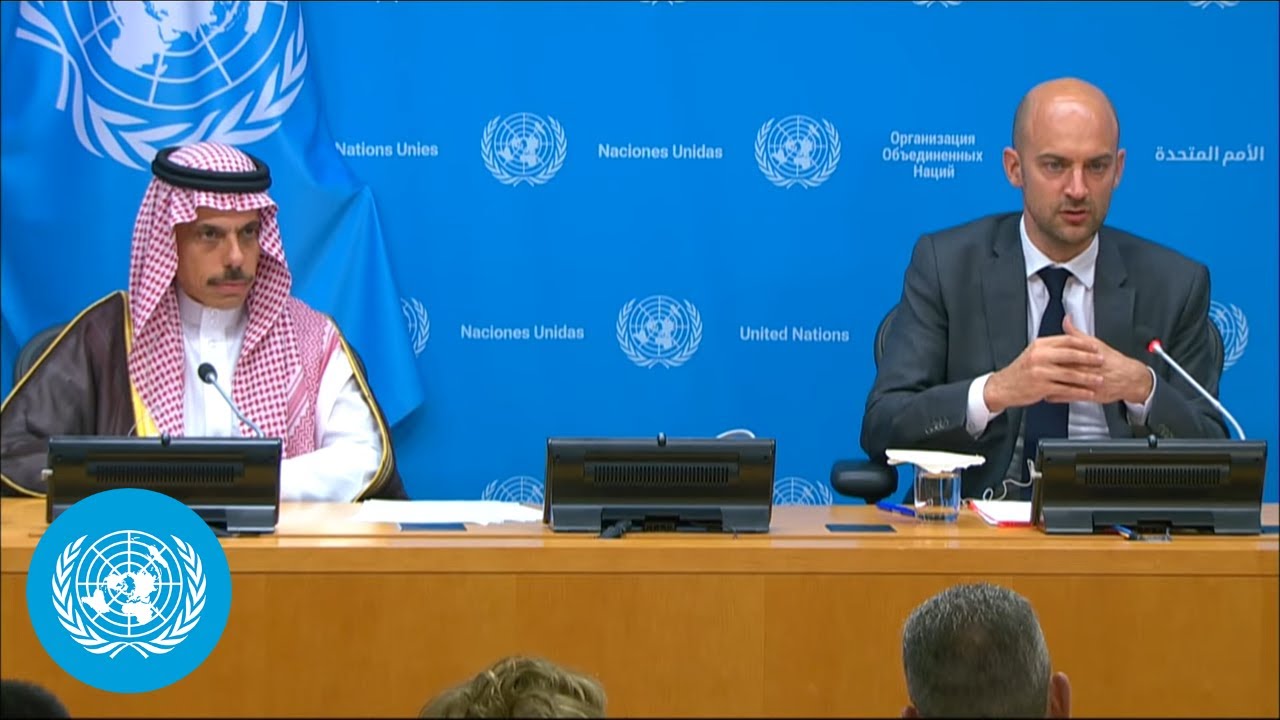
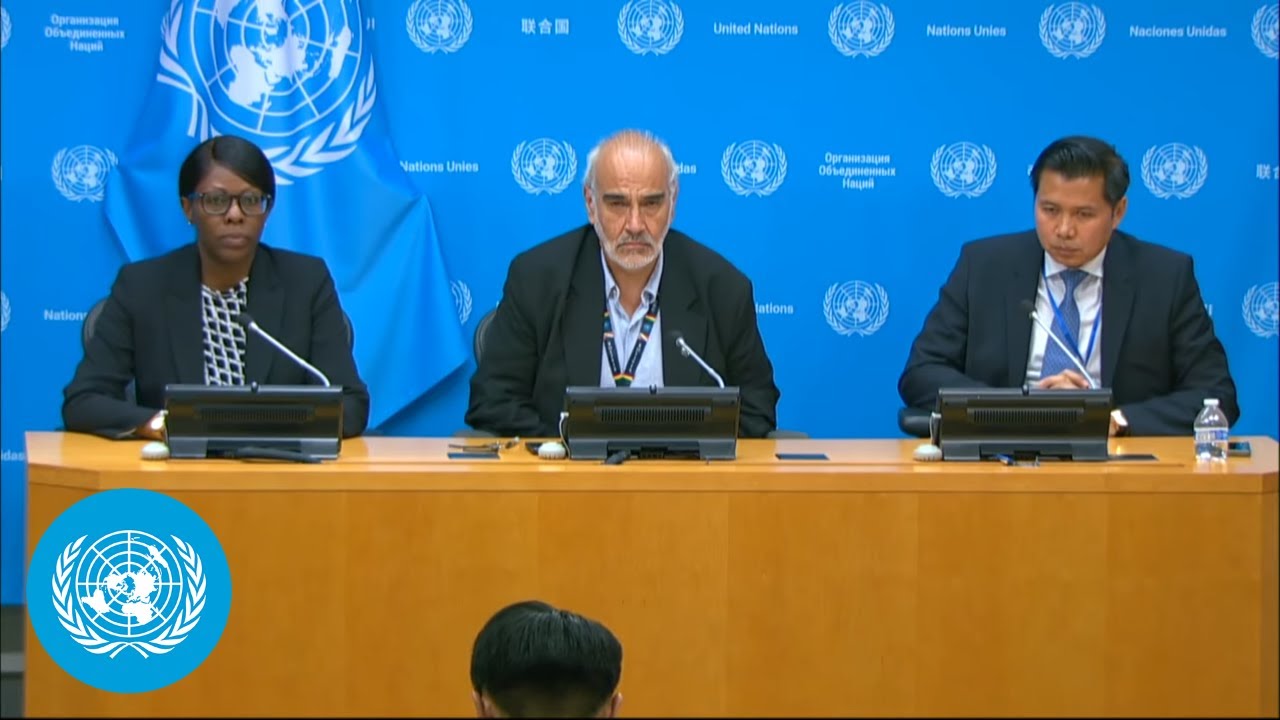
Press Conference by France and Saudi Arabia’s Foreign Ministers on the United Nations High-Level International Conference on “The Peaceful Settlement of the Question of Palestine and the Implementation of the Two-State Solution”.
The number of hungry people in the world decreased slightly in 2024 according to a new United Nations report. Progress, however, was not consistent across the globe, as hunger continued to rise in most subregions of Africa and western Asia.
“Africa has been deteriorating in terms of hunger, while Latin America, especially South America, has been improving, and Asia, especially South Asia driven by India, has been significantly improving,” said Maximo Torero, Chief Economist of the Food and Agriculture Organization of the United Nations, commenting on the outcomes of the report.
The State of Food Security and Nutrition in the World (SOFI 2025) report jointly published by five United Nations specialized agencies indicates that an estimated 8.2 percent of the global population, or about 673 million people, experienced hunger in 2024, down from 8.5 percent in 2023 and 8.7 percent in 2022.
SOFI 2025 indicates that between 638 and 720 million people faced hunger in 2024.
Based on the midpoint estimate of 673 million, this represents a decrease of 15 million people from 2023 and of 22 million from 2022.
Notable improvements are seen in southern Asia, mainly reflecting new data from India, and Latin America. Hunger in Asia fell from 7.9 percent in 2022 to 6.7 percent, or 323 million people, in 2024. Additionally, Latin America and the Caribbean saw undernourishment fall to 5.1 percent, or 34 million people, in 2024, down from a peak of 6.1 percent in 2020.
According to the current projection, 512 million people could be chronically undernourished by 2030, with nearly 60 percent of them in Africa.
SOFI 2025 also examines the causes and consequences of the 2021–2023 food price surge and its impact on food security and nutrition. The report highlights that the global policy response to the COVID-19 pandemic —characterized by extensive fiscal and monetary interventions — combined with the impacts of the war in Ukraine and multiple extreme weather events contributed to recent inflationary pressures.
“The SOFI also show us that the food prices have been increasing more and faster than the prices of other commodities.That means the food inflation has been faster and higher than the non-food inflation. And that, of course, affects the most vulnerable people, which their share of expenditures in food is higher than in other commodities.”
Food inflation has hindered the post-pandemic recovery in food security and nutrition. Since 2020, global food price inflation has consistently outpaced headline inflation. The gap peaked in January 2023, with food inflation reaching 13.6 percent, 5.1 percentage points above the headline rate of 8.5 percent.
Low-income countries have been particularly hit hard by rising food prices. While median global food price inflation increased from 2.3 percent in December 2020 to 13.6 percent in early 2023, it climbed even higher in low-income countries, peaking at 30 percent in May 2023.
The report recommends a combination of policy responses to food price inflation. They include targeted and time-bound fiscal measures, such as social protection programs, to safeguard vulnerable households; credible and transparent monetary policies to contain inflationary pressures; and strategic investments in agrifood R&D, transport and production infrastructure, and market information systems to improve productivity and resilience.
“Private financing will be essential. In everything we do, we cannot just use the governments and IFIs [International Financial Institutions] we also need to atract private financing. And climate financing needs to increase substentialy. In agrifood systems today they are at 4 percents, while the agrifood systems are the ones providing the right to food. So, we need to change that abruptly so that we can have financing that is needed to transform our agrifood systems so that we can assure that there is more availability of healthy diets in the world and the cost of the healthy diet is reduced in the world and that we can accelerate the transmition of decline of the prices of commodities into the final products that we eat.”
Despite rising global food prices and the increasing cost of a healthy diet, the number of people unable to afford a healthy diet fell from 2.76 billion in 2019 to 2.60 billion in 2024. However, the improvement was uneven. In low-income countries, where the cost of a healthy diet rose more sharply than in wealthier countries, the number of people unable to afford one increased from 464 million in 2019 to 545 million in 2024. In lower-middle-income countries (excluding India), the number rose from 791 million in 2019 to 869 million over the same period.
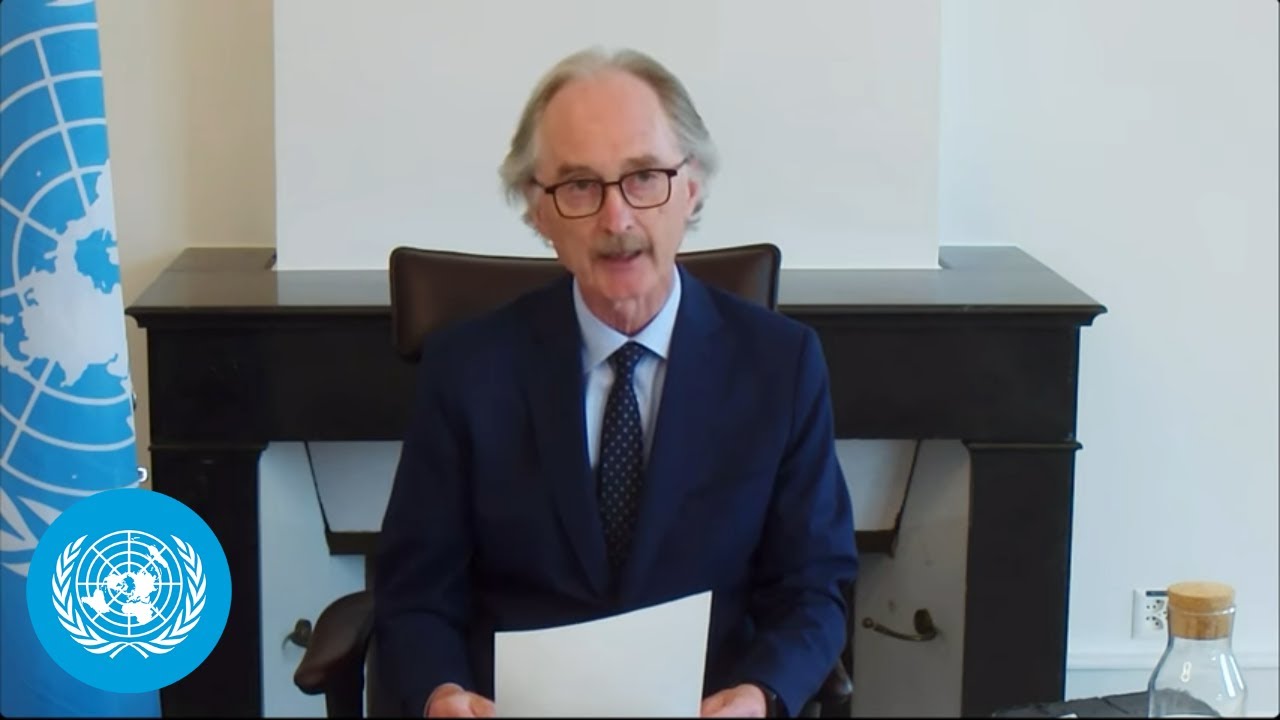
Briefing the Security Council today (Jul 28), the UN Special Envoy for Syria, Geir Pedersen, condemned a deadly outbreak of violence in Syria’s Suweida governorate that left civilians dead and displaced thousands calling it “violence that should not have happened.”
On 12 July, tensions between Bedouin tribes and Druze communities flared into armed clashes, following a series of mutual kidnappings. Syrian authorities deployed security forces to the area, but those forces were “attacked, killed and abducted by Druze groups,” Pedersen said, adding that “there were extremely grave reports of serious violations by security forces against Druze civilians.”
As fighting intensified, Israeli airstrikes targeted Syrian security personnel and armed Bedouin groups in and around Suweida. Israel also struck a Ministry of Defense building and conducted airstrikes near the Presidential Palace in Damascus. “Israel’s strikes caused casualties among civilians and security forces,” Pedersen said.
“I condemn the appalling violations against civilians and combatants in Suweida,” he added. “I also condemn Israel’s intervention and dangerous airstrikes in Suweida and in Damascus.”
The humanitarian fallout has been severe. Edem Wosornu, Director of Operations and Advocacy at the UN humanitarian affairs office (OCHA), said the violence displaced an estimated 175,000 people, roughly a third of Suweida’s population, in an area where “two-thirds of people were already in need of assistance.”
Compounding the crisis, wildfires in the coastal governorate of Lattakia displaced more than 1,100 people and destroyed vital farmland, Wosornu said. She warned that “the fires were exacerbated by the worst drought-like conditions Syria has seen in 36 years,” with key reservoirs now at historically low levels.
Syria’s UN Ambassador, Qusay al-Dahhak, said the country is confronting “multifaceted, complex and serious challenges,” and urged the international community to maintain positive engagement and support.
He also said, “Israeli attacks continue to undermine efforts to achieve recovery and meet the aspirations of our people. The Israeli occupation entity pursues its attempts to impose a new occupation reality by undermining Syria’s national unity, stoking strife and obstructing efforts to achieve security and stability.”
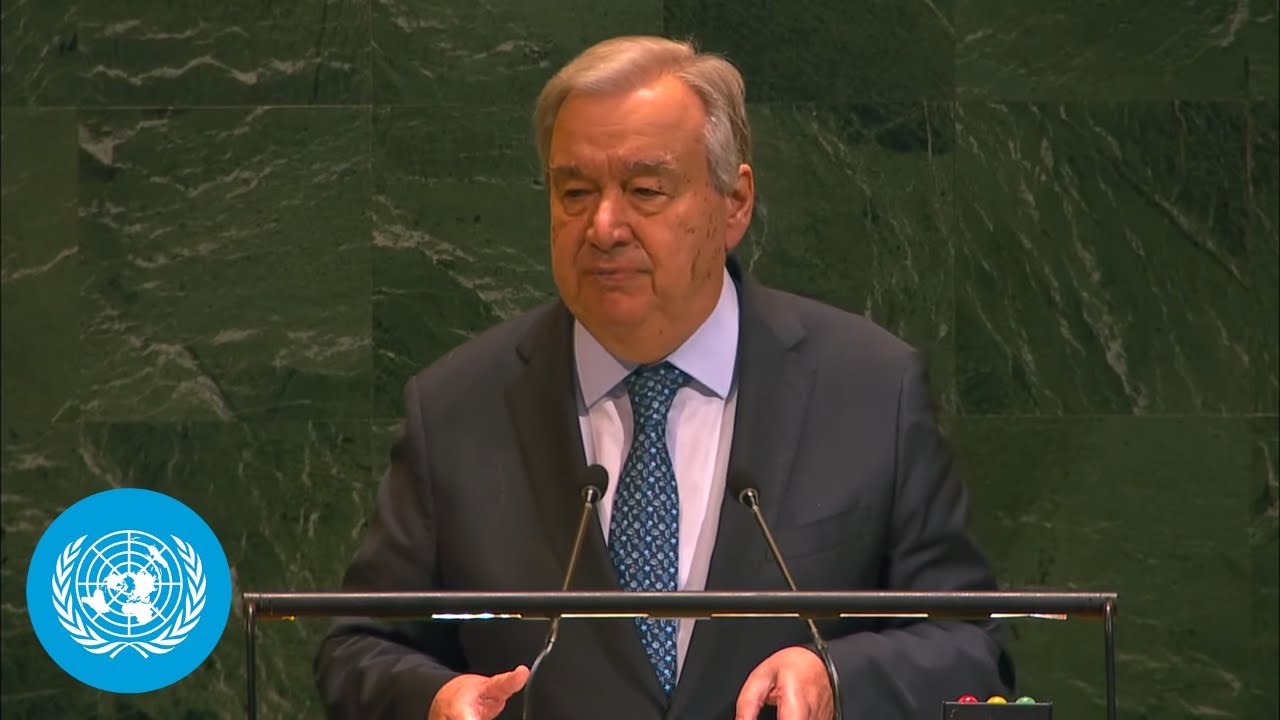
Secretary-General Antonio Guterres said, “The only realistic, just, and sustainable solution is two States — Israel and Palestine — living side-by-side in peace and security, within secure and recognized borders, on the basis of the pre-1967 lines, with Jerusalem as the capital of both – in line with international law, UN resolutions and other relevant agreements.”
Guterres today (28 Jul) spoke at the opening segment of the High-Level International Conference for the Peaceful Settlement of the Question of Palestine and the Implementation of the Two-State Solution.
In his remarks, the UN chief warned, time is running out. “With every passing day, trust is slipping. Institutions are weakened. And hopes are dashed.”
He implored the international community not only to keep the two-State solution alive – “but to take the urgent, concrete, irreversible steps necessary to make it real.”
Guterres stressed, “Nothing can justify the horrific 7 October terror attacks by Hamas. And nothing can justify the scale of death and destruction in Gaza since then – a level without precedent in recent times.”
The Secretary-General said, “Let us reject the false choice between Palestinian statehood and Israeli security. There is no security in occupation.”
“Let us affirm,” he said, “Israel’s legitimate security concerns must be addressed. And so must the legitimate rights of the Palestinian people.”
“We must speak with one voice. To condemn all acts of terror. To denounce all targeting of civilians and taking of hostages. To reject incitement to hatred and violence,” Guterres added.
He continued, “We must call on Israel to recommit – clearly and unequivocally — to the two-State solution, and to cease all actions that undermine it. And we must support Palestinian unity around a peaceful, democratic, and inclusive vision of statehood.”
“Let us lay the groundwork for: Unified Palestinian governance. Credible security arrangements. And a Palestinian Authority that carries out reforms and that can deliver for its people,” he concluded.
France and Saudi Arabia are the Co-chair of the Conference.
For his part, French diplomat Jean-Noël Barrot said that his government is “ready to fully recognize the State of Palestine, and will do so in the month of September next.”
“This recognition, which is a major decision by France, is an expression of both a rejection and it is an appeal. It is a rejection of the idea that the war camp is winning over the peace camp,” Barrot reiterated.
Minister of Foreign Affairs of the Kingdom of Saudi Arabia, Faisal bin Farhan Al-Saud, called on Member States to join the final outcome document and to participate in its implementation.
“Our collective responsibility requires us today to work urgently to end the humanitarian disaster that is threatening the credibility of the international law, and to enable the Palestinian people to achieve self-determination in order to achieve peace and security for all people in the region, opening the way towards stability, prosperity and development,” the Saudi Minister of Foreign Affairs said.
Philemon Yang, President of the UN General Assembly also spoke at the opening session.
He said, “The focus of this conference must therefore be concrete and action-oriented, identifying steps the international community must take to realise the two-State solution.”
“We must restore both hope and trust: Hope that a better future is possible,” he reiterated.
Prime Minister of State of Palestine, Mohammad Mustafa, said, “This international conference must constitute a turning point in which positions and decisions are translated into immediate and unprecedented practical steps to stop the genocide and end the Israeli occupation.”
“Uphold the Palestinian rights and help an independent Palestinian State on the basis of a two-state solution that takes shape in accordance with the resolutions of international legitimacy, which opens the way towards peace, security, stability and prosperity in our region for the benefit of all peoples and States,” Prime Minister Mustafa said.
He affirmed “the readiness of the State of Palestine to assume full responsibility for governance and security in Gaza with Arab and international support.”
“We also stress that the State of Palestine is the only holder of the right to rule the entire Gaza Strip, and it is the holder of the exclusive right to maintain security. Israel must withdraw completely from the Gaza Strip, and Hamas must relinquish its control over the Strip and hand over its weapons to the Palestinian Authority,” the Prime Minister added.
He also reaffirmed Palestine’s position, “rejecting violence and terrorism in all its forms, including targeting and attacking civilians.”
Full remarks [as delivered]: https://www.un.org/sg/en/content/sg/statement/2025-07-28/secretary-generals-remarks-the-opening-segment-of-the-high-level-international-conference-for-the-peaceful-settlement-of-the-question-of-palestine-and-the
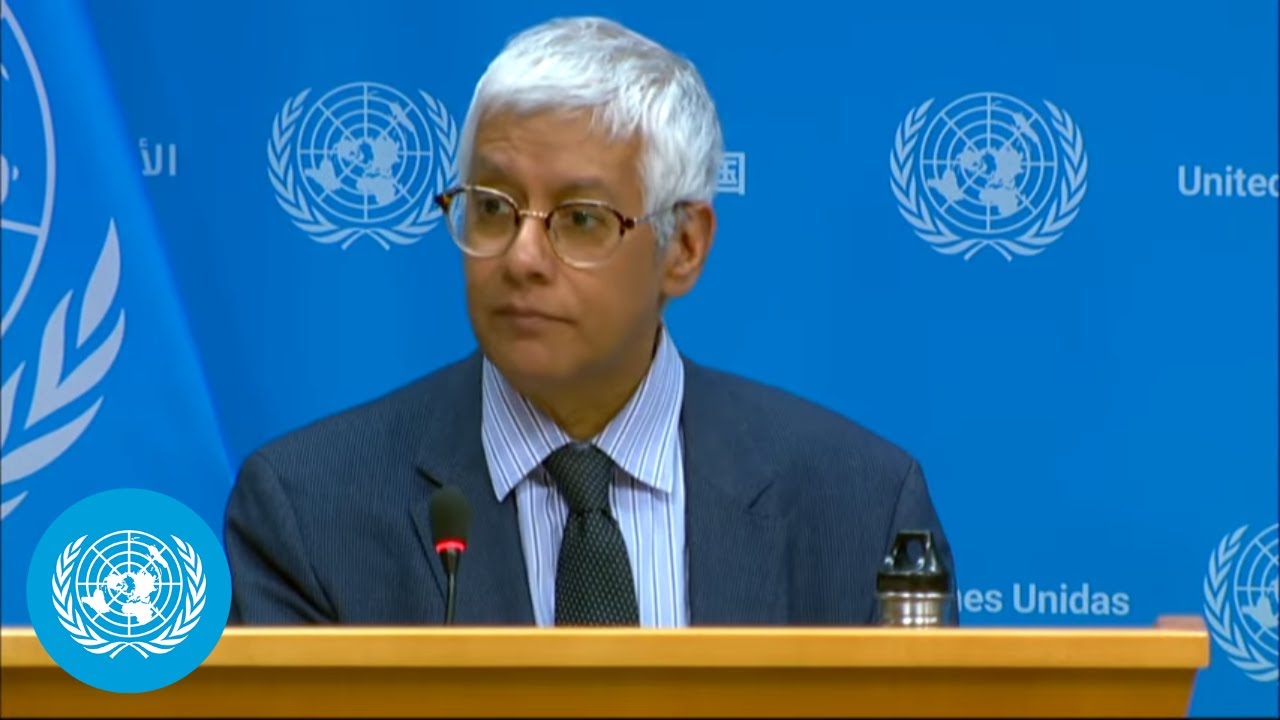
Noon briefing by Farhan Haq, Deputy Spokesperson for the Secretary-General.
Highlights:
Secretary-General/Palestine
Occupied Palestinian Territory
Food Systems Summit
Deputy Secretary-General
Security Council/Syria
Syria/Humanitarian
Lebanon/Israel
Ukraine
Democratic Republic of the Congo
Sudan
World Hepatitis Day
SECRETARY-GENERAL/PALESTINE
The Secretary-General will speak this afternoon at the opening session of the international conference on the implementation of the two-State solution.
He will say that the only realistic, just and sustainable solution for Israelis and Palestinians is two states, Israel and Palestine, living side by side in peace and security, within recognized borders, on the basis of the pre-1967 lines, with Jerusalem as the capital of both.
But he will warn that time is running out, with trust slipping every passing day while institutions are weakened and hopes are dashed.
At an earlier meeting this morning, he said that the wholesale destruction of Gaza is intolerable and must stop and that unilateral actions that would forever undermine the two-state solution are unacceptable.
The Secretary-General said that today’s conference is a rare and indispensable opportunity. We must ensure that it does not become another exercise in well-meaning rhetoric, Mr. Guterres added. It can and must serve as a decisive turning point – one that catalyzes irreversible progress towards ending the occupation and realizing our shared aspiration for a viable two-State solution.
OCCUPIED PALESTINIAN TERRITORY
Tom Fletcher, the Emergency Relief Coordinator, yesterday welcomed Israel’s decision to support a one-week scale-up of aid, including lifting customs barriers on food, medicine and fuel from Egypt and the reported designation of secure routes for UN humanitarian convoys. Some movement restrictions appear to have been eased on Sunday, he said, with initial reports indicating that over 100 truckloads were collected.
This is progress, Mr. Fletcher said, but vast amounts of aid are needed to stave off famine and a catastrophic health crisis. He said that we need sustained action, and fast, including quicker clearances for convoys going to the crossing and dispatching into Gaza; multiple trips per day to the crossings so we and our partners can pick up the cargo; safe routes that avoid crowded areas; and no more attacks on people gathering for food.
UN agencies and our partners have welcomed these measures. Yesterday, the World Food Programme(WFP) said that it has enough food in the region or on the way there to feed the starving population for about three months. The UN Relief and Works Agency (UNRWA) says that some 6,000 trucks in Jordan and Egypt are waiting for the green light to enter.
Meanwhile, the World Health Organization (WHO) said that July was the worst month of deaths linked to malnutrition, with more than 85 per cent of malnutrition related deaths recorded in 2025. Nearly one in five children under five in Gaza City is now acutely malnourished.
UN partners say that in July, more than 5,000 children under five have already been admitted for outpatient treatment of malnutrition. The only four specialized treatment centres in Gaza are overwhelmed, pushing an already fragile health system closer to collapse.
The UN and its partners stress the need for unimpeded access of humanitarian aid through all crossings and corridors to allow large-scale delivery of aid to the starving and exhausted population.
Yesterday, the Israeli authorities announced simplified movement procedures both from the crossings and within Gaza. Out of 17 missions requiring coordination with the Israeli authorities, eight were facilitated, including the collection of fuel and supplies from Kerem Shalom, while three have been denied, and two cancelled. Four missions, including the uplift of food cargo, were impeded but accomplished.
The long-standing restrictions on the entry of aid have created an unpredictable environment with a lack of confidence by communities that aid will reach them. This has resulted in many of our convoys being offloaded directly by starving, desperate people. Yesterday, hungry people offloaded food supplies before they could reach their intended destination.
As we have said before, the only way to mitigate for this situation is by having a sustained flow of aid over a period of time. This was evident during the ceasefire, when such incidents did not occur.
Meanwhile, airdrops have resumed in Gaza yesterday. While the UN welcomes all efforts to provide aid to the people who desperately need it, UN agencies and partners remind that airdrops are the last resort measure and carry risks for people on the ground. Injuries were reported yesterday when packages fell on tents.
Full highlights: https://www.un.org/sg/en/content/ossg/noon-briefing-highlight?date%5Bvalue%5D%5Bdate%5D=28%20July%202025
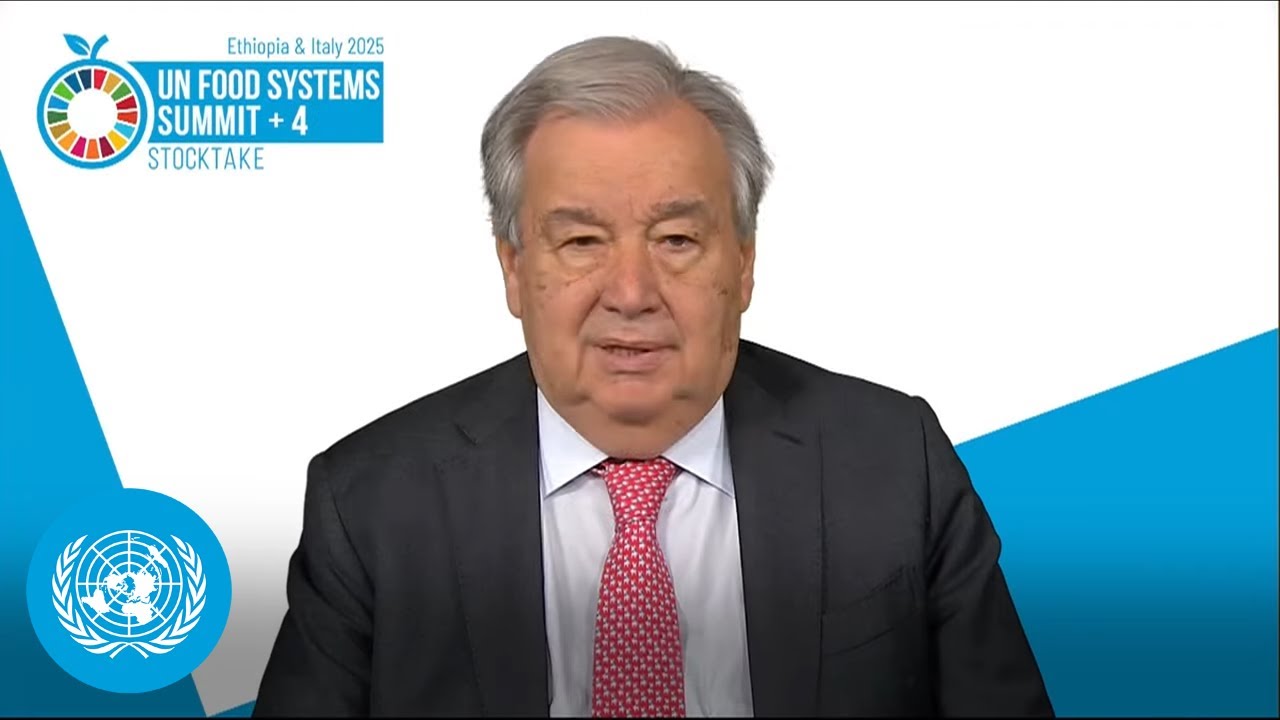
Video message by António Guterres, UN Secretary-General at the High-Level Opening “Harnessing a changing world for the future of sustainable food systems” – UN Food Systems Summit +4 Stocktake (UNFSS+4).
“Excellencies, Dear friends,
I thank the Government and people of Ethiopia and the Italian Government for co-hosting this important gathering.
I regret that circumstances have kept me from joining you in person.
Four years ago, the world came together for the first UN Food Systems Summit – anchored in the understanding that food systems are about more than food.
They are about health, nutrition, climate, decent work, justice – and the right to a better future.
Since then, we have seen progress.
Two-thirds of countries have integrated food systems transformation into national development plans.
Over 100 have aligned food strategies with climate and biodiversity goals.
And 155 countries are advancing efforts with National Convenors and strong engagement from businesses, civil society, Indigenous Peoples, youth and farmers.
The UN System, including through the UN Food Systems Coordination Hub, is their partner every step of the way.
Last year’s Pact for the Future reaffirmed our shared commitment to food systems that are inclusive, sustainable, equitable, resilient – and rooted in human rights.
But progress is not fast or fair enough.
Global hunger is rising.
Trade shocks are pushing food prices out of reach.
One-third of the world’s people cannot afford a healthy diet – while one-third of the world’s food is lost or wasted.
The hidden costs of our food systems – on health, nature, and human suffering – exceed $10 trillion a year.
That’s more than three times the GDP of the African continent.
This is not just a crisis of scarcity.
It is a crisis of justice, equity, and climate.
Nearly 40 percent of the global workforce is linked to food systems – yet many remain trapped in poverty.
Climate change is disrupting harvests, supply chains and humanitarian response.
Conflict continues to drive hunger – from Gaza to Sudan and beyond.
Hunger feeds further instability – and undermines peace.
We must never accept hunger as a weapon of war.
Dear friends,
We know what works.
Every dollar invested in nutrition can return up to twenty-three.
Sustainable food systems can advance all 17 Sustainable Development Goals.
And transformation is underway.
Governments are leading the way – integrating food systems into climate strategies, biodiversity frameworks, and national budgets.
They are empowering women and youth, scaling up nutritious school meals, and investing in agroecology.
Look no further than Ethiopia – where investments in local wheat production and climate-aligned food policy are reducing import dependence and creating jobs.
But governments cannot do it alone.
The private sector must play a vital role – from innovation and logistics to finance and investment.
We need responsible business practices aligned with the public good.
We need bold leadership – and enforceable guidelines for corporate accountability.
We must build on new partnerships like the Global Alliance against Hunger and Poverty and scale up action across sectors.
Looking ahead, I see three urgent priorities:
First, break down silos.
Food systems are everyone’s business.
We need integrated policies and a global framework that connects agriculture to people – their health, climate, trade, and finance.
We must also harness new technologies – including Artificial Intelligence – to boost production, reduce waste, and create decent jobs across the value chain.
Second, address power imbalances.
We must govern food systems fairly, tackle inequality and deliver on the right to food for all.
That means elevating the voices of women, youth, farmers, Indigenous Peoples, and local actors.
Third, unlock and connect finance at scale.
Transformation requires investment.
We need debt relief, greater access to concessional finance, and reform of the global financial system to give developing countries representation that reflects the realities of today’s global economy.
We need climate action – including at COP30 – to close the adaptation gap, align climate funding with food systems, and accelerate a just transition.
And above all, we need peace – so that investments can take root and farmers can look to the future with confidence.
Excellencies, Dear friends,
The future of food is the future of humanity.
Let us work together to build food systems that nourish every person, restore our planet, and grow prosperity from the ground up.
Opening segment
Roundtable 1 – The Case for Peace: Advancing the Two-State Solution through Narrative, Measures, and Law
Roundtable 2 – Two States, One Future: Sovereignty, Security, and Economic Viability
Roundtable 3 – From Rubble to Renewal: Humanitarian Relief, Reconstruction, and the Promise of Peace
Concluding Segment – Perspectives From the UN
This ministerial high-level session brings together the outcomes of the thematic roundtables and working groups convened under the auspices of the High-Level Conference on the Implementation of the Two-State Solution.
It provides a platform to consolidate key insights, highlight consensus across political, legal, economic, and humanitarian tracks, and articulate concrete next steps. The session is both a culmination of months of coordinated diplomatic work and a launchpad for action, and laying the groundwork for sustained international engagement, accountability, and implementation in support of a just and lasting peace.
To watch in all UN official languages, please visit: https://webtv.un.org/en/asset/k1v/k1va8rn5a5
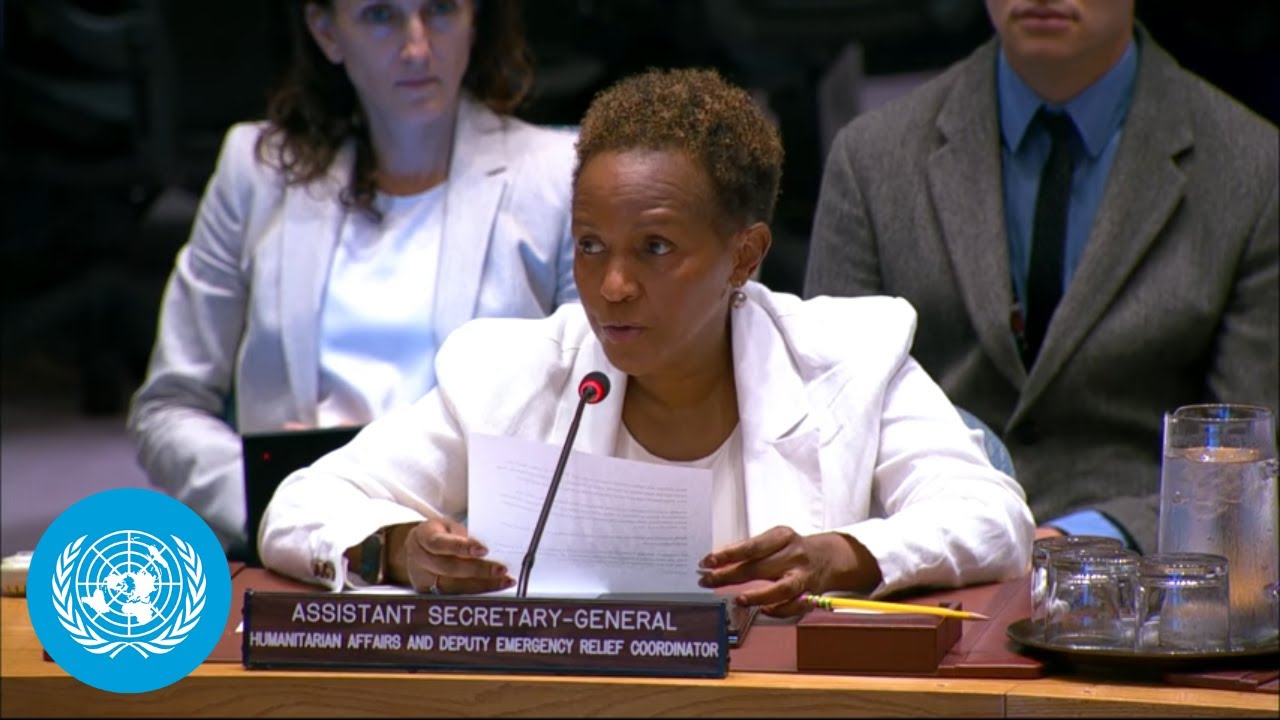
The humanitarian situation in Ukraine continues to deteriorate amid severe funding shortages. Assistant Secretary-General for Humanitarian Affairs Joyce Msuya warned that only 34 percent of the $2.6 billion required for the 2025 Humanitarian Needs and Response Plan has been received.
Msuya said, “Cash assistance, mental health support, and services to respond to gender-based violence have been slashed due to funding shortfalls.” She added, “Without an immediate influx of resources, even prioritized programmes will be at risk – just as the people of Ukraine approach a fourth wartime winter.”
U.S. Acting Representative Dorothy Shea called on countries, including China, to halt exports of dual-use goods to Russia. “Beijing’s claim to have implemented strong export controls on dual use goods falls apart in the face of daily recovery of Chinese produced components in the drones, weapons and vehicles that Russia uses against Ukraine.” Shea said.
China’s envoy, Geng Shuang, said, “China has never provided lethal weapons to any party to the conflict, and has always strictly controlled dual use materials, including the export of drones.” He also said, “We urge the US to stop shifting blames on the Ukraine issue all creating confrontation, and instead, playing a more constructive role in promoting ceasefire and peace talks.”
Russia’s ambassador, Dmitry Polyanskiy, said, Ukraine’s leadership moved to dismantle independent anti-corruption bodies after they had prepared compromising materials and criminal cases against the president and his inner circle. He said a law was pushed through “his puppet parliament” to place those bodies under the control of the Prosecutor General’s Office. Polyanskiy said, “Right now, at this very moment, his [Zelensky] loyalists are busy destroying documents exposing corruption at the highest levels of power documents implicating the Kyiv usurper and his allies in the embezzlement of billions of dollars in budget funds and Western aid.” Polyanskiy added that after obtaining the incriminating materials, authorities appeared to backtrack in response to public backlash. He said the targeted institutions were created under Western pressure and were once seen as a “cure for corruption,” yet, he said, “today, we didn’t hear any of it here.”
Ukraine’s delegate Khrystyna Hayovyshyn touched upon some claims made by Russia at a recent Security Council meeting regarding the issue of abducted children. She said the list of 339 names of children to be returned from Russia, submitted by Ukraine, was not a complete count, as Moscow previously claimed, but a preliminary confidence-building measure. While Ukraine maintains that thousands of children have been unlawfully taken, the limited list was shared to encourage cooperation.
Hayovyshyn said that even in response to this smaller list, Russia has provided only partial information on fewer than one-fifth of the children. “Russia also mentioned children from the list allegedly ‘returned.’ In fact, only six children were returned, five of whom are siblings. This was the result of a year-long humanitarian effort mediated by the State of Qatar – a process demonstrating the power of third-party engagement, not Russian goodwill,” she said.
Speakers will be Diego Pacheco, Chair of the Landlocked Developing Countries and Chargé d‘Affaires of the Permanent Mission of the Plurinational State of Bolivia to the United Nations; along with Irene M. Juru, Deputy Permanent Representative of Zimbabwe to the United Nations and Member of the LLDCs Bureau; and Khamphinh Philakone, Deputy Permanent Representative of the Lao People’s Democratic Republic to the United Nations and Member of the LLDCs Bureau.
The moderator will be Franz Zubieta (Minister Counsellor of the Permanent Mission of the Plurinational State of Bolivia to the United Nations).
[Spanish/English interpretation has been requested].
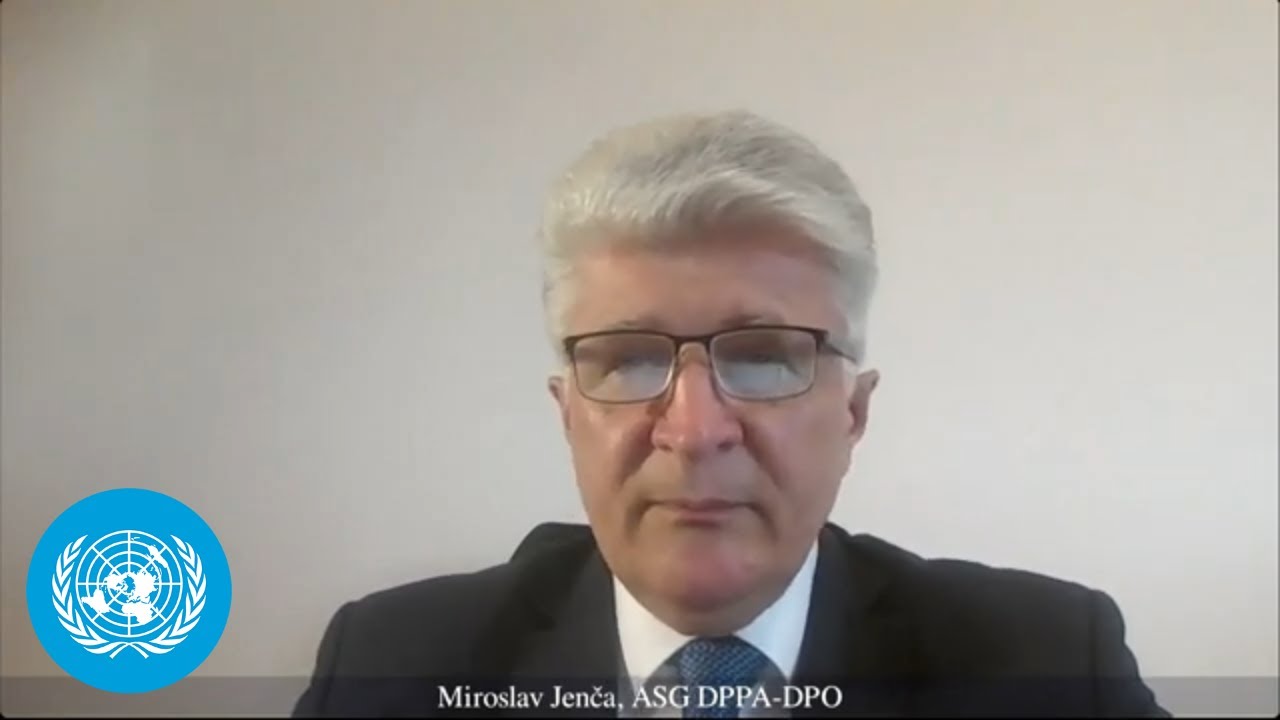
“According to the Office of the High Commissioner for Human Rights (OHCHR), in June, civilian casualties in Ukraine reached a three-year high,” said Miroslav Jenča, Assistant Secretary-General for Europe, Central Asia, and the Americas.
Briefing the Security Council today (Jul 25) he cited intensifying violence across the country, including attacks near the Zaporizhzhia Nuclear Power Plant.
“On 11 July, a drone attack reportedly hit the city hall in Enerhodar, where most of the staff of Ukraine’s Zaporizhzhia Nuclear Power Plant (ZNPP) live, located only about five kilometres from the Plant,” Jenča said.
The conflict’s reach has extended beyond Ukraine. “Moscow and St. Petersburg have also been targeted with dozens of drones, reportedly causing severe disruptions to air traffic,” Jenča noted, adding that over 2,000 flights were disrupted between 5 and 7 July. However, he stressed that the UN could not independently verify those incidents or any related civilian casualties in Russia.
Despite these escalations, Jenča welcomed diplomatic efforts, “On Wednesday, Ukrainian and Russian delegations met in Istanbul for the third time this year. We welcome the continuation of these direct contacts between the sides and urge Ukraine and the Russian Federation to make further progress towards a ceasefire and a lasting settlement.”
The humanitarian situation in Ukraine continues to deteriorate amid severe funding shortages. Assistant Secretary-General for Humanitarian Affairs Joyce Msuya warned that only 34 percent of the $2.6 billion required for the 2025 Humanitarian Needs and Response Plan has been received.
Msuya said, “Cash assistance, mental health support, and services to respond to gender-based violence have been slashed due to funding shortfalls.” She added, “Without an immediate influx of resources, even prioritized programmes will be at risk – just as the people of Ukraine approach a fourth wartime winter.”
U.S. Acting Representative Dorothy Shea called on countries, including China, to halt exports of dual-use goods to Russia. “Beijing’s claim to have implemented strong export controls on dual use goods falls apart in the face of daily recovery of Chinese produced components in the drones, weapons and vehicles that Russia uses against Ukraine.” Shea said.
China’s envoy, Geng Shuang, said, “China has never provided lethal weapons to any party to the conflict, and has always strictly controlled dual use materials, including the export of drones.” He also said, “We urge the US to stop shifting blames on the Ukraine issue all creating confrontation, and instead, playing a more constructive role in promoting ceasefire and peace talks.”
Russia’s ambassador, Dmitry Polyanskiy, said, Ukraine’s leadership moved to dismantle independent anti-corruption bodies after they had prepared compromising materials and criminal cases against the president and his inner circle. He said a law was pushed through “his puppet parliament” to place those bodies under the control of the Prosecutor General’s Office. Polyanskiy said, “Right now, at this very moment, his [Zelensky] loyalists are busy destroying documents exposing corruption at the highest levels of power documents implicating the Kyiv usurper and his allies in the embezzlement of billions of dollars in budget funds and Western aid.” Polyanskiy added that after obtaining the incriminating materials, authorities appeared to backtrack in response to public backlash. He said the targeted institutions were created under Western pressure and were once seen as a “cure for corruption,” yet, he said, “today, we didn’t hear any of it here.”
Ukraine’s delegate Khrystyna Hayovyshyn touched upon some claims made by Russia at a recent Security Council meeting regarding the issue of abducted children. She said the list of 339 names of children to be returned from Russia, submitted by Ukraine, was not a complete count, as Moscow previously claimed, but a preliminary confidence-building measure. While Ukraine maintains that thousands of children have been unlawfully taken, the limited list was shared to encourage cooperation.
Hayovyshyn said that even in response to this smaller list, Russia has provided only partial information on fewer than one-fifth of the children. “Russia also mentioned children from the list allegedly ‘returned.’ In fact, only six children were returned, five of whom are siblings. This was the result of a year-long humanitarian effort mediated by the State of Qatar – a process demonstrating the power of third-party engagement, not Russian goodwill,” she said.
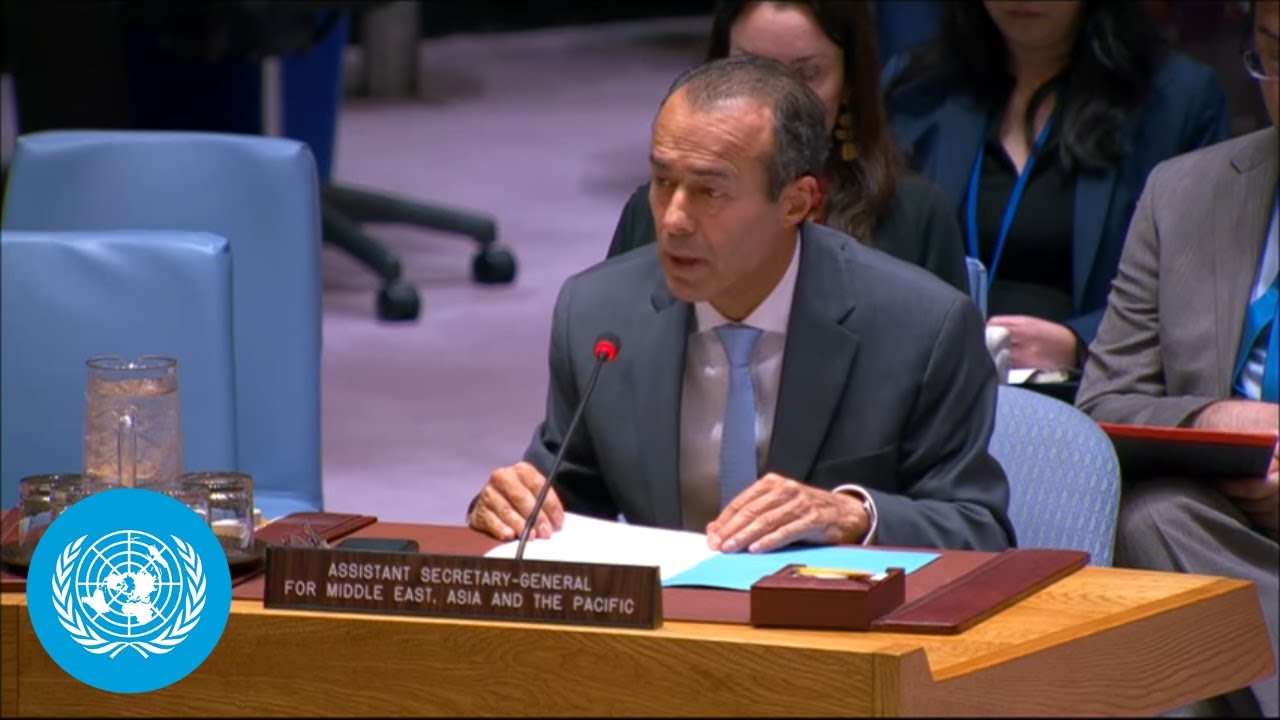
Amid rising global instability, the United Nations stressed the need to deepen its partnership with the Organization of Islamic Cooperation (OIC), which UN Assistant Secretary-General Khaled Khiari called “indispensable.”
Speaking at a Security Council briefing today (Jul 24), Khiari said such cooperation is a priority for the Secretary-General and central to implementing the Pact for the Future, in line with Chapter VIII of the UN Charter.
The session, chaired by Pakistan’s Deputy Prime Minister and Foreign Minister Mohammad Ishaq Dar, is one of the key events of Pakistan’s July presidency of the Council.
Khiari outlined areas of close collaboration between the two organizations, noting shared goals in conflict resolution and humanitarian support across the Middle East and beyond. “In the Middle East, the United Nations and the OIC have long shared common objectives in seeking a lasting and comprehensive resolution to the question of Palestine,” he said.
He highlighted the recent joint Conference on Jerusalem, held in Dakar on 9 July, and welcomed the endorsement of Gaza’s Recovery and Reconstruction Plan by both the OIC and the League of Arab States through their Joint Ministerial Committee.
Turning to Lebanon, Khiari said the OIC’s “consistent political backing” amid regional tensions has proven particularly valuable. He also underscored the OIC’s central role in Afghanistan through its engagement with the de facto authorities and efforts to protect the rights of Afghan women and girls, “drawing on its unique position as the collective and credible voice of the Muslim world.”
In Sudan, where more than two years of conflict have devastated the country, Khiari said, “The OIC’s support to international mediation efforts, including those of Personal Envoy Lamamra, remains highly valuable as efforts continue to find a resolution that will prevent further disaster and return Sudan to a path of peace.”
He also noted recent progress in counter-terrorism cooperation following the 2024 signing of a Memorandum of Understanding between the UN Office of Counter-Terrorism and the OIC. The two sides have worked together on “rights-based approaches through technical assistance, parliamentary engagement, and strategic dialogue.”
Yousef M. Al-Dobeay, Assistant Secretary-General for Political Affairs of the OIC said, “We need to bolster our cooperation to promote tolerance and human understanding. It is incumbent upon us to fight together to counter hate speech and to strengthen a culture of coexistence. Mr. President, we need to work together to protect international peace and security in line with the UN Charter.”
Pakistan’s Foreign Minister Ishaq Dar warned of “wars waged with impunity, occupations sustained without accountability, humanitarian crises multiplying, and ideologies of hatred fast becoming normalized.”
“Amidst prevailing flux and deepening uncertainty, the urgency for coordinated and principled action has never been greater,” Dar said.
A presidential statement on UN-OIC cooperation, initiated by Pakistan, was adopted at the meeting.
Addressing the Amnesty International Global Assembly, Secretary-General Antonio Guterres called for immediate action in Gaza. While reiterating his condemnation of the 7 October terror attacks by Hamas, he said that “nothing can justify the explosion of death and destruction since,” criticizing global indifference and inaction.
Guterres today (25 Jul) addressed the Global Assembly via a video link to the event in Prague. He is the first United Nations Secretary-General to address the Assembly – the charity’s highest decision-making body.
He commended the Amnesty International for being at the forefront of the global struggle for human rights – “fearless, principled and relentless.”
Guterres described a worsening humanitarian crisis in Gaza, citing starving aid workers and traumatized children. He said, “Our own heroic staff continue to serve in unimaginable conditions. Many are so numb and depleted that they say they feel neither dead nor alive. Children speak of wanting to go to heaven, because at least, they say, there is food there. We hold video calls with our own humanitarians who are starving before our eyes.”
“This is not just a humanitarian crisis. It is a moral crisis that challenges the global conscience,” the UN chief stressed.
Guterres once again called for an immediate and permanent ceasefire, the immediate and unconditional release of all hostage, and urgent steps toward a two-State solution.
He said, “The United Nations stands ready to make the most of a possible ceasefire to dramatically scale up humanitarian operations across the Gaza Strip, as we successfully did during the previous pause in fighting. Our plans are ready, and they are finalized. We know what works – and we know what does not.”
The Secretary-General also commended Amnesty International’s “indispensable” role in a global battle for human dignity. For human rights. For justice. For the multilateral system itself.
He said, “We need your movements – rooted in communities and rising from the ground up – making it clear that leaders cannot turn a blind eye to their obligations. And, yes, we need what you’ve called ‘troublemaking’. The kind that challenges complacency and inaction. That exposes injustice. That drives lasting change.”
The UN chief spoke about this year’s focus of the Global Assembly: confronting the rise of authoritarian practices – and advancing climate justice.
Guterres noted that the world is witnessing a surge in repressive tactics aiming at corroding respect for human rights. And these are contaminating some democracies.
“We must right these wrongs,” the UN chief stressed.
He said, “Many countries we must recognize stand firm with human rights. And we must push all countries to defend them – consistently, and universally, even – or especially – when inconvenient.”
He continued, “We must urge them to protect and strengthen the international human rights system. We must demand accountability for human rights violations – without fear or favour. And insist that countries honour commitments in the Pact of the Future – to protect civic space, and uphold human rights and gender equality. We must also demand action to confront the flood of lies and hate polluting our digital spaces.”
On climate justice, the UN chief called for “real finance” to support developing nations grappling with climate disasters. He urged nations to fulfill pledges and explore new sources of finance – “including putting an effective price on carbon, and establishing solidarity levies on polluting sectors and industries.”
Founded in 1961, Amnesty International is a global human rights movement that campaigns to end abuses and promote justice. The organization has long worked in collaboration with the United Nations, participating actively in the development of international human rights law and mechanisms.
Through the compelling collages of the renowned Turkish artist Uğur Gallenkuş, the event will trace the journey from acknowledgment of systemic inequalities to hopeful action, spotlighting youth as changemakers in food systems, including winners of the UN SDG Action Awards; harnessing the power of art and creativity to shift narratives and inspire bold and transformative action; and fostering an intergenerational multi-stakeholder dialogue and new forms of collaboration rooted in trust and solidarity between national governments, UN entities, changemakers, artists, civil society and grassroots organizations.
Speakers:
Dr. Ergogie Tesfaye, Minister of Women and Social Affairs, Federal Democratic Republic of Ethiopia
Ms. Amina J. Mohammed, Deputy Secretary-General of the United Nations
Dr. Felipe Paullier, Assistant Secretary-General for Youth Affairs, United Nations Youth Office
Ms. Marina Ponti, Global Director of the UN SDG Action Campaign
Ms. Eldana Samuel, Chairperson of Nefas Silk Lafto sub-city’s Child Parliament/Member of the Ethiopian and Addis Ababa city Child Parliaments
Prof. Bekele Mekonnen, Contemporary Visual Artist, Poet and Educator, Federal Democratic Republic of Ethiopia
Ms. Nzambi Matee, Founder of Gjenge Makers, a Nairobi-based social enterprise
Dr. Million Belay, General Coordinator, Alliance for Food Sovereignty in Africa
Mr. Njathi Kabui, Chef and Expert in Food Literacy
Ms. Paola Andrade, Founder of Supvivors Say No More — Ecuador
Music Performers:
Ms. Chioma “Cill” Ogbonna, Singer-Songwriter and Artivist
Ms. Yordanos Yohannes, Yared School of Music, Addis Ababa University
Mr. Rocky Dawuni, Singer-Songwriter, 4x Grammy Nominated Musician and Activist, UNEP Goodwill Ambassador
Co-Moderators:
Mr. Valerio Cataldi, Africa Correspondent for RAI
Mr. Shiferaw Lakew, Ethiopian Broadcast Journalist
Noon Briefing by Stephanie Tremblay, Associate Spokesperson for the Secretary-General.
Highlights:
Amnesty International
Deputy Secretary-General
Occupied Palestinian Territory
Syria
U.N.I.F.I.L.
Climate/China–EU Summit
Security Council/Ukraine
Democratic Republic of the Congo
Financial Contribution
Briefing Today
Briefing on Monday
AMNESTY INTERNATIONAL
This morning, António Guterres became the first United Nations Secretary-General to address Amnesty International’s Global Assembly. He told the Assembly that powerful forces are ranged against human rights – and against the international system built to protect and uphold them.
The Secretary-General said that the scale and scope of the humanitarian crisis in Gaza is beyond anything we have seen in recent times. And he spoke about the level of indifference and inaction we see by too many in the international community.
The Secretary-General said that the UN’s heroic staff continue to serve in unimaginable conditions, while many are so numb and depleted that they say they feel neither dead nor alive.
He said that the United Nations stands ready to make the most of a ceasefire to dramatically scale-up humanitarian operations across the Gaza Strip, as we successfully did during the previous pause in fighting. Our plans are ready, and they are finalized, he said. He once more called for an immediate and permanent ceasefire, the immediate and unconditional release of all hostages, immediate and unimpeded humanitarian access and urgent, concrete and irreversible steps towards a two-State solution.
DEPUTY SECRETARY-GENERAL
UN Deputy Secretary-General, Amina Mohammed, will travel later today, on behalf of the Secretary-General, to attend the 2nd UN Food Systems Summit Stocktaking Moment (UNFSS+4), taking place from 27 -29 July, in Addis Ababa, co-hosted by Ethiopia and Italy. Four years since the 2021 UN Food Systems Summit, UNFSS+4 will serve as a platform to reflect on progress, strengthen collaboration, and unlock finance and investments to accelerate the transformation of food systems.
While at the Summit, Ms. Mohammed will meet with senior government officials, the private sector, civil society, youth and other stakeholders, to discuss priority actions to support food systems transformation and accelerate progress on the SDGs.
The Deputy Secretary-General will then go on to Amman, the Hashemite Kingdom of Jordan, to chair the annual regional retreat with UN Resident Coordinators from across the Arab region, with a focus on advancing sustainable development in these countries.
Ms. Mohammed will also meet with senior government officials to strengthen the UN-Jordan partnership and discuss priority actions to support the SDGs.
The Deputy Secretary-General will return to New York on 2 August.
Full highlights: https://www.un.org/sg/en/content/noon-briefing-highlight?date%5Bvalue%5D%5Bdate%5D=25%20July%202025
At Amnesty International’s 2025 Global Assembly, UN Secretary-General António Guterres calls for an immediate and permanent ceasefire, the immediate and unconditional release of all hostages and immediate and unimpeded humanitarian access. At the same time, concrete and irreversible steps towards a two-State solution.
Read the UN News story: In hard-hitting human rights address, Guterres calls for urgent action on Gaza, authoritarianism and climate justice -https://news.un.org/en/story/2025/07/1165497
Cookies are used on our website to make your use as comfortable as possible. These so-called essential cookies are stored in your browser because they are essential for the basic functions of the website.
We also use third-party cookies for online advertising on our sites. These cookies are only stored in your browser with your consent. By clicking here you agree to the use of these additional cookies or you can reject them:
This website uses cookies to improve your experience while you navigate through the website. Out of these, the cookies that are categorized as necessary are stored on your browser as they are essential for the working of basic functionalities of the website. We also use third-party cookies that help us analyze and understand how you use this website. These cookies will be stored in your browser only with your consent. You also have the option to opt-out of these cookies. But opting out of some of these cookies may affect your browsing experience.
Necessary cookies are absolutely essential for the website to function properly. These cookies ensure basic functionalities and security features of the website, anonymously.
Cookie
Duration
Description
cookielawinfo-checkbox-analytics
11 months
This cookie is set by GDPR Cookie Consent plugin. The cookie is used to store the user consent for the cookies in the category "Analytics".
cookielawinfo-checkbox-functional
11 months
The cookie is set by GDPR cookie consent to record the user consent for the cookies in the category "Functional".
cookielawinfo-checkbox-necessary
11 months
This cookie is set by GDPR Cookie Consent plugin. The cookies is used to store the user consent for the cookies in the category "Necessary".
cookielawinfo-checkbox-others
11 months
This cookie is set by GDPR Cookie Consent plugin. The cookie is used to store the user consent for the cookies in the category "Other.
cookielawinfo-checkbox-performance
11 months
This cookie is set by GDPR Cookie Consent plugin. The cookie is used to store the user consent for the cookies in the category "Performance".
viewed_cookie_policy
11 months
The cookie is set by the GDPR Cookie Consent plugin and is used to store whether or not user has consented to the use of cookies. It does not store any personal data.
Functional cookies help to perform certain functionalities like sharing the content of the website on social media platforms, collect feedbacks, and other third-party features.
Performance cookies are used to understand and analyze the key performance indexes of the website which helps in delivering a better user experience for the visitors.
Analytical cookies are used to understand how visitors interact with the website. These cookies help provide information on metrics the number of visitors, bounce rate, traffic source, etc.
Advertisement cookies are used to provide visitors with relevant ads and marketing campaigns. These cookies track visitors across websites and collect information to provide customized ads.