Social media has become a new gateway to armed groups in Colombia. Videos set to the rhythm of cumbia and corridos are used to attract young people. UN News spoke with two teachers from conflict-affected areas.
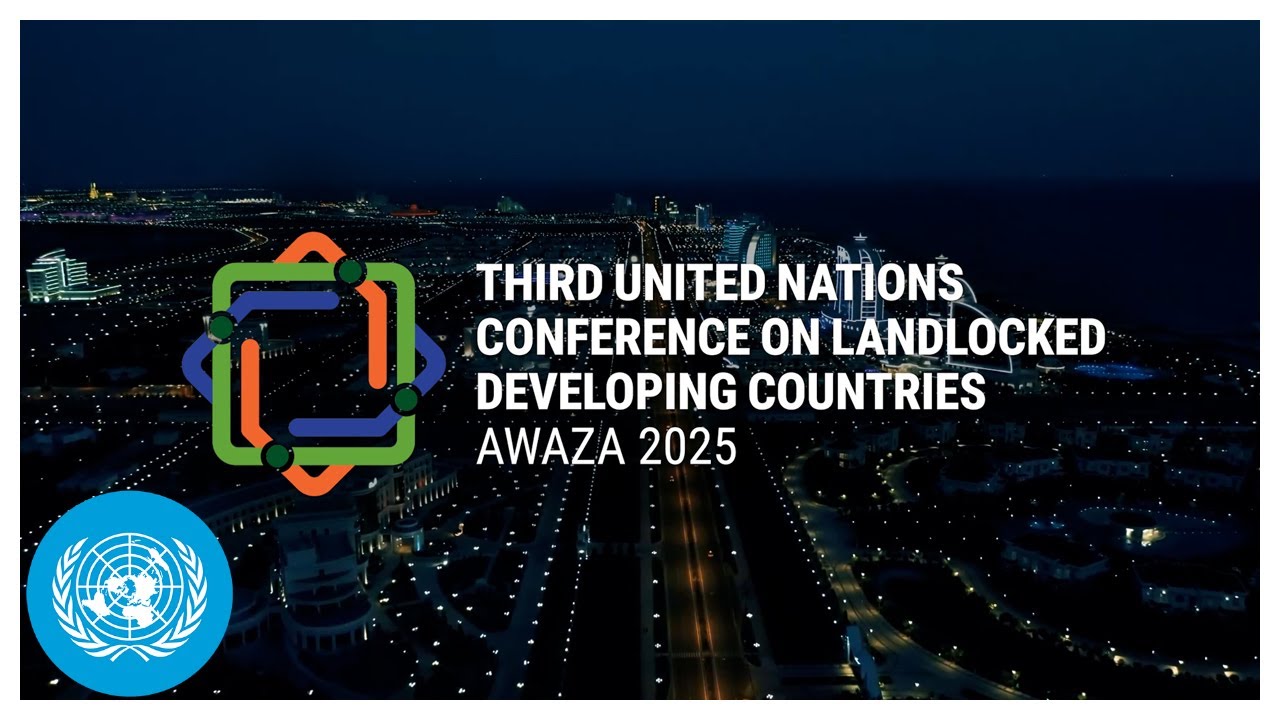
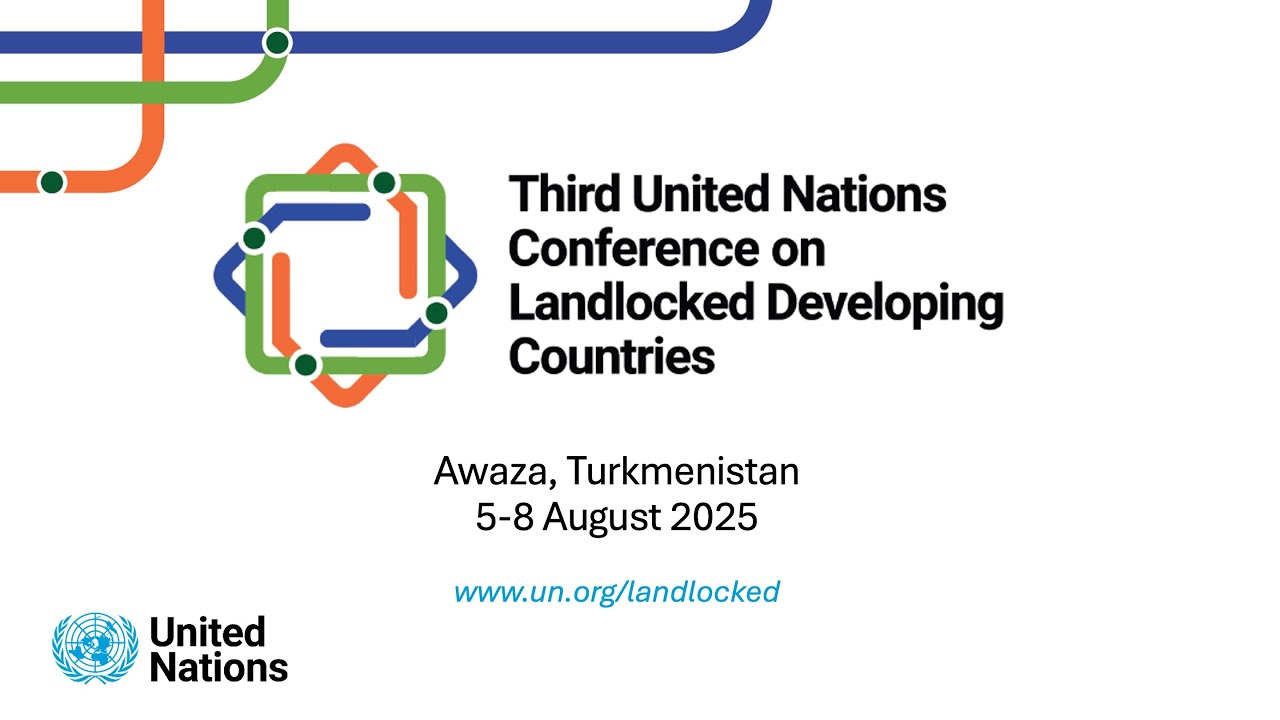
The Third UN Conference on Landlocked Developing Countries in Awaza, Turkmenistan, opens an opportunity to explore meaningful partnerships to unlock the potential of landlocked developing countries.
Landlocked Developing Countries (LLDCs) are locked out: with no direct territorial access to the sea, they struggle with international trade, connectivity, and economic development.
Cut off from the global marketplace and without the means to develop adequate transport and logistics infrastructure, landlocked developing countries facing unique and significant challenges in achieving the sustainable development goals. By supporting these countries, we can help to build a more equitable and prosperous future for all.
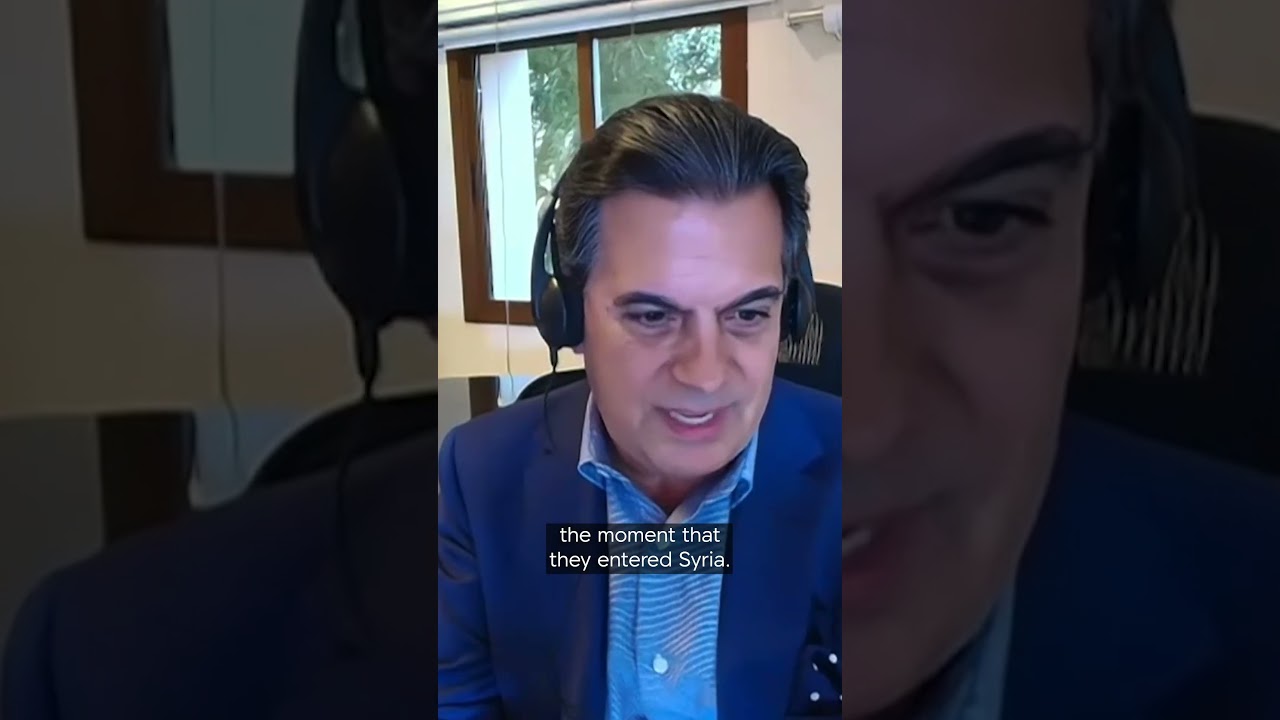
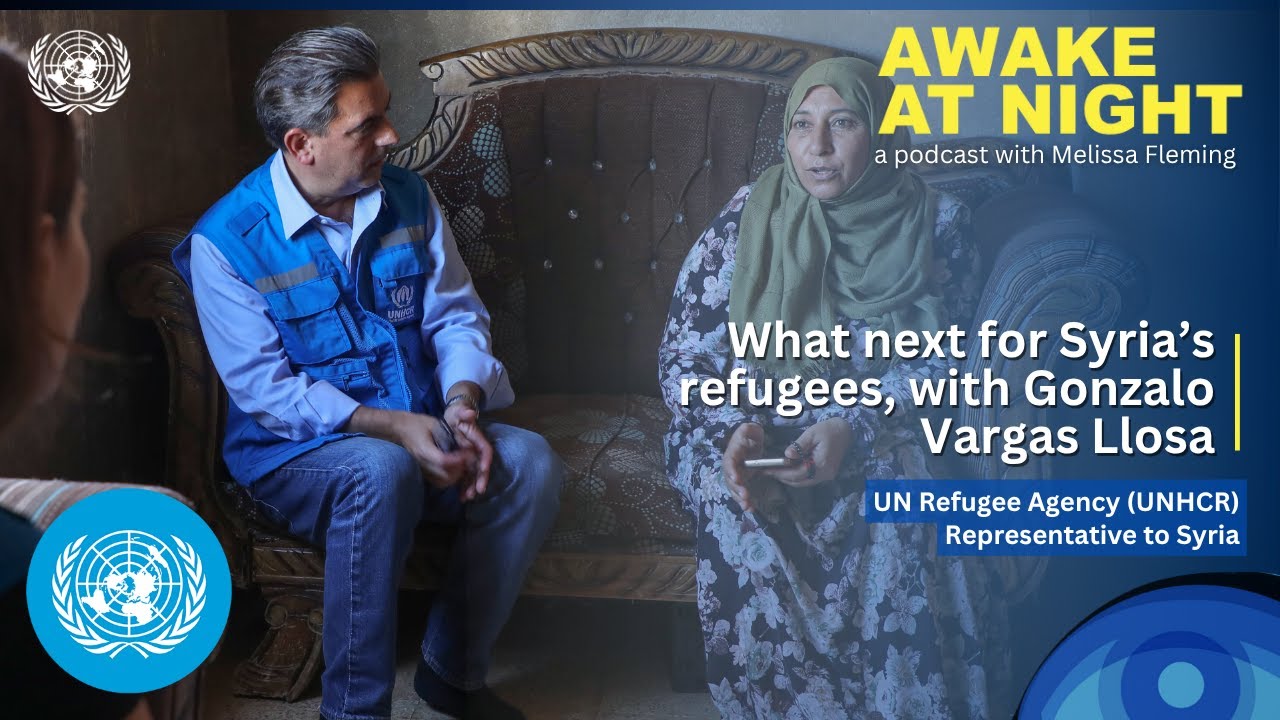
Rather than follow in the footsteps of his late father, a Nobel-prize winning writer, Gonzalo Vargas Llosa opted instead to serve humanity. Now the UN High Commissioner for Refugees’ Representative to Syria, he just witnessed a historic end to 14 years of conflict and crisis.
“There were these long, long lines of cars of Syrian refugees coming back from Lebanon. So many of them stopped the car the moment that they entered Syria, they got out of the car, they kissed the ground … saying we are so happy to be back in this new Syria,” Gonzalo shared.
The fall of the Assad regime has brought fresh hope for millions of displaced Syrians. Yet with a lack of housing, services and jobs still preventing most from returning, the UN is calling for action to support returnees.
In this episode, Gonzalo Vargas Llosa looks back on a career full of seismic turning points, and reflects on the painful sacrifices of a life spent in service.
Full podcast: https://youtu.be/rLEjDXUboEI
Listen to more Awake at Night episodes: https://music.youtube.com/playlist?list=PLwoDFQJEq_0b6hu1e8oxsch9W0D7vkNqt
About Awake at Night
Hosted by Melissa Fleming, UN Under-Secretary-General for Global Communications, the podcast ‘Awake at Night’ is an in-depth interview series focusing on remarkable United Nations staff members who dedicate their career to helping people in parts of the world where they have the hardest lives – from war zones and displacement camps to areas hit by disasters and the devastation of climate chan
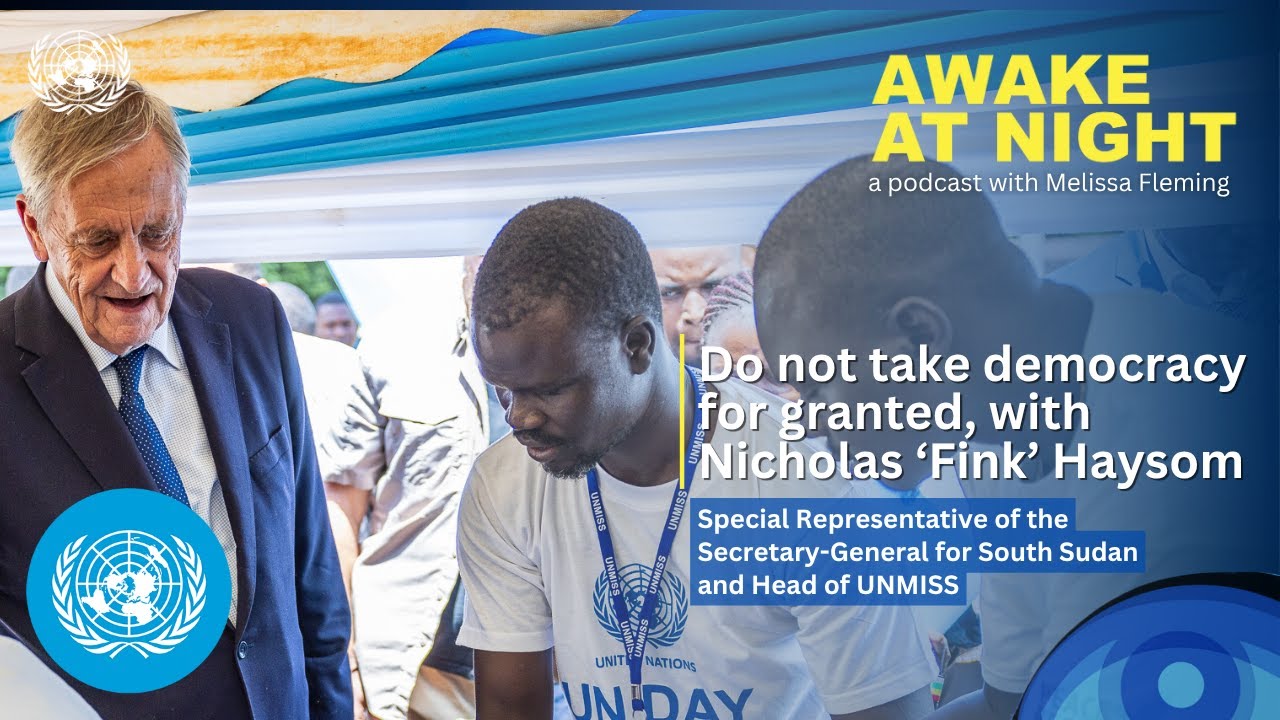
As a young white activist in South Africa, Nicholas Haysom risked detention to oppose the apartheid regime, later working alongside Nelson Mandela. Now Special Representative of the Secretary-General for South Sudan and Head of the United Nations Mission there, he is still striving tirelessly in pursuit of peace and human rights.
“The lesson of [Nelson] Mandela is not just being a nice person, it’s perseverance in your ideals. It’ll change the world.”
After a long and varied career, Nicholas (Fink) Haysom is supporting recovery and resilience in South Sudan, the UN’s newest member state. In this episode, he reflects on helping the world’s youngest nation build a better future, on why thorny negotiations are always necessary to move on from any civil war, and on why lasting peace should never be taken for granted.
[00:00] Introduction
[02:01] Growing up in Apartheid South Africa
[04:35] Political awakening and activism
[06:44] Enduring arrests and solitary confinement
[10:33] The end of apartheid
[12:58] Becoming Nelson Mandela’s legal advisor
[15:23] Working with Nelson Mandela and lessons learned
[19:06] Joining the United Nations
[21:55] Challenges of peace agreements
[23:56] Leading UN efforts in South Sudan
[27:09] What keeps Nicholas awake at night
[28:00] Gratitude for a meaningful career
[30:06] Hope for the next generation
[31:22] Seeing Mandela’s statue at UNHQ
[32:34] Closing remarks
Listen to more Awake at Night episodes: https://music.youtube.com/playlist?list=PLwoDFQJEq_0b6hu1e8oxsch9W0D7vkNqt
About Awake at Night
Hosted by Melissa Fleming, UN Under-Secretary-General for Global Communications, the podcast ‘Awake at Night’ is an in-depth interview series focusing on remarkable United Nations staff members who dedicate their career to helping people in parts of the world where they have the hardest lives – from war zones and displacement camps to areas hit by disasters and the devastation of climate change.
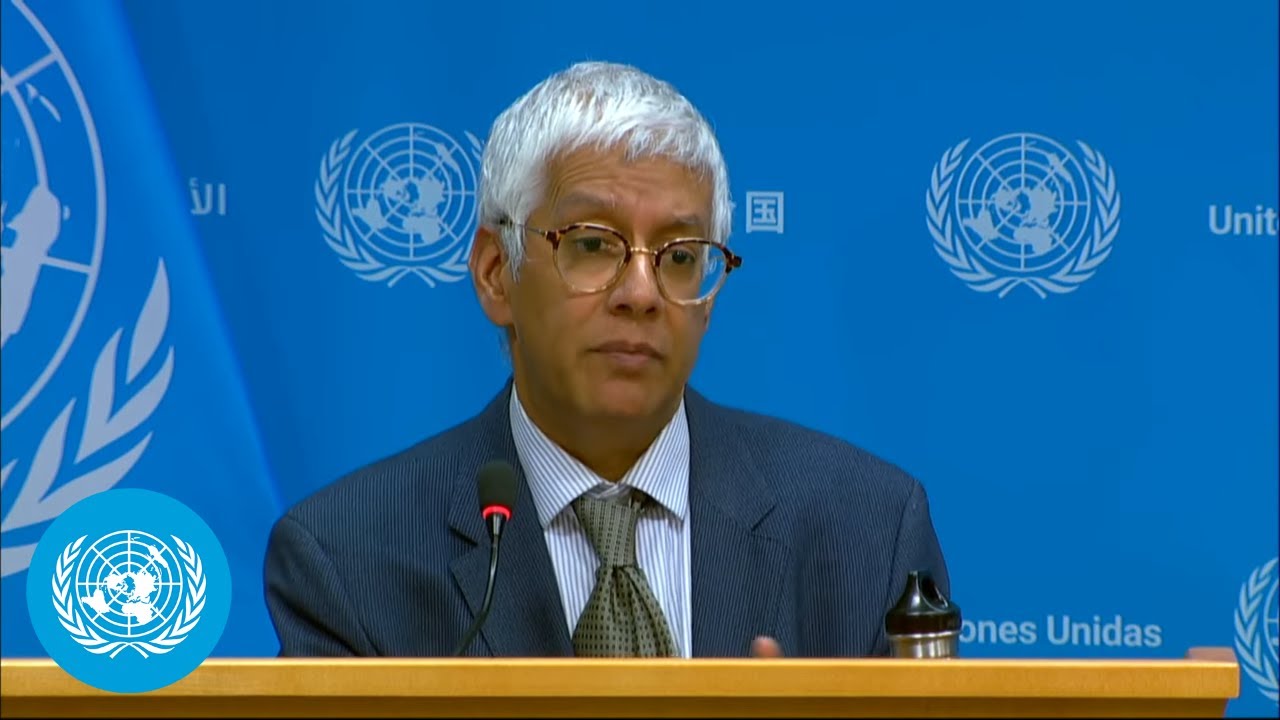
Noon briefing by Farhan Haq, Deputy Spokesperson for the Secretary-General.
Highlights:
Myanmar
Helsinki Final Act
Occupied Palestinian Territory
Syria
UNIFIL
Ukraine
Haiti
Security Council
Briefings Tomorrow
MYANMAR
The UN remains concerned by ongoing violence in Myanmar, including aerial bombardment hitting civilians and civilian infrastructure. Civilians and humanitarian workers must be protected. Any pathway out of the deteriorating situation in Myanmar requires an end to the violence and unimpeded access of relief workers and supplies to meet the enormous humanitarian needs exacerbated since the 28 March earthquakes.
The Secretary-General reiterates his concern over the military’s plan to hold elections amid ongoing conflict and human rights violations and without conditions, including safety and security, that would permit the people of Myanmar to freely and peacefully exercise their political rights.
Security Council Resolution 2669 (2022) calls for immediately releasing all arbitrarily detained prisoners, including President Win Myint and State Counsellor Aung San Suu Kyi; upholding democratic institutions and processes; and pursuing in constructive dialogue and reconciliation in accordance with the will and interests of the people of Myanmar.
The United Nations is committed to staying and delivering in Myanmar and to working with all stakeholders, including ASEAN and other regional actors, to attain sustainable peace.
HELSINKI FINAL ACT
Today, the Secretary-General addressed via a video message the High-level Conference commemorating the Fiftieth Anniversary of the Helsinki Final Act. He noted that we are witnessing a dangerous drift away from commitments that have safeguarded peace for generations. Yet, he said, in this moment of peril, the values enshrined in the UN Charter and echoed in the Helsinki Final Act – sovereignty, territorial integrity and peaceful coexistence – remain our moral and strategic compass.
The Secretary-General called on all to recommit to the spirit of Helsinki by strengthening regional partnerships to renew multilateralism, by principled leadership to uphold international law, and by forging unity of purpose to build a future of mutual respect, resilience, and shared prosperity.
Full Highlights: https://www.un.org/sg/en/content/noon-briefing-highlight?date%5Bvalue%5D%5Bdate%5D=31%20July%202025
The Third UN Conference on Landlocked Developing Countries in Awaza, Turkmenistan, opens an opportunity to explore meaningful partnerships to unlock the potential of landlocked developing countries.
Landlocked Developing Countries (LLDCs) are locked out: with no direct territorial access to the sea, they struggle with international trade, connectivity, and economic development.
Cut off from the global marketplace and without the means to develop adequate transport and logistics infrastructure, landlocked developing countries facing unique and significant challenges in achieving the sustainable development goals. By supporting these countries, we can help to build a more equitable and prosperous future for all.
The Third UN Conference on Landlocked Developing Countries opens an opportunity to explore meaningful partnerships to unlock the potential of landlocked developing countries.
– Opening Ceremony
– Plenary Session, General Debate
Landlocked Developing Countries (LLDCs), lacking direct sea access, face hurdles in trade, connectivity, and development. Without coastal ports, they rely on transit nations, causing higher trade costs and delays. Despite challenges, LLDCs host vibrant communities with untapped potential.
The Third UN Conference on LLDCs offers a chance to explore solutions and forge partnerships, addressing challenges and unlocking their full potential for a more equitable and prosperous future.
Rather than follow in the footsteps of his late father, a Nobel-prize winning writer, Gonzalo Vargas Llosa opted instead to serve humanity. Now the UN High Commissioner for Refugees’ Representative to Syria, he just witnessed a historic end to 14 years of conflict and crisis.
“There were these long, long lines of cars of Syrian refugees coming back from Lebanon. So many of them stopped the car the moment that they entered Syria, they got out of the car, they kissed the ground … saying we are so happy to be back in this new Syria,” Gonzalo shared.
The fall of the Assad regime has brought fresh hope for millions of displaced Syrians. Yet with a lack of housing, services and jobs still preventing most from returning, the UN is calling for action to support returnees.
In this episode, Gonzalo Vargas Llosa looks back on a career full of seismic turning points, and reflects on the painful sacrifices of a life spent in service.
[00:00] Introduction
[01:10] A turning point in Damascus
[04:10] A new atmosphere
[10:28] The emotional reunions
[12:42] Fears of another exodus
[15:43] What keeps Gonzalo awake at night
[19:29] Gonzalo’s humanitarian awakening
[25:16] Why work in the field matters
[27:23] The personal cost
[34:22] A hope for the future
[35:41] Closing remarks
Listen to more Awake at Night episodes: https://music.youtube.com/playlist?list=PLwoDFQJEq_0b6hu1e8oxsch9W0D7vkNqt
About Awake at Night
Hosted by Melissa Fleming, UN Under-Secretary-General for Global Communications, the podcast ‘Awake at Night’ is an in-depth interview series focusing on remarkable United Nations staff members who dedicate their career to helping people in parts of the world where they have the hardest lives – from war zones and displacement camps to areas hit by disasters and the devastation of climate change.
Noon briefing by Farhan Haq, Deputy Spokesperson for the Secretary-General.
Highlights:
– Occupied Palestinian Territory
– Sudan
– Somalia
– Pacific Tsunami Warnings
– Haiti
– Cholera
– Tax Cooperation
– International Days
OCCUPIED PALESTINIAN TERRITORY
The Office for the Coordination of Humanitarian Affairs warns that four days since the start of tactical pauses in Gaza declared by the Israeli authorities, we are still seeing casualties among those seeking aid and more deaths due to hunger and malnutrition.
Parents continue to struggle to save their starving children. In a social media post, UNICEF said that this is a condition that we can prevent and called for increased humanitarian access.
Aid workers in Gaza have not been spared. UN partners report high workloads, burnout and exhaustion – due mainly to the lack of food – among frontline workers as well as among caseworkers in mental health and psycho-social support facilities.
While the UN and its partners are taking advantage of any opportunity to support people in need during the unilateral tactical pauses, the conditions for the delivery of aid and supplies are far from sufficient. As an example of the delivery of aid challenges, you’ll recall that the Kerem Shalom crossing is a fenced-off area. For our drivers to access it, Israeli authorities must approve the mission, provide a safe route through which to travel, provide multiple ‘green lights’ on movement, as well as a pause in bombing, and, ultimately, open the iron gates to allow us to enter.
On the issue of fuel, last week, the UN brought in limited quantities of fuel through the Kerem Shalom and Zikim crossings, almost half of which were transferred to the north to support vital health, emergency, water and telecommunications needs.
OCHA reiterates that current fuel entries are insufficient to meet life-saving critical needs and represent a drop in the ocean of needs.
OCHA again stresses that a permanent ceasefire is needed more than ever. Unilateral tactical pauses alone do not allow for the continuous flow of supplies required to meet immense needs levels in Gaza.
Meanwhile, desperate, hungry people continue to offload the small amounts of aid from the trucks that are able to exit the crossings.
The UN and our partners continue to coordinate humanitarian movements inside Gaza with the Israeli authorities. Yesterday, three facilitated missions allowed our staff to collect cargo containing food from the Kerem Shalom and Zikim crossings and allowed for fuel to be transferred within Gaza. However, the others faced impediments, particularly delays in receiving the green light to move by the Israeli authorities, and one had to be cancelled.
OCHA reiterates that in order to scale-up the delivery of aid in a manner that begins to meet people’s tremendous needs, it is critical that all crossings must open, a broad range of supplies – both humanitarian and commercial – be allowed to enter, aid movements inside Gaza be safeguarded and facilitated in a timely manner, and that humanitarians be allowed to do their jobs.
Full Highlights:
https://www.un.org/sg/en/content/ossg/noon-briefing-highlight?date%5Bvalue%5D%5Bdate%5D=30+July+2025
The latest Integrated Food Security Phase Classification (IPC) report reveals a worsening hunger crisis in Gaza, according to the World Food Programme (WFP). “What the data tells us is that two of the three indicators that we monitor have reached famine thresholds,” said Jean Martin Bauer, WFP’s Director of Food Security and Nutrition Assessments. He added that the overall situation has deteriorated since the previous IPC assessment in May, which had already warned of famine risk.
The three indicators used to determine famine levels are household food deficits, acute malnutrition, and mortality. Briefing reporters in New York today (Jul 29) Bauer said food consumption has sharply declined across the territory. “Today, we’ve got over 33 percent of the population that goes for an entire day without having access to any food,” he said.
Malnutrition has also spiked. “The levels of global acute malnutrition have quadrupled in Gaza City between May and July,” Bauer noted.
While humanitarian pauses have allowed limited aid to trickle in, WFP officials say current access remains inadequate.
“Since Sunday, we’ve only been able to move approximately half of what we’ve requested to move,” said Ross Smith, WFP’s Director of Emergency Preparedness and Response. “Because people are desperate and the situation on the ground is such that crowds are swarming convoys of the relief supplies, we’re not able to do the proper distributions that we want.”
Smith added that live fire directed at civilians continues to disrupt aid operations. “We continue every day to see casualty incidents,” he said.
UN Under-Secretary-General for Peace Operations Jean-Pierre Lacroix said, without the strong, united political support of United Nations Security Council members, peacekeeping missions are relegated to only achieving the ‘intermediate goals of peacekeeping.’”
Today (29 Jul), addressing the Security Council about adapting peace operations for the pursuit of political solutions, Lacroix, Under-Secretary-General for Peace Operations, “We continue to see the implications of the polarization of this Security Council. As I have stated here and in related forums, without the strong, united political support of United Nations Security Council members, peacekeeping missions are relegated to only achieving the ‘intermediate goals of peacekeeping.’”
He added, “We should not discount the value of these, which include managing conflicts, maintaining ceasefires and protecting hundreds of thousands of civilians every day. But it’s a less desirable and more expensive outcome than Council Members providing the requisite political support that would enable peacekeeping to reach its ultimate objective of enabling the parties to the conflict to reach durable peace – one that they can maintain following the successful drawdown of a peacekeeping mission.”
He also said, “Peace operations in general and peacekeeping missions in particular will not be able to do their utmost to enable a countries transition from conflict to peace or simply to implement the mandates provided by this Security Council, if they are not given the requisite resources to do so.”
He stressed, “While we continue to seek efficiencies, including but not exclusively through UN80, I would like to reiterate the Secretary-General’s request to pay in full and on time their contributions. Our ability to keep the peace requires it.”
Martha Ama Akyaa Pobee, UN Assistant Secretary-General for Africa, addressed the Council on behalf of Under-Secretary-General for Political and Peacebuilding Affairs Rosemary DiCarlo.
She said, “The trust deficit we see today did not exist with many of our more successful missions in the past – this rich history must be re-explored and mined.”
She also said, “To be successful, our political missions must be responsive to the needs of their host State or States – and, conversely, enjoy the support of their host State or States. The responsibility for achieving political solutions rests with national actors.”
Noon briefing by Farhan Haq, Deputy Spokesperson for the Secretary-General.
Highlights:
IPC Report
IPC/Secretary-General
Occupied Palestinian Territory
Lebanon
Deputy Secretary-General
Security Council
Guatemala
Cambodia/Thailand
Dr. David Nabarro
Noon Briefing Guests
IPC REPORT
The World Food Programme (WFP) and UNICEF warned today that Gaza faces the grave risk of famine, as food consumption and nutrition indicators have reached their worst levels since the conflict began. That’s according to data shared in the latest Integrated Food Security Phase Classification (IPC) Alert.
The IPC Alert highlights that two out of the three famine thresholds have now been breached in parts of the territory.
Food consumption – the first core famine indicator – has plummeted in Gaza since the last IPC Update in May 2025. Data shows that more than one in three people (39 per cent) are now going days at a time without eating. More than 500,000 people – nearly a quarter of Gaza’s population – are enduring famine-like conditions, while the remaining population is facing emergency levels of hunger.
Acute malnutrition, the second core famine indicator, has risen in Gaza at an unprecedented rate. In Gaza City, malnutrition levels among children under five have quadrupled in two months, reaching 16.5 per cent. This signals a critical deterioration in nutritional status and a sharp rise in the risk of death from hunger and malnutrition.
Acute malnutrition and reports of starvation-related deaths, the third core famine indicator, are increasingly common, but collecting strong data under current circumstances in Gaza remains very difficult as health systems, already decimated by nearly three years of conflict, are collapsing.
IPC/SECRETARY-GENERAL
In response to the IPC alert, the Secretary-General said the following:
“The latest Integrated Food Security Phase Classification Alert confirms what we have feared: Gaza is on the brink of famine.
The facts are in — and they are undeniable.
Palestinians in Gaza are enduring a humanitarian catastrophe of epic proportions. This is not a warning. It is a reality unfolding before our eyes.
The trickle of aid must become an ocean. Food, water, medicine, and fuel must flow in waves and without obstruction.
This nightmare must end.
Ending this worst-case scenario will take the best efforts of all parties — now.
We need an immediate and permanent humanitarian ceasefire; the immediate and unconditional release of all hostages; and full, unfettered humanitarian access across Gaza.
This is a test of our shared humanity – a test we cannot afford to fail.”
OCCUPIED PALESTINIAN TERRITORY
Turning to Gaza, the Office for the Coordination of Humanitarian Affairs warns that we are making the most of the steps announced by the Israeli authorities to ease the delivery of aid into and across Gaza. We are collecting more supplies at the crossings and bringing more in from outside to restock.
Our colleagues in the ground say the Israeli-declared tactical pauses have reduced the intensity of hostilities, but not significantly enough, in times and areas where these are meant to apply. On Sunday and Monday – the two first days of the pauses – the UN and our partners were able to bring into Gaza more food, mainly wheat flour, alongside ready-to-use infant formula, high-energy biscuits, diapers, vaccines and much needed fuel. But OCHA says the volume of goods coming in is still far from enough.
Our colleagues say that most aid is still being offloaded by crowds before reaching where it’s supposed to go. But market monitoring shows prices for basic goods are starting to drop, which could point to better operating conditions if aid flows further increase and supplies saturate the area.
OCHA reminds us that commercial imports need to resume, sooner rather than later. No humanitarian operation can fully support 2.1 million people on its own. And for people to feel reassured that aid is flowing regularly, tactical pauses won’t cut it. What’s desperately needed is a full, permanent ceasefire.
Meanwhile, throughout most of the Gaza Strip, the UN and our partners are still required to coordinate humanitarian movements with the Israeli authorities. We’re seeing fewer outright denials by the Israeli authorities, but teams are still facing impediments on the ground.
Full highlights: https://www.un.org/sg/en/content/noon-briefing-highlight?date%5Bvalue%5D%5Bdate%5D=29%20July%202025
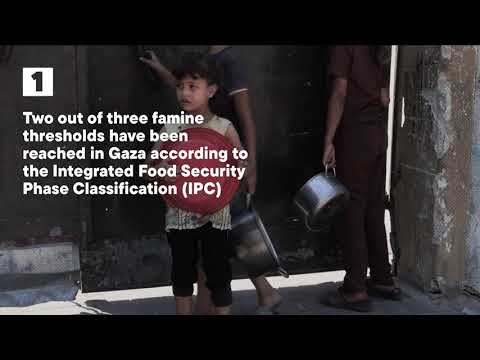
According to the Integrated Food Security Phase Classification (IPC) platform, two out of three famine thresholds have been reached in Gaza: plummeting food consumption and acute malnutrition. Famine has not been declared as the third criteria, deaths from malnutrition, cannot be demonstrated.
There is mounting evidence that “widespread starvation, malnutrition and disease” are driving a rise in hunger-related deaths, which is the third famine indicator.
The context to the alert is stark: one in three people is now going without food for days at a time, the IPC said. Hospitals are also overwhelmed and have treated more than 20,000 children for acute malnutrition since April. At least 16 children under five have died from hunger-related causes since mid-July.
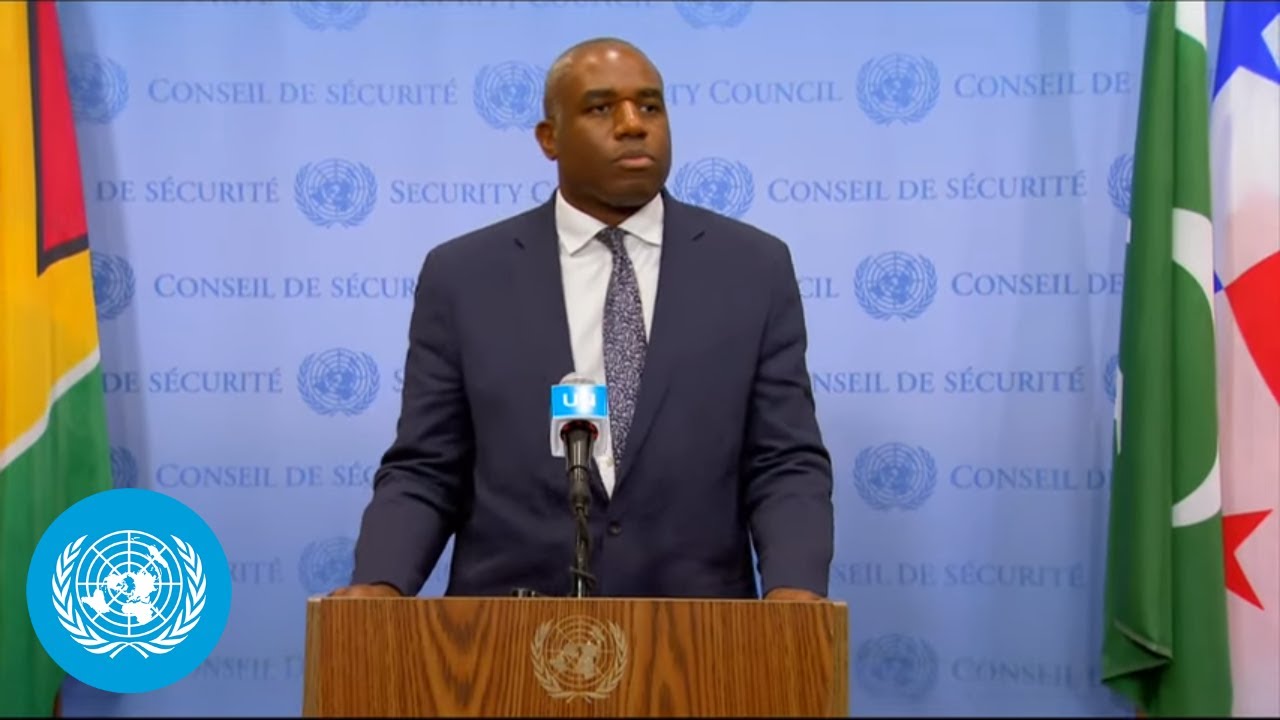
Comments to the media by the Rt. Hon. David Lammy, MP (Secretary of State for Foreign, Commonwealth and Development Affairs of the United Kingdom of Great Britain and Northern Ireland), on Palestine – Security Council Media Stakeout.
UN chief said, “The creeping annexation of the occupied West Bank is illegal. It must stop.”
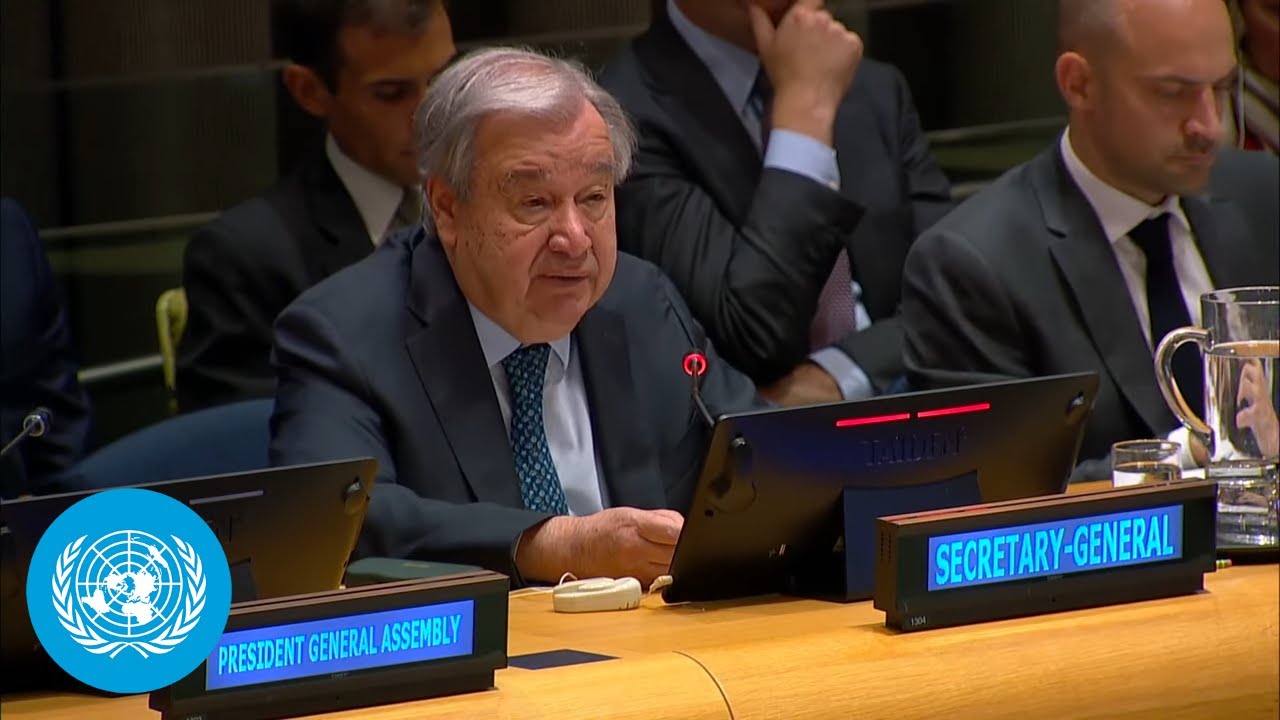
Addressing the High-level International Conference for the Peaceful Settlement of the Question of Palestine and the Implementation of the Two-State Solution today (28 Jul), UN Secretary-General Antonio Guterres called for renewed political will to achieve a two-state solution and condemned actions that undermine peace.
He said, “Nothing can justify the horrific 7 October terror attacks by Hamas and the taking of hostages, both of which I have repeatedly condemned. And nothing can justify the obliteration of Gaza that has unfolded before the eyes of the world.”
The Secretary-General will also condemn ongoing actions that undermine peace, including the demolition of Palestinian homes, forced displacement, demographic changes, and Israel’s recent Knesset declaration supporting annexation of the West Bank.
He continued, “These are not isolated events. They are part of a systemic reality that is dismantling the building blocks of peace in the Middle East. And yet, precisely because of the grim realities, we must do even more to realize the two-State solution.”
The Secretary-General reaffirmed that the two-state solution remains the only viable and legal framework for peace, with Israel and Palestine living side-by-side in peace and security, based on pre-1967 borders and with Jerusalem as the capital of both states.
He emphasized that both must be independent, democratic, and fully recognized by the international community.
This, he said, is the only credible path to lasting peace — not only between Israelis and Palestinians, but across the wider Middle East.
He then called for bold, principled leadership to make the difficult decisions needed to achieve this vision.
Mohammad Mustafa, Palestinian Prime minister, said that this conference is also a message “to the Israeli people: that there is a path to peace and regional integration. It will be achieved through our independence, not our destruction. Through the realization of our rights, not their continued denial. That Palestinians are not condemned to perpetual occupation and exile, and Palestinian and Israeli are not dumbed to be at eternal war.”
He also said, “Hamas must stop his rule of Gaza and hand over its weapons to the Palestinian authority. And we stand ready to invite regional and international forces to be deployed and full cooperate coordination with the state of Palestine as a part of a stabilization and protection mission.”
Jean-Noël Barrot, French Minister for Europe and Foreign Affairs, and Prince Faisal bin Farhan Al-Saud, Minister of Foreign Affairs of the Kingdom of Saudi Arabia briefed correspondents after the morning session.
The French Minister said, “The President of the Republic, through a letter delivered on July 24 by the Consul General of France to the President of the Palestinian Authority, Mahmoud Abbas, has committed to recognizing the State of Palestine at the upcoming United Nations General Assembly in September. With this decision, France reaffirms the Palestinian people’s right to self-determination in the face of facts accomplished on the ground, the humanitarian catastrophe that is plunging an entire people into despair, and existential threat.”
He also said, “Our expectations from the Israeli government: First, the lifting of the financial blockade. The payment of the €2 billion owed by the Israeli government to the Palestinian Authority. The abandonment of colonization projects, particularly the E1 project, which—with 3,400 housing units being built in the West Bank—threatens the territorial continuity of the future State of Palestine. The cessation of the activities of the Humanitarian Foundation for Gaza and the militarized system of humanitarian aid distribution in Gaza.”
The Saudi Minister of Foreign Affairs said, “For the Kind of Saudi Arabia, normalization with Israel can only come through the establishment of a Palestinian state. That position remains the same, and it is based on a strong conviction that only through the establishment of a Palestinian state, and only through addressing the legitimate rights of the Palestinian people to self-determination can we have sustainable pace and reintegration in the region.”
The High-level International Conference for the Peaceful Settlement of the Question of Palestine and the Implementation of the Two-State Solution held its first meeting in New York on 17 June 2025.
This meeting was subsequently suspended and resumed today at UNHQ, in New York.
It provides a platform to consolidate key insights, highlight consensus across political, legal, economic, and humanitarian tracks, and articulate concrete next steps.
The session is both a culmination of months of coordinated diplomatic work and a launchpad for action, and laying the groundwork for sustained international engagement, accountability, and implementation in support of a just and lasting peace.
Cookies are used on our website to make your use as comfortable as possible. These so-called essential cookies are stored in your browser because they are essential for the basic functions of the website.
We also use third-party cookies for online advertising on our sites. These cookies are only stored in your browser with your consent. By clicking here you agree to the use of these additional cookies or you can reject them:
This website uses cookies to improve your experience while you navigate through the website. Out of these, the cookies that are categorized as necessary are stored on your browser as they are essential for the working of basic functionalities of the website. We also use third-party cookies that help us analyze and understand how you use this website. These cookies will be stored in your browser only with your consent. You also have the option to opt-out of these cookies. But opting out of some of these cookies may affect your browsing experience.
Necessary cookies are absolutely essential for the website to function properly. These cookies ensure basic functionalities and security features of the website, anonymously.
Cookie
Duration
Description
cookielawinfo-checkbox-analytics
11 months
This cookie is set by GDPR Cookie Consent plugin. The cookie is used to store the user consent for the cookies in the category "Analytics".
cookielawinfo-checkbox-functional
11 months
The cookie is set by GDPR cookie consent to record the user consent for the cookies in the category "Functional".
cookielawinfo-checkbox-necessary
11 months
This cookie is set by GDPR Cookie Consent plugin. The cookies is used to store the user consent for the cookies in the category "Necessary".
cookielawinfo-checkbox-others
11 months
This cookie is set by GDPR Cookie Consent plugin. The cookie is used to store the user consent for the cookies in the category "Other.
cookielawinfo-checkbox-performance
11 months
This cookie is set by GDPR Cookie Consent plugin. The cookie is used to store the user consent for the cookies in the category "Performance".
viewed_cookie_policy
11 months
The cookie is set by the GDPR Cookie Consent plugin and is used to store whether or not user has consented to the use of cookies. It does not store any personal data.
Functional cookies help to perform certain functionalities like sharing the content of the website on social media platforms, collect feedbacks, and other third-party features.
Performance cookies are used to understand and analyze the key performance indexes of the website which helps in delivering a better user experience for the visitors.
Analytical cookies are used to understand how visitors interact with the website. These cookies help provide information on metrics the number of visitors, bounce rate, traffic source, etc.
Advertisement cookies are used to provide visitors with relevant ads and marketing campaigns. These cookies track visitors across websites and collect information to provide customized ads.