Palestine, Lebanon, Israel & other topics – Daily Press Briefing (15 July 2025) | United Nations

Palestine, Lebanon, Israel & other topics – Daily Press Briefing (15 July 2025) | United Nations

Hier klicken, um den Inhalt von YouTube anzuzeigen.
Learn more in YouTube’s privacy policy.

Noon Briefing by Stéphane Dujarric, Spokesperson for the Secretary-General.

Highlights:
Occupied Palestinian Territory
Lebanon/Israel
Syria/Suweida
Syria/Humanitarian
Sudan
Democratic Republic of the Congo
Afghanistan
Nigeria
Youth Skills Day
Financial Contribution
Briefing

OCCUPIED PALESTINIAN TERRITORY
The Office for the Coordination of Humanitarian Affairs reports that the Israeli military continues to issue displacement orders, telling Palestinians to relocate to Al Mawasi, an already overcrowded area lacking the basics for survival. This is happening obviously amid ongoing hostilities.
Today’s displacement order covers approximately 9 square kilometres, encompassing 11 neighbourhoods across Gaza and North Gaza governorates, where at least 120,000 people are estimated to be residing.
Civilians must be protected, including those fleeing and forced to leave through displacement orders, as well as those who remain despite those orders.
Food insecurity is, as you can imagine, also worsening.
On the fuel crisis, OCHA reports that Israeli authorities continue to allow the entry of limited supplies of fuel. So far, it’s been a rate of about 75,000 litres per working day, with nothing allowed on Friday and Saturday and a lag of a day or two before fuel can be collected from the Palestinian side of Kerem Shalom crossing. We and our partners reiterate that hundreds of thousands of litres of fuel are critically needed every day to keep life-saving services going.
Inside Gaza, planned missions by UN partners to deliver aid and services continue to face significant access challenges. Many are either denied outright or obstructed due to unpredictable and lengthy coordination procedures.
The restrictive operational environment is making it increasingly difficult to deliver core humanitarian services, including food, healthcare, shelter, water, sanitation, protection and education, which is further worsening an already catastrophic situation.
We reiterate our call on the Israeli authorities to allow and facilitate unimpeded and safe flow of humanitarian and commercial supplies into Gaza – swiftly and at the scale necessary to save survivors.
The picture in the West Bank is also bleak.
A lot had been mentioned by our colleagues in Geneva this morning, but I can tell you that in the past weeks Israeli settlers and Israeli security forces have intensified their killings, attacks and harassment of Palestinians in the occupied West Bank, including East Jerusalem.
We call on Israel to immediately stop these killings, harassment and home demolitions across the occupied Palestinian territory. As the occupying power, Israel must take all feasible measures to ensure public order and safety in the West Bank. There must be thorough, independent and transparent investigations into all killings and all other alleged violations of international law.

LEBANON/ISRAEL
Moving north, UNIFIL peacekeepers stationed in southern Lebanon continue to observe a military presence and activities by Israel Defense Forces, including air violations by drones.
In the past days about the Israeli airstrikes on targets in Lebanon, we are aware of reports of Israeli airstrikes reportedly targeting Hizbullah positions in the Bekaa to the east of Beirut, resulting in several casualties. We, once again, urge the parties to uphold the cessation of hostilities and refrain from any activities that may endanger civilians.
And yesterday, UNIFIL peacekeepers found two unauthorized weapons caches in their area of operations, including one containing detonation wire coils and another containing mortars and anti-personnel mines. As per usual practice, these were referred to the Lebanese Armed Forces for disposal.
UNIFIL emphasizes that it is committed to impartially monitor and report on violations of resolution 1701 and support the parties in fulfilling their responsibilities under Security Council resolution 1701.
The UN remains committed to supporting the parties to uphold the cessation of hostilities and implement resolution 1701.

Full Highlights:
https://www.un.org/sg/en/content/noon-briefing-highlight?date%5Bvalue%5D%5Bdate%5D=15%20July%202025

For more Information or to watch the video on YouTube, click here.

Syria: UN urges Israel & Syria to uphold ceasefire & avoid escalating violence | United Nations

Syria: UN urges Israel & Syria to uphold ceasefire & avoid escalating violence | United Nations

Hier klicken, um den Inhalt von YouTube anzuzeigen.
Learn more in YouTube’s privacy policy.

Amid escalating intercommunal violence in Syria’s Sweida governorate, and Israel’s resumed and intensified airstrikes on Syrian territory, Assistant Secretary-General Khaled Khiari today (17 Jul) called on Israel and Syria to “refrain from any action that would further undermine” the 1974 Disengagement of Forces Agreement “and the stability on the Golan.”

Khiari reiterated the Secretary-General’s “unequivocal condemnation of all violence against civilians, including all acts that fan the flames of sectarian tensions and rob the people of Syria of their opportunity for peace and reconciliation after fourteen years of brutal conflict.”

The Assistant Secretary-General for the Middle East, Asia and the Pacific, Departments of Political and Peacebuilding Affairs and Peace Operations also expressed condemnation at the Israeli airstrikes noting that they had “targeted the Damascus authorities’ forces and official buildings including the Ministry of Defence and the vicinity of the Presidential Palace, as well as the Mazzeh military airport.”

He said, “in addition to violating Syria’s sovereignty and territorial integrity, Israel’s actions undermine efforts to build a new Syria at peace with itself and the region and further destabilize Syria at a sensitive time,” adding that it was “ essential that both Israel and Syria uphold the terms of the 1974 Disengagement of Forces Agreement to preserve the ceasefire between both parties, and refrain from any action that would further undermine it and the stability on the Golan.”

Syrian Ambassador Qusay al-Dahhak told the Council that “Syria categorically rejects the pretexts used by the Israeli authorities to justify these acts of aggression,” adding that “such practices are merely an extension of the occupation’s systematic policies aimed at undermining Syria’s stability and dragging it into conflict.”

Al-Dahhak said, “despite the gravity of the Israeli attacks, the Syrian leadership acted with utmost wisdom and responded to American, Arab, and Turkish mediation efforts, whom we thank. These efforts helped prevent the region from sliding into an open confrontation.”

For his part, Israeli Ambassador Brett Jonathan Miller quoted the book of Leviticus, and said “we will not stand idly by as our close brothers and sisters are being slaughtered” as this was a “moral obligation” enshrined as Israeli law.

He said, “for this very reason, Israel carried out these precise strikes against jihadist militants in southern Syria.”

“Israel’s position is clear” Miller continued, “we have a commitment to preserve the southwestern region of Syria as a demilitarized area and to prevent the rise of terrorist threats along our border.”

Nearly 2,000 families have been displaced from areas impacted by violence in Sweida governorate and are currently sheltering in a dozen collective sites. Many are unable to return home due to damage, looting or destruction of their residences.

The health system in Sweida remains critically strained. Hospitals in neighbouring Dar’a governorate are also overwhelmed. These facilities are operating without power and facing severe supply shortages, with some patients transferred to Damascus. Reports indicate that at least two doctors in Sweida were killed during the recent clashes, and some health facilities have been used by armed groups, endangering patients, and staff.

The World Health Organization has dispatched 35 trauma and emergency surgery kits, enough for 1,750 interventions, but many remain undelivered due to access constraints. The interim health ministry has also mobilized medical supplies to be sent to the area.

For more Information or to watch the video on YouTube, click here.

Science Day 2025: Unlocking Tomorrow’s Solutions, Today | United Nations

Science Day 2025: Unlocking Tomorrow’s Solutions, Today | United Nations

Hier klicken, um den Inhalt von YouTube anzuzeigen.
Learn more in YouTube’s privacy policy.

Designed to foster exchange across disciplines and sectors, Science Day has become a recognized platform for identifying where science is contributing to the implementation of the Sustainable Development Goals (SDGs).

Designed to foster exchange across disciplines and sectors, Science Day has become a recognized platform for identifying where science is contributing to the implementation of the Sustainable Development Goals (SDGs) – and where more integration, support, and innovation are needed.

This edition will thus serve both as a strategic stocktaking moment and a platform for ‘horizon scanning’ – grounded in practice, yet ambitious in scope. It will explore how science is supporting SDG implementation today, where systemic gaps remain, and what kinds of science-policy collaboration will be needed to advance sustainable development in the years to come. It will also consider the complex global context in which this future must be navigated – marked by political fragmentation, financial uncertainty, and strain across multilateral institutions – and how science can remain a credible, trusted, and adaptive partner amid these dynamics.

Organized by International Science Council (ISC), Stockholm Environment Institute (SEI), United Nations Development Programme (UNDP), Sustainable Development Solutions Network (SDSN), and UN Department of Economic and Social Affairs (UN DESA).

Concept note: https://files.teamup.com/4777013/attachment/01JZ18R7606DMWB66SY37C4SGK/Science%20Day%202025.pdf?hash=679b6ced077cb1311fbb4c9555c1d5ac58bf2a9a6d692e91bb0f06f589b306b0

For more Information or to watch the video on YouTube, click here.
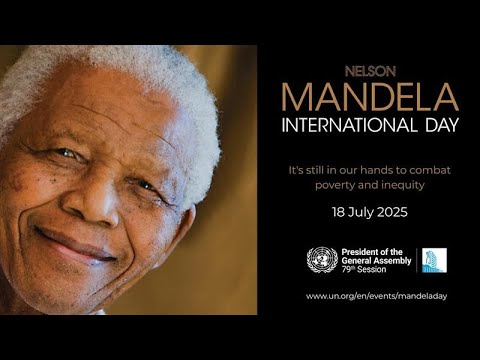
Nelson Mandela Day | United Nations

Nelson Mandela Day | United Nations

Hier klicken, um den Inhalt von YouTube anzuzeigen.
Learn more in YouTube’s privacy policy.

In recognition of the former South African President’s contribution to the culture of peace and freedom, UN General Assembly declares 18 July “Nelson Mandela International Day”.

Resolution A/RES/64/13 recognizes Mandela’s values and his dedication to the service of humanity in: conflict resolution; race relations; promotion and protection of human rights; reconciliation; gender equality and the rights of children and other vulnerable groups; the fight against poverty; the promotion of social justice.

Programme:

Opening remarks by H.E. Mr. Philemon Yang, President of the General Assembly
Statement by H.E. Mr. António Guterres, Secretary-General of the United Nations
Keynote by H.E. Ms. Naledi Pandor, former Minister of International Relations and Cooperation in South Africa
Awarding of the 2025 UN Mandela Prize to Ms. Brenda Reynolds and her remarks
Awarding of the 2025 UN Mandela Prize to Mr. Kennedy Odede and his remarks
Remarks from Member States

For more Information or to watch the video on YouTube, click here.
UN Secretary-General on Cyprus – Media Stakeout | United Nations

UN Secretary-General on Cyprus – Media Stakeout | United Nations

Hier klicken, um den Inhalt von YouTube anzuzeigen.
Learn more in YouTube’s privacy policy.

Media stakeout by António Guterres, Secretary-General of the United Nations, following the informal meeting on Cyprus held at the UN Headquarters in New York.

For more Information or to watch the video on YouTube, click here.
Cyprus, Syria & other topics – Daily Press Briefing (17 July 25) | United Nations

Cyprus, Syria & other topics – Daily Press Briefing (17 July 25) | United Nations

Hier klicken, um den Inhalt von YouTube anzuzeigen.
Learn more in YouTube’s privacy policy.

Noon Briefing by Stephanie Tremblay, Associate Spokesperson for the Secretary-General.

Highlights:
– Informal Meeting on Cyprus
– Syria
– Security Council / Syria
– Gaza
– Occupied Palestinian Territory
– Security Council / OPT
– U.N.I.F.I.L.
– Iraq
– Ukraine
– Sudan
– Senior Appointment

INFORMAL MEETING ON CYPRUS
As you know, the Secretary-General is convening here at the UN Headquarters the Greek Cypriot and Turkish Cypriot leaders as well as representatives of the guarantor powers of Greece, Türkiye and the United Kingdom for an informal meeting on Cyprus.
This morning, the Secretary-General held bilateral meetings with the heads of delegations. There is a plenary meeting taking place now, and this will be followed by a working lunch. The concluding session will take place this afternoon. 

SYRIA
I have an update for you on Syria, the Office for the Coordination of Humanitarian Affairs says that as of today, nearly 2,000 families have been displaced from areas impacted by violence in Sweida governorate, that’s according to one of our local partners. These families are currently sheltering in a dozen collective sites. Many are unable to return home due to damage, looting or destruction of their residences.
The health system in Sweida remains critically strained. Hospitals in neighbouring Dar’a governorate are also overwhelmed. These facilities are operating without power and facing severe supply shortages, with some patients transferred to Damascus. Reports indicate that at least two doctors in Sweida were killed during the recent clashes, and some health facilities have been used by armed groups, endangering patients and staff.
We and our partners are mobilizing to deliver humanitarian assistance and assess needs as security allows, and engaging with interim authorities to facilitate access.
The World Health Organization has dispatched 35 trauma and emergency surgery kits – enough for 1,750 interventions – but many remain undelivered due to access constraints. The interim health ministry has also mobilized medical supplies to be sent to the area.
We urge all parties to protect people caught up in the violence, including by allowing them to move freely to seek safety and medical assistance. Security forces must respect applicable international law, norms and standards throughout their operations.

SECURITY COUNCIL/SYRIA
And this afternoon, the Security Council will meet on Syria. Khaled Khiari, Assistant Secretary-General for the Middle East, Asia and the Pacific, will brief the Council members.

GAZA
The Secretary-General strongly condemns today’s reports of an Israeli strike on the Holy Family Church in Gaza, a place of worship and a sanctuary for civilians. Attacks on places of worship are unacceptable. People seeking shelter must be respected and protected, not hit by strikes.
Too many lives have already been lost. There is an urgent need for an immediate ceasefire and the immediate and unconditional release of all hostages.
The Secretary-General calls on all parties to ensure that civilians are respected and protected at all times and allow humanitarian aid to flow into the Strip at scale.

Full Highlights: https://www.un.org/sg/en/content/noon-briefing-highlight?date%5Bvalue%5D%5Bdate%5D=17%20July%202025

For more Information or to watch the video on YouTube, click here.

Sudan – Joint Security Council Media Stakeout | United Nations

Sudan – Joint Security Council Media Stakeout | United Nations

Hier klicken, um den Inhalt von YouTube anzuzeigen.
Learn more in YouTube’s privacy policy.

Joint Security Council Stakeout on Sudan and South Sudan by Ambassador Michael Imran Kanu, Permanent Representative of Sierra Leone and Ambassador Sandra Jensen Landi, Deputy Permanent Representative of Denmark, and accompanied by Representatives from France, Greece, Guyana, Panama, Republic of Korea, Slovenia, United Kingdom.

For more Information or to watch the video on YouTube, click here.

Gaza: UN Humanitarian Chief urges action to protect civilians and ensure aid access | United Nations

Gaza: UN Humanitarian Chief urges action to protect civilians and ensure aid access | United Nations

Hier klicken, um den Inhalt von YouTube anzuzeigen.
Learn more in YouTube’s privacy policy.

Addressing a Security Council meeting on the humanitarian situation in Gaza, Under-Secretary-General for Humanitarian Affairs Tom Fletcher today (16 Jul) said, “surely, we do not need to debate whether killing civilians waiting in line for life’s essentials meets the responsibility to provide for civilian needs.”

Fletcher said, “Israel, as the occupying power, is obligated to ensure that people have food and medical supplies. But that is not happening. Instead, civilians are exposed to death and injury, forcible displacement, stripped of dignity.”

Following reports of dozens of people killed or injured at one of the Israeli-militarized food distribution hubs this morning, he said, “we are awaiting the outcome of Israel’s investigation into this, and numerous earlier incidents” and asked Council Members to consider “whether Israel’s rules of engagement incorporate all feasible precautions to avoid and minimize civilian harm, in all circumstances.”

Fletcher told the Council that “each time that we report on what we see, we face threats of further reduced access to the civilians we are trying to serve. We face that tension everywhere but nowhere is that tension between our advocacy mandate and delivering aid greater than in Gaza. Visas are not renewed or reduced in duration, explicitly in response to our work on protection of civilians. Security clearances are not granted for staff to enter Gaza to continue their work and humanitarian partners are increasingly denied entry to Gaza.”

The Under-Secretary-General said, “we have a plan that works. It requires predictable aid, of different types and at scale, entering multiple crossings where people do not come under fire, travelling on routes that we choose, without long delays, being delivered to our warehouses and distribution points according to established UN aid mechanisms and humanitarian principles – the principles that you have given us the mandate to uphold.”

For more Information or to watch the video on YouTube, click here.
30th Anniversary of the Genocide in Srebrenica & other topics – Daily Press Briefing |11 Jul 25 | UN

30th Anniversary of the Genocide in Srebrenica & other topics – Daily Press Briefing |11 Jul 25 | UN

Hier klicken, um den Inhalt von YouTube anzuzeigen.
Learn more in YouTube’s privacy policy.

Noon Briefing by Stéphane Dujarric, Spokesperson for the Secretary-General.

Highlights:
– 30th Anniversary of the Genocide in Srebrenica
– Occupied Palestinian Territory
– Syria
– Memorandum of Understanding between the UN and the Russian Federation
– Haiti
– Attacks in the Red Sea
– Sudan
– Central African Republic
– World Population Day
– International Days
– Briefings

30TH ANNIVERSARY OF THE GENOCIDE IN SREBRENICA
Today is the International Day of Reflection and Commemoration of the 1995 Genocide in Srebrenica. In a message for the Day, the Secretary-General notes that as we mark this anniversary in Srebrenica – the worst atrocity on European soil since the Second World War. He stresses that this day is not only a moment of reflection, it is also a call to vigilance and action.
The Secretary-General points out that at a time when hate speech, denial and division are gaining ground, we must stand firm for truth and justice, adding that we must detect early warning signs and respond before violence takes hold, and that we must respect international law, we must defend human rights, and we must uphold the dignity of every individual, and also invest in reconciliation and peace.
And also to note that Rosemary DiCarlo, the Under-Secretary-General for Political and Peacebuilding Affairs, represented the Secretary-General at the official ceremony that took place in Bosnia-Herzegovina today. In her remarks, she noted that the genocide in Srebrenica remains one of the darkest chapters in Europe’s recent history, a stark reminder of the consequences of hatred, division and the failure to protect civilians. She emphasized that the legacy of Srebrenica must be a world that never again turns away in the face of atrocity.
Also present from the UN side was Miguel Ángel Moratinos, the High Representative for the UN Alliance of Civilizations.

OCCUPIED PALESTINIAN TERRITORY
Turning to the situation in Gaza, the Office for the Coordination of Humanitarian Affairs says that every day without a ceasefire brings more preventable deaths – children dying in pain, and hungry people shot while trying to reach the trickle of aid that is allowed in.
And today, once again, we’ve seen horrifying reports of casualties – dozens of them – among people in Rafah who were simply trying to get food and other basic supplies for their families.
Meanwhile, the fuel crisis remains acute.
Yesterday – for the second straight day – our colleagues were able to pick up 75,000 litres of fuel and bring them to the Gaza strip. This is of course a positive development. However, these amounts are a small portion of what is actually required to sustain lifesaving operations every day in Gaza.
To be clear: fuel is still running out in Gaza. More fuel is needed than what is actually brought in. If the current limits aren’t lifted immediately, so we can bring in greater volumes, more services will go dark
We also urgently need unimpeded, safe access inside Gaza. Yesterday, our teams could provide hospitals with some of the fuel that came in – but only in the south. That’s because Israeli authorities denied our attempt to bring fuel to the north.
Such denials are life-threatening.
We know that hospitals in the north are on the verge of shutting down. But it’s not just hospitals: Fuel is also running out for ambulances, it is running out for water treatment facilities and it is running out for many other essential services, all of which are at risk of collapsing.
Overall, out of the 15 humanitarian movements attempted yesterday where coordination was required with the Israeli authorities, five were denied outright, four were initially approved but then faced impediments on the ground, and only six were fully facilitated. Critical missions – such as the evacuation of vulnerable people from high-risk areas, the retrieval of vehicles and spare tires, and the assessment of medical equipment – could not be accomplished.
The facilitation of movements also needs to be timely. OCHA reports that on Wednesday, Israeli authorities denied a request to reach part of Gaza city where 18 injured people were trapped under the rubble. By the time the mission was finally allowed through yesterday, no one was found alive.
And another important reminder from OCHA is that much-needed operations, such as the distribution of tents, cannot even be attempted as stocks are fully depleted, and Israeli authorities are blocking the entry of any shelter materials – for over 130 days now.
Meanwhile, active hostilities and insecurity continue to put civilians – including aid workers – at risk.

Full Highlights: https://www.un.org/sg/en/content/noon-briefing-highlight?date%5Bvalue%5D%5Bdate%5D=11%20July%202025

For more Information or to watch the video on YouTube, click here.
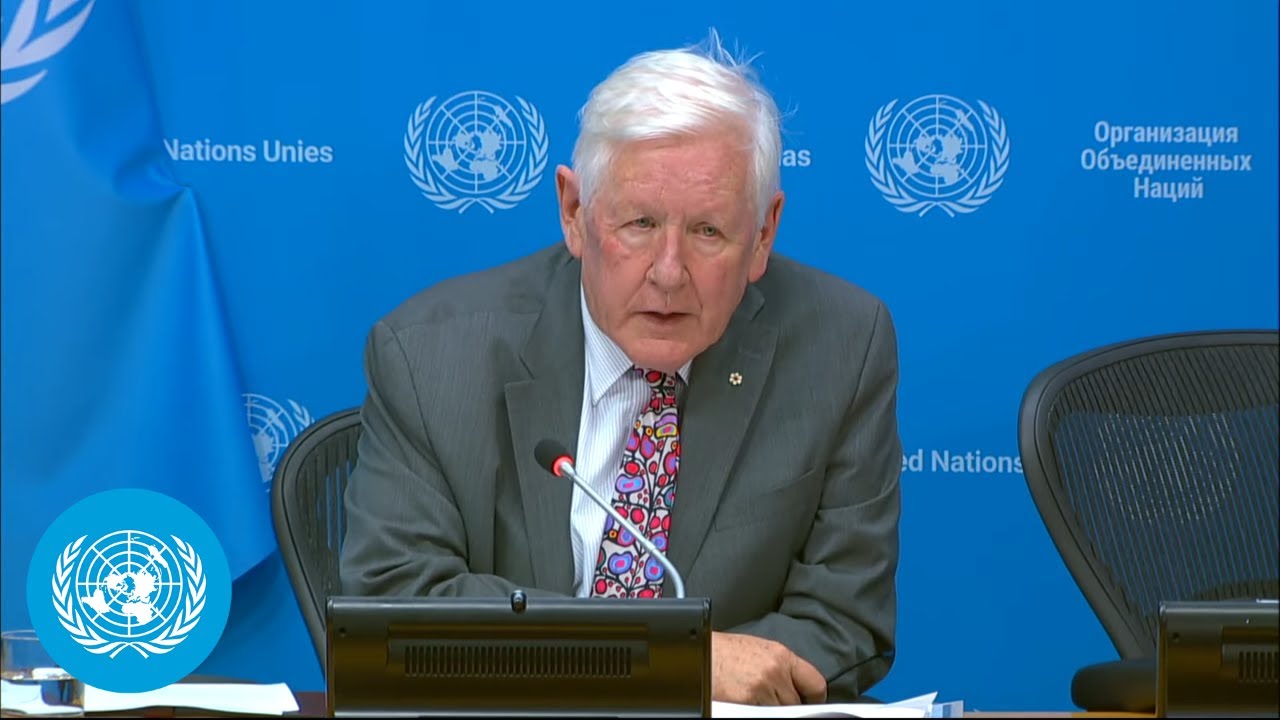
ECOSOC President Urges Global Solidarity to Rescue SDGs by 2030 – Press Briefing | United Nations

ECOSOC President Urges Global Solidarity to Rescue SDGs by 2030 – Press Briefing | United Nations

Hier klicken, um den Inhalt von YouTube anzuzeigen.
Learn more in YouTube’s privacy policy.

The President of the Economic and Social Council (ECOSOC) Bob Rae today (15 Jul) said, “a retreat from global solidarity will have a negative impact on our ability to improve the lives of the people of the world.”

Rae, who is presiding the 4th meeting of the UN ECOSOC High-level political forum (HLPF) on sustainable development, noted that the world remains off-track to achieve the Sustainable Development Goals (SDG’s) by 2030, but stressed that “it’s not a litany of failure.”

He said, “we ‘ve seen significant areas of improvement. We’ve reduced childhood mortality quite substantially in the last five years, we’ve had major success on improving maternal and childhood health. These have been very significant. We have more women going to school than ever before, more girls participating in the education system. We can point to many areas in which we’re in fact not necessarily on track, but where we have improved, compared to where we were before.”

The Canadian Ambassador said, “some decisions that have been taken with respect to the global economy and decisions that have been taken with respect to the funding of the critical institutions that we have created since 1945 have and are having a negative impact on the ability of countries to achieve what has to be achieved.”

He said, “nation states that have the means to provide greater support for sustainable development have chosen not to do so for their own domestic reasons. And that also represents a significant challenge for all of us and for the global system.”

Rae said, “a retreat from global solidarity will have a negative impact on our ability to improve the lives of the people of the world.”

Asked about the United States withdrawal from the World Health Organization (WHO) he said it was “It’s not a great day,” but added, “it’s not the end of the WHO. And frankly, it’s not the end of the world, because we have to build organisations that are resilient enough to deal with the impact of short term and, in my view, misguided political decisions by governments.”

The ECOSOC President said, “let’s hold to account the people who should be held to account. It’s the member states who have to take responsibility. And yes, some member states more than others.”

He said, “the two largest donors – not donors, the two largest assessed contributions, taxes to be paid to the UN – who have not been paying their taxes are China and the United States. And they are two members of the Security Council. So, we have to have a much more candid conversation about who is responsible for what prescription.

The HLPF is convening this week under the theme: “Advancing sustainable, inclusive, science- and evidence-based solutions for the 2030 Agenda for Sustainable Development and its Sustainable Development Goals for leaving no one behind.”

For more Information or to watch the video on YouTube, click here.

Gaza: WFP warns of worsening starvation as aid access remains blocked | United Nations

Gaza: WFP warns of worsening starvation as aid access remains blocked | United Nations

Hier klicken, um den Inhalt von YouTube anzuzeigen.
Learn more in YouTube’s privacy policy.

World Food Programme (WFP) deputy chief Carl Skau said, “one in three people in Gaza goes for days without eating.” He once again called for a ceasefire and the access for humanitarian aid, the Programme has “enough food on the borders to be delivered to the entire population for some two months,” he said.

The Deputy Executive Director briefed reporters today (11 Jul) in New York on his recent visit to Gaza.

“Starvation is spreading,” Skau said, referring to the recent IPC report a few weeks ago pointing to the entire population being acutely food insecure and 500,000 people in starvation, he added, “it’s much worse now. Malnutrition is surging.”

The senior WFP official also highlighted the displacement in the Strip. He said, “I’ve met families who have moved maybe two or three times. Now it’s a situation where I meet families who have moved two or three times in the past ten days. They have moved 20 or 30 times, and obviously every time they are able to bring less and the margins to survive become slimmer

Skau also said that the Programme’s ability to response and assist as humanitarians “have never been more constrained.”

“The first issue is obviously the amount that we are able to bring in. It’s just a fraction of what’s needed,” he explained, adding that the price of a kilo of wheat flour was over $25 during his visit last week.

Skau described the operating environment for his team as “impossible.”

He said, “Some 85 percent now of the territory, there are active military operations. Our teams get stuck in waiting for clearances and at checkpoints, often spending between 15 to 20 hours straight in the armored vehicles trying to escort our convoys.”

“There’s not enough fuel. There are not enough spare parts to our vehicles. Most of the windows in our armored vehicles have been damaged, and we don’t have basic communication. Radio, antennas from our cars have been ripped off. And so, if you are more than 20 metres away from each other, we don’t have proper communication. And that, it is really an issue when you are in this kind of environment, he added.

The Deputy Executive Director also informed the reporters that WFP has been “actively engaging with Israeli authorities over the past few weeks.”

He noted that there were some agreements in terms of improving the conditions, but the implementation of the agreements is not yet enough.

Skau reiterated that WFP has enough food on the borders to deliver to the entire population for some two months, “but obviously we need that ceasefire and we need conditions within that ceasefire.”

For more Information or to watch the video on YouTube, click here.
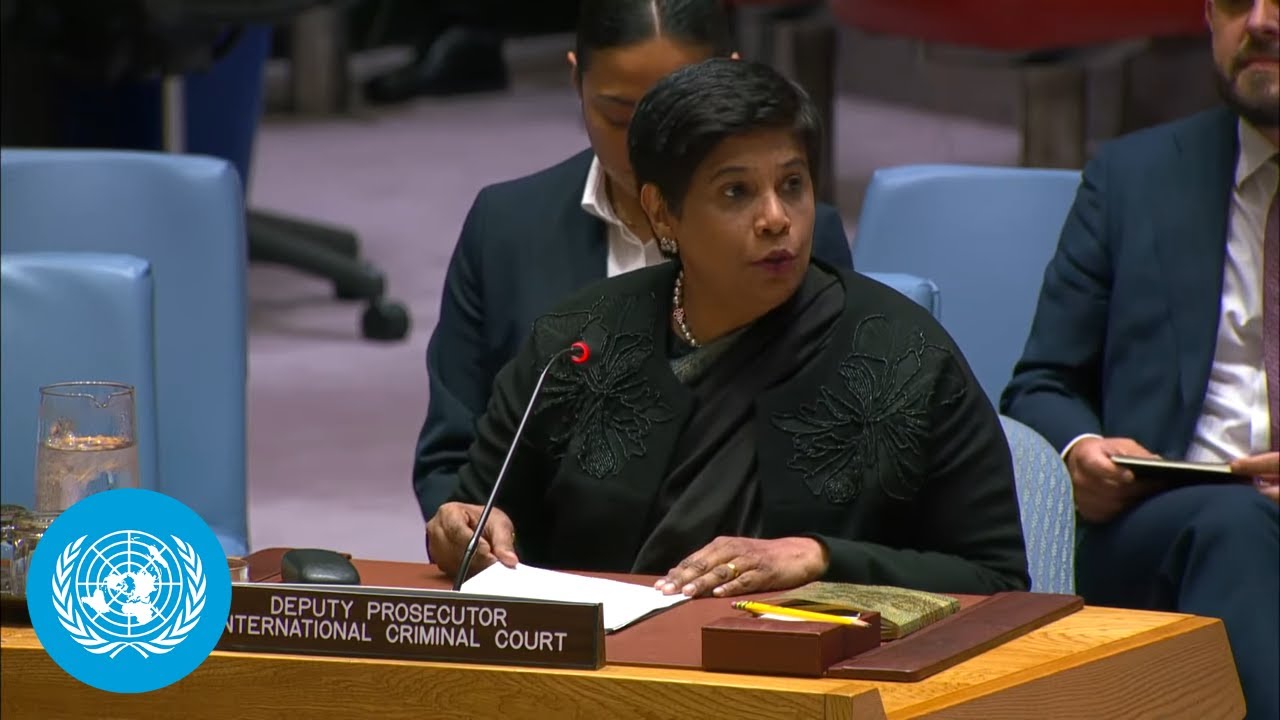
Sudan: ICC warns of ongoing war crimes and atrocities in Darfur | United Nations

Sudan: ICC warns of ongoing war crimes and atrocities in Darfur | United Nations

Hier klicken, um den Inhalt von YouTube anzuzeigen.
Learn more in YouTube’s privacy policy.

Deputy International Criminal Court (ICC) Prosecutor Nazhat Shameem Khan today (10 Jul) told the Security Council that the Office of the Prosecutor has “reasonable grounds to believe that war crimes and crimes against humanity have been and are continuing to be committed in Darfur.”

Khan described a series of ongoing violations, including hospitals, humanitarian convoys, and other civilian objects apparently being targeted; famine escalating and humanitarian aid not reaching those in need; people being deprived of water and food; rape and sexual violence being weaponized; and abductions for ransom or to bolster the ranks of armed groups becoming common practice.

She said, “we come together at a time when it can seem difficult to find appropriate words to describe the depth of suffering in Darfur. The humanitarian position has reached an intolerable state.”

The Deputy Prosecutor noted the Office’s conclusions are grounded on the activities it has been undertaking in the last six months and in earlier reporting periods, relying on documentary, testimonial, and digital evidence, collected and analysed by the Office.

She said, “drawing on the over 7,000 evidence items collected to date, the Office of the Prosecutor remains focused on delivering concrete landmarks, so as to respond to the legitimate and impassioned calls for justice heard from victims and survivors.”

Khan said, “to those on the ground in Darfur now; to those inflicting unimaginable atrocities on its population; they may feel a sense of impunity at this moment, as Ali Kushayb may have in the past. But we are working intensively to ensure that the Ali Kushayb trial represents only the first of many in relation to this situation at the International Criminal Court.”

On 9 July 2021, Pre-Trial Chamber II confirmed all the charges of war crimes and crimes against humanity brought by the Prosecutor against Ali Muhammad Ali Abd-Al-Rahman – commonly known as Ali Kushayb – and committed him to trial. The trial ended on 13 December 2024

Khan said, “there is an inescapable pattern of offending, targeting gender and ethnicity through rape and sexual violence which must be translated into evidence for the Court and the world to hear,” and stressed that “these alleged crimes are being given particular priority by our Office as we proceed with focus in our investigative work.”

Sudanese Ambassador Al-Harith Idriss Al-Harith Mohamed, for his part told the Council that “militia of the Rapid Support are launching an all-out destruction war against the state without the main parameters of a regular army.”

Al-Harith Mohamed, said, “they lack unity of control and command or even knowledge of the rules of engagement. They are established based on communal bases. The recruitment is based on ethnicity. They have been designated as a terrorist group.

On the other hand, he continued, “the soldiers of the Sudanese Armed Forces are coming from all strata of the Sudanese society they have been trained on IHL (International Humanitarian Law); they follow a strict code of conduct. They also apply the principles of precaution and distinction. We’ve also, through our spokesperson, have issued a number of statements warning citizens from any potential areas that might be turned into a theatre of war. “

Outside the Council, Ambassadors Michael Imran Kanu of Sierra Leone and Sandra Jensen Landi of Denmark issued a statement joined by Representatives from France, Greece, Guyana, Panama, Republic of Korea, Slovenia, and the United Kingdom.

Kanu said, “we express, position to the office for their continued dedication to their mandate under exceptional, challenging circumstances. We welcome the ongoing intensive activities with respect to the situation in Darfur, reflected in the report. Based on extensive testimonial, digital and documentary evidence collected, the office has confirmed it has reasonable grounds to believe that war crimes and crimes against humanity have been and continue to be committed in Darfur.’

Landi, for her part said, “we remain steadfast in upholding the principles enshrined in the Rome Statute and defending the court’s integrity against any threats or actions targeting the institution, its officials, or cooperating partners. Such actions are counterproductive to our shared goal of ensuring accountability for the most serious crimes, promoting the rule of law, and fostering lasting respect for international law, including human rights.”

For more Information or to watch the video on YouTube, click here.
Afghanistan: UN warns of mass refugee returns amid crisis and rights concerns | United Nations

Afghanistan: UN warns of mass refugee returns amid crisis and rights concerns | United Nations

Hier klicken, um den Inhalt von YouTube anzuzeigen.
Learn more in YouTube’s privacy policy.

“Since the spring of this year, first Pakistan, then Iran and now possibly others, such as Tajikistan, are fomenting the mass return of Afghan refugees,” a UN refugee agency (UNHCR) said.

Arafat Jamal, UNHCR Representative in Afghanistan, addressed the press virtually from Kabul today (11 Jul), in New York on the country’s humanitarian situation, notably on the increase of Afghan returns in adverse circumstances

He reported, “Since the spring of this year, first Pakistan, then Iran and now possibly others, such as Tajikistan, are fomenting the mass return of Afghan refugees. Some people are moving in a voluntary fashion, but others are not.”

He said, “Of concern to us is the scale, the intensity and the manner in which returns are occurring. In terms of the scale, over 1.6 million Afghans have returned from both Pakistan and Iran this year alone, including 1.3 million from Iran.”

He also said, “At the Iran Afghanistan border, where I just was a few days ago, and to which I’m heading again tomorrow, we are seeing peaks of over 40,000 people a day. And on the fourth of July, we actually saw 50,000 people coming across that border. Many of these returnees are arriving having been abruptly uprooted and having undergone arduous, exhausting and degrading journeys.”

He highlighted, “And while they are from Afghanistan, they often appear to be not of Afghanistan. Often born abroad, with better education and different cultural norms. Their outlook is different from and often at all with present day in Afghanistan. We are particularly concerned about the fate of women and girls in a country in which their most basic human rights are at risk and not respected.”

He continued, “What we are seeing with these returns is precarity layered upon poverty, on drought, human rights abuses and an instable region. In other words, we are having a deeply impoverished people coming to a country that is itself, while welcoming wholly unprepared to receive them.”

He stressed, “Many will be left with a desperate choice: Do they flee, or do they fight? Do they do they come home find nothing to do and simply bounce back to Iran, to Turkey and on to Europe? Or if they are, particularly if they are working age men, are they going to be victims of those groups that are prowling the countryside looking for recruits for their various causes.”

He concluded, “We are calling for restraint, for resources, for dialog and for international cooperation to stem an evolving chaotic situation and to foster a more stable outcome for all of us.”

For more Information or to watch the video on YouTube, click here.
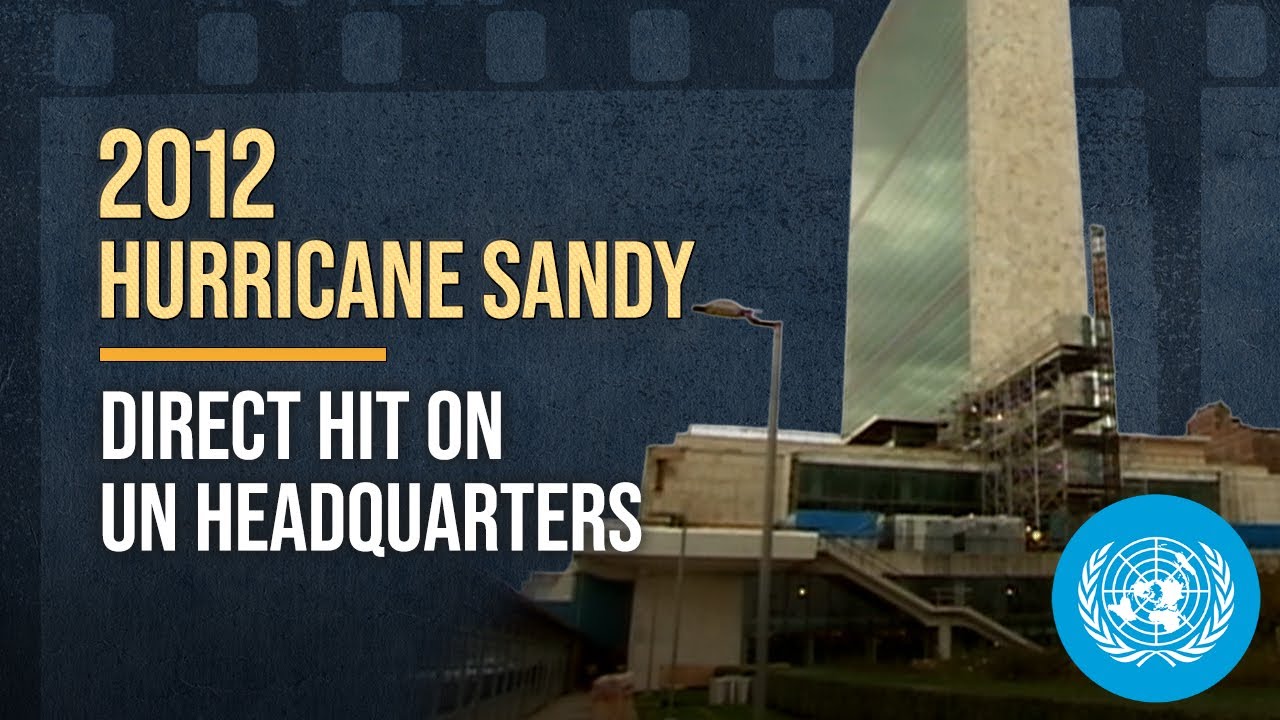
2012: Hurricane Sandy | United Nations

2012: Hurricane Sandy | United Nations

Hier klicken, um den Inhalt von YouTube anzuzeigen.
Learn more in YouTube’s privacy policy.

Beginning in late October 2012 in the Atlantic Ocean, Hurricane Sandy grew into what some media reports described as a “once in a generation” storm, causing death and destruction across the Caribbean region and the eastern seaboard of the United States.
In the Caribbean, five million people were affected and 72 people died. In Haiti, 54 people died, and hundreds of thousands of people were hit by floods and heavy winds. In Cuba, 20 per cent of the country’s population was affected. Jamaica, the Dominican Republic and the Bahamas also suffered significantly.
Sandy’s arrival, and its effects, in New York City, where the United Nations is headquartered, led to the UN offices being closed for an unprecedented three days straight, with most meetings cancelled, before re-opening on Thursday, 1 November 2012.
The UN complex sustained damage due to high wind and flooding, which affected communications and other infrastructure.

For more Information or to watch the video on YouTube, click here.
2025 Global AIDS Update: “AIDS, Crisis and the Power to Transform” – Press Conference | UN

2025 Global AIDS Update: “AIDS, Crisis and the Power to Transform” – Press Conference | UN

Hier klicken, um den Inhalt von YouTube anzuzeigen.
Learn more in YouTube’s privacy policy.

Countries must urgently step up to transform their HIV responses amid an international funding crisis that risks millions of lives, a new UN report said.

UNAIDS today launched its 2025 Global AIDS Update, AIDS, Crisis and the Power to Transform, which shows that a historic funding crisis is threatening to unravel decades of progress unless countries can make radical shifts to HIV programming and funding.

Angeli Achrekar, UNAIDS Assistant Secretary-General, addressed virtually the press today (10 Jul) in New York about the report and said, “The report details one of the most successful public health responses in history, saving nearly 27 million lives, and showing what’s possible when the world comes together in solidarity. Right now, we show that 31 point 6 million people living with HIV, or 77 percent of all people living with HIV globally are on life saving treatment. This is extraordinary progress, and what we saw by the end of 2024 is that the end of AIDS as a public health threat by 2030 was indeed in sight.”

The report highlights the impact that the sudden, large-scale funding cuts from international donors are having on countries most affected by HIV.

Achrekar said, “There has been a sudden, abrupt, wave of massive cuts and weakening of aid consensus from the single largest HIV donor, but also other governments all over the world since January 2025, and onwards. And what’s happening is that it’s putting the entire global HIV response in peril.”

Yet it also showcases some inspiring examples of resilience, with countries and communities stepping up in the face of adversity to protect the gains made and drive the HIV response forward.

Some 25 of the 60 low and middle-income countries included in the report have indicated increases in domestic budgets for their HIV responses in 2026.

The estimated collective rise among the 25 countries amounts to 8 percent above current levels, translating to approximately USD 180 million in additional domestic resources.

Achrekar said, “We’re seeing phenomenal new tools, a suite of long-acting HIV prevention medicines that are already coming to market with injections just twice a year, that are nearly 100 percent effective at preventing and stopping HIV transmission from occurring.”

This is promising, but not sufficient to replace the scale of international funding in countries that are heavily reliant.

Achrekar explained, “We have modeled in this report and show that if the world does not act to mitigate and really ensure that there is continuity of support and resources for HIV prevention and treatment efforts, an additional 6 million HIV infections and an additional 4 million AIDS deaths will occur by 2029. What this means is that we will return to the late 1990s and early 2000s when the epidemic would it was at its deadliest peak.”

She continued, “The number of countries criminalizing key populations had increased. Bans on same sex relations are now in 64 countries, and sex work in 168 countries. This dangerous trend limits access to HIV prevention and treatment services, and again, makes the progress of getting to end AIDS and get that response back on track even harder.”

For more Information or to watch the video on YouTube, click here.