The people of Gaza face another killer on top of bombs and bullets: starvation, the Director-General of the World Health Organization says. Tedros Adhanom Ghebreyesus notes that WHO personnel came under fire in the city of Deir al Balah, where Israeli military entered the agency’s staff residence, forcing women and children to evacuate while male personnel and family members were handcuffed, stripped, and interrogated.
“Due to the severe funding cuts that World Food Program is facing, we have exhausted our food and nutrition resources,” said Margot van der Velden, WFP’s Regional Director for West and Central Africa. “At the beginning of August, we will have to face the heartbreaking reality of having to suspend our operations for the populations in northeast Nigeria.”
Margot van der Velden briefed reporters today (Jul 23) on the humanitarian situation in Nigeria stating that WFP will suspend all emergency food and nutrition aid for over 1.3 million people in northeast Nigeria at the start of August, citing critical funding shortages and a rapidly deteriorating humanitarian situation.
The looming cuts in Nigeria reflect a broader funding crisis across the region. “This crisis is not just in Nigeria,” van der Velden said. “Across West and Central Africa, WFP is facing critical funding shortfalls that are forcing us to reduce and suspend many operations in some of the most fragile contexts on the continent.”
WFP assistance in the region has dropped by 60 percent compared to last year. In Mali and Niger, emergency support has been slashed by over 80 percent, van der Velden said. Overall, WFP is now only reaching five million people, a dramatic decrease given the scale of need.
She also highlighted that nearly ten million people are displaced across West and Central Africa, including around two million in northeast Nigeria alone. Many are trapped in areas they cannot leave. Chad, meanwhile, has received 1.7 million refugees from Sudan, further stretching regional capacities.
The situation is being exacerbated by a surge in violence. “We see an uptick of the attacks of the armed groups in the northeast of Nigeria,” van der Velden said.
Inflation and climate-related shocks are compounding the crisis. “We’ve also, of course, been faced in Nigeria with this unfortunate high-level inflation of food prices,” she said. “There is a larger proportion of populations that have difficulties meeting their basic needs on the high costs of a minimum food basket. And that is also aggravating.”
Last year’s devastating floods in northeast Nigeria destroyed harvests and continue to hinder planting efforts this season. Van der Velden said the current crisis is the result of multiple compounding factors: rising needs driven by conflict, inflation, and climate shocks – all coming to a head just as WFP faces a sharp drop in funding.
During today’s (23 July) Security Council meeting on Palestine, Israeli Ambassador Danny Danon announced punitive measures against staff of the UN Office for the Coordination of Humanitarian Affairs (OCHA).
Khaled Khiari, the Assistant Secretary-General for the Middle East, Asia and the Pacific, briefed the Security Council on the situation in Gaza, saying that it is long past time for the fighting to end, for adequate humanitarian aid to enter the Strip, and for the recovery and reconstruction to begin in the context of a return to a political path towards a two-State solution.
He said that today, the situation inside the Strip, especially for women and children, is more dire than at any other time during this crisis.
Khiari also talked about the situation in the occupied West Bank, which he said remains deeply concerning, with high levels of violence driven by ongoing Israeli military operations, many involving civilian casualties and extensive damage to homes and infrastructure, attacks by settlers against Palestinians, and attacks by Palestinians against Israelis.
He added that the upcoming ministerial meeting to support a two-State solution, co-hosted by France and Saudi Arabia, is key to highlight international consensus around these goals, and reaffirm the principles of sustaining a two-State solution.
Riyad Mansour, Permanent Observer of the State of Palestine to the UN said, “Israel has ravaged Gaza. It has destroyed nearly everything in that narrow strip of Palestinian land. But nearly 2 million human beings remain, including 1 million children. They must be saved.”
Danny Danon, Permanent Representative of Israel to the United Nations, said, “Mr. Fletcher has not walked back the accusation that Israel is committing genocide. He knows it’s not true. He knows it. There are facts, international law, you have to prove intention. Yet, he said it anyway. That word carries more weight than any other accusation. To use it falsely is to dishonor the memory of real genocide victims and to endanger more lives by fueling hatred. It is not too late to correct the record. Israel demands that Mr. Fletcher retract his statement publicly, unequivocally and immediately.”
He then announced, “Today, I announce that Israel will take steps to ensure that what has been happening with OCHA will no longer continue. Hundreds of OCHA employees are undergoing security vetting. Key employees will not have their permits renewed following clear evidence of strong affiliation with Hamas. Some were even involved in the atrocities of October 7th. Israel will no longer grant automatic visas to OCHA’s international staff. Visas will now be limited to one month’s terms. What was, will no longer be.”
He also stated, “Jonathan Whittall, OCHA’s head of office for the so called ‘territories,’ has consistently and outrageously demonstrated his bias and agenda against the State of Israel. He will not have his visa renewed, and he will leave the country by July 29th.”
He also said, “Israel is doing the job the UN was created to do. We are dismantling terror networks. We are protecting civilians. We are standing up for minorities under threat.”
Barbara Woodward, Permanent Representative of the United Kingdom to the United Nations called on Israel to end “these attacks, hold those responsible to account and to work with the UN to implement effective aid distribution in line with humanitarian principles and international humanitarian law.”
Israeli Ambassador Danny Danon addressed the press earlier this morning.
Answering a question about allowing journalists to enter in Gaza, he said, “You know, when you bring journalists into war zone, you don’t want to see any casualties -God forbid. That is the reasoning we don’t want to see casualties of journalists traveling inside Gaza: it is a war zone. But I agree with you, you know, I think if the journalist would go there, they will be able to see what’s happening.”
OCCUPIED PALESTINIAN TERRITORY
The United Nations Office for the Coordination of Humanitarian Affairs (OCHA) today said that humanitarian operations in Gaza are currently under severe strain: aid workers face serious security risks, crossings remain unreliable, and critical supplies are routinely delayed or blocked.
The UN stands ready to seize the opportunity of a ceasefire to significantly scale up humanitarian operations across the Gaza Strip, as it did during the previous ceasefire. UN plans are ready, and they are finalized.
But to make a real difference, Israel must enable safe and unimpeded aid delivery, allow the entry of critical equipment and fuel, must open all crossings and restore movement along key supply routes. Humanitarian staff must be able to operate safely, people must be allowed to move freely, and supplies – including from the private sector – must reach all parts of Gaza.
If these conditions are met, the UN will urgently prioritize providing food, water, shelter, medical care, and protection to the civilians of Gaza who have faced unimaginable hardship for far too long.
Today, UN Resident and Humanitarian Coordinator for the Occupied Palestinian Territory, Dr. Ramiz Alakbarov, visited the Gaza Strip, where he met with UN agencies and humanitarian partners in Deir al Balah. During his visit, he expressed strong support for the tireless efforts of humanitarian workers who are continuing to deliver under extraordinarily difficult and dangerous conditions, including working in active combat zones and amid persistent fear.
Meanwhile, the Office of Coordination for Humanitarian Affairs warns that the hunger crisis in the Gaza Strip has never been so dire. Today, 109 aid organizations warned that mass starvation is spreading across the Gaza Strip, with colleagues and those they serve wasting away.
The UN and its partners report that aid workers are fainting from hunger and exhaustion. Deadly malnutrition among children is reaching catastrophic levels. UNICEF reminds us that a severely malnourished child is over 10 times more likely to die than a well-nourished child.
Despite catastrophic conditions, aid workers continue to deliver life-saving assistance, wherever and whenever they can. However, OCHA stresses that to sustain these operations – including nutrition programmes – the Israeli authorities must facilitate the delivery of much more aid into and across all areas of the Gaza without any delay.
As of Sunday, our partners deliver 158,000 cooked meals through 64 community kitchens. This figure reflects a decrease of more than 70,000 daily meals compared to the previous day.
On the health front, hospitals are overwhelmed and cannot cope with the influx of patients – including those injured by hostilities – due to lack of supplies and fuel.
Earlier today, local health authorities said that, in the past few days, several of their health facilities have been shut down due to the lack of fuel. More hospitals, including Al Shifa, are at imminent risk of shutting down within the next few days.
Meanwhile, the UN Population Fund warns that severe food deprivation, a shattered healthcare system, and immense psychological stress are leading to catastrophic birth outcomes for pregnant women and for newborns. From January to June of this year, births sharply declined, and 220 mothers died – more than 20 times the total number of maternal deaths recorded in 2022. At least 20 newborns died within 24 hours of birth, and a third of babies were born prematurely, underweight or required admission to neonatal intensive care, when those facilities were available.
Today, partners reported that people with disabilities have no food, no assistive devices and no healthcare.
Meanwhile, measures must be taken to protect civilians – including the tens of thousands of people in the Strip who are older or are living with disabilities – who need assistance that preserves their dignity and survival.
Currently, the Israeli authorities are the sole decision makers on who, how and how much aid enters the Gaza Strip, and the type of supplies that are allowed in. Logistical challenges are immense: To collect supplies that have reached any of the Israeli crossings around Gaza – all of which are fenced off and heavily guarded – drivers need multiple access approvals, as well as a pause in the bombing and for the iron gates to slide open.
All too often, civilians approaching our trucks are shot at. To collect supplies safely, we must get reliable assurances that troops would not engage or be present along the routes of our convoys.
Full highlights: https://www.un.org/sg/en/content/noon-briefing-highlight?date%5Bvalue%5D%5Bdate%5D=23%20July%202025
The World Health Organization (WHO) operations compromised following attacks on warehouse and facility sheltering staff and families in Deir al Balah, Gaza. The Organization will remain in Deir al Balah, deliver and expand its operations, a WHO senior official said.
The World Health Organization (WHO) operations compromised following attacks on warehouse and facility sheltering staff and families in Deir al Balah, Gaza.
WHO representative for the Occupied Palestinian Territory Rik Peeperkorn spoke to reporters today (22 Jul) via video link, stressing that the Organization will remain on the ground. “We stay in and deliver, and we will expand our operation,” he said.
On Monday (21 Jul), following intensified hostilities in Deir Al Balah, after the latest evacuation orders issued by the Israeli military, the WHO staff residence, WHO residence for the national staff was attacked three times, the senior WHO official said.
“Personnel and their families, including children, were exposed to grave danger and traumatized after airstrikes caused a fire and significant damage,” Peeperkorn said, adding that Israeli military entered the premises, forcing women and children to evacuate on foot toward Al-Mawasi amid active conflict.
“Male staff and male family members were handcuffed, stripped, interrogated on the spot, and screened at gunpoint. Two WHO staff and two male family members were detained. Three were later released, while one staff member remains in detention.,” he added.
Peeperkorn stressed that most of the WHO staff housing is now inaccessible in Deir Al Balah. “Last night due to this intensified hostilities, 43 staff and their families were already relocated from several staff residences to the WHO office in the darkness and in significant risk,” he explained.
The WHO senior official also said that in another event, WHO’s main warehouse located in Deir al Balah is within the evacuation zone, and was damaged yesterday after an attack caused explosions and fire inside.
“We see this as part of a pattern of systematic destruction of health facility. We also understand what was reported that it was later looted by desperate crowds,” he added.
Peeperkorn highlighted that the geographical coordinates of all WHO premises, including offices, warehouses, and staff housing, are shared with the relevant parties.
“With the main warehouse nonfunctional and the majority of medical supplies in Gaza depleted, WHO is severely constrained in adequately supporting hospitals, emergency medical teams and health partners, which are, as we know, already critically short on medicines, medical supplies, fuel and equipment,” the WHO official said.
WHO urgently called Member States to “help to actually increase the support to WHO and to help ensure a sustained and regular flow of medical supplies into Gaza.”
Peeperkorn concluded by calling for “the immediate release of the WHO staff member detained yesterday and the protection of all our staff and its premises. We reiterate our call for the active protection of civilians, health care and its premises, and for the rapid and unimpeded flow of aid.”
The UN Security Council unanimously adopted a draft resolution on strengthening mechanisms for the peaceful settlement of disputes.
Addressing the Security Council today (22 Jul) after the vote, UN Secretary-General Antonio Guterres said, “Around the world, we see an utter disregard for — if not outright violations of — international law — including international human rights law, international refugee law, international humanitarian law, and the UN Charter itself, without any accountability.”
He added, “And the cost is staggering — measured in human lives, shattered communities, and lost futures. We need look no further than the horror show in Gaza – with a level of death and destruction without parallel in recent times.”
He also said, “With Israeli military operations intensifying and new displacement orders issued in Deir al-Balah, devastation is being layered upon devastation. I am appalled that UN premises have been struck – among them facilities of the UN Office for Project Services and the World Health Organization, including WHO’s main warehouse. This is despite all parties having been informed of the locations of these UN facilities. These premises are inviolable and must be protected under international humanitarian law – without exception.”
He stressed, “Peace is a choice. And the world expects the UN Security Council to help countries make this choice. This Council is at the centre of the global architecture for peace and security. Its creation reflected a central truth. Competition between states is a geopolitical reality. But cooperation — anchored in shared interests and the greater good — is the sustainable pathway to peace.”
Full remarks as delivered: https://www.un.org/sg/en/content/sg/statement/2025-07-22/secretary-generals-remarks-the-security-council-multilateralism-and-peaceful-settlement-of-disputes-bilingual-delivered-scroll-down-for-all-english-and-all-french
The Chief Economist of the Food and Agriculture Organization (FAO), Máximo Torero presented the findings of the upcoming State of Food Security and Nutrition in the World (SOFI) 2025 report and said the world, “has experienced a dramatic increase in food prices driven by a combination of unprecedented global shocks,” including the COVID-19 pandemic and the Russian invasion of Ukraine.
The Chief Economist of the Food and Agriculture Organization (FAO), Máximo Torero today (22 Jul) presented the findings of the upcoming State of Food Security and Nutrition in the World (SOFI) 2025 report and said the world, “has experienced a dramatic increase in food prices driven by a combination of unprecedented global shocks,” including the COVID-19 pandemic and the Russian invasion of Ukraine.
Talking to reporters in New York via video teleconference, Torero said, “the episodes described in this publication brings up what we call a perfect storm” and illustrate “how fragile global agrifood systems remain in the face of component disruptions.”
He said, the only time we have seen something similar was around in the 70s.
The report, Torero said, “shows that a 10 percent increase in food prices was associated with a 3.5 increase in moderate or severe food insecurity, and a 1.8 percent increase in severe food insecurity.”
He said, “these impacts are especially acute in Africa and Western Asia, where food imports dependence and currency appreciation make food even less affordable.”
The FAO Chief Economist told reporters that “countries with robust governance structures and preexisting response mechanisms acted faster and more effectively” as investments in policy infrastructure institutional capacity are “essential for future crises preparedness.”
He said, “the SOFI underscores inflation can undermine progress, it underlines our vulnerabilities, and it also brings the importance of strengthening resilience, inclusiveness and transparency to be able to avoid and minimize the risk of these problems.”
Earlier in the day, the President of the Economic and Social Council (ECOSOC) Bob Rae presented the report at an event in the sidelines of the ECOSOC’s High-Level Political Forum on Sustainable Development (HLPF).
Rae said, “global hunger has been sharply rising since 2019 and remains alarmingly high. In 2023 nearly 1 in 11 worldwide face hunger – that’s close to 10 percent – and over 2 billion experienced food insecurity.”
He said, “there are two things that we can point to in particular, two global events. One is the pandemic, which allowed prices to go up and became very sticky at the top. And the second is the Russian invasion of Ukraine, which denied an awful lot of people access to grain and drove grain prices way high. We all know from, well, the real world where prices come up, they’re much slower going down.”
The SOFI Report, Rae said, “offers analysis of practical options for action to minimize the impacts of inflation and hunger, food insecurity and all forms of malnutrition. It reminds us that ending hunger and malnutrition isn’t just about producing more food, although that is important. It’s about ensuring access to healthy diets for all, especially in times of crisis.”
The 2025 edition of SOFI will be launched on Monday 28 July during the Second UN Food Systems Summit Stocktake (UNFSS+4) in Addis Ababa, Ethiopia.
The report examines the challenges that rising food prices pose for achieving the Sustainable Development Goal (SDG) 2.1 and 2.2 targets of ending hunger, food insecurity and malnutrition by 2030. The report also explores the drivers behind recent food inflation, its impact on food security and nutrition, and the policy responses necessary to prevent and mitigate these effects.
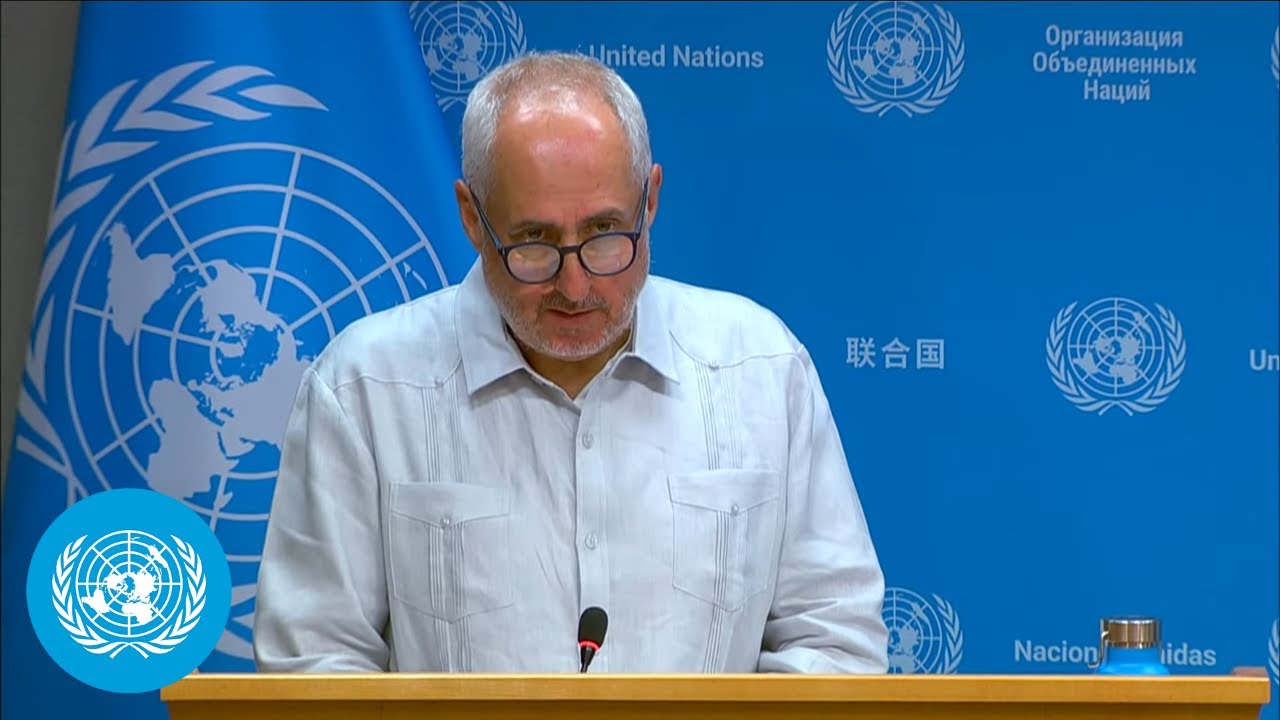
Noon Briefing by Stéphane Dujarric, Spokesperson for the Secretary-General.
Highlights:
Secretary-General/Climate
Security Council
Occupied Palestinian Territory
U.N.E.S.C.O.
Sudan
South Sudan
Democratic Republic of the Congo
Afghanistan
Ukraine
Haiti
Guests
SECRETARY-GENERAL/CLIMATE
This morning, the Secretary-General delivered a special address on ‘A Moment of Opportunity: Supercharging the Clean Energy Age’. He underscored that already, the carbon emissions saved by solar and wind globally are almost equivalent to what the whole European Union produces in a year. But, he said, this transformation is fundamentally about energy security and people’s security and that it’s about smart economics.
The Secretary-General said that the energy transition is unstoppable but is not yet fast enough or fair enough.
SECURITY COUNCIL
The Secretary-General spoke at today’s Security Council meeting on multilateralism, and he warned that around the world, we see an utter disregard for international law, including international human rights law, international refugee law, international humanitarian law, and the UN Charter itself, without any accountability.
He drew attention to what he called the horror show in Gaza, where malnourishment is soaring, starvation is knocking on every door and now we are seeing the last gasp of a humanitarian system built on humanitarian principles.
Mr. Guterres said he is appalled that UN premises have been struck, among them facilities of the UN Office for Project Services and the World Health Organization, including WHO’s main warehouse. This is despite all parties having been informed of the locations of these UN facilities.
He reminded the Council that these premises, like all civilian sites, are inviolable and must be protected under international humanitarian law without exception.
He noted that today marks three years since the signing of the Black Sea Initiative and the Memorandum of Understanding with the Russian Federation, efforts that show what we can achieve through mediation and the good offices of the United Nations, even during the most challenging moments.
The Secretary-General said that we must work to ensure that the Security Council reflects the world of today, not the world of 80 years ago. The Council should be made more representative of today’s geopolitical realities. And we must continue improving the working methods of this Council to make it more inclusive, transparent, efficient and accountable, he added.
OCCUPIED PALESTINIAN TERRITORY
Turning to the Gaza Strip, the Office for the Coordination of Humanitarian Affairs warns that intense hostilities continue with no let-up, as does the rapid collapse of the last lifelines keeping people alive.
Earlier today, local health authorities said that, in just the past 24 hours, more than a dozen children and adults had died from hunger. Hospitals have admitted people in a state of severe exhaustion caused by a lack of food, and others are said to be collapsing in the streets. This is on top of continued reports of people being shot, killed or injured while simply trying to find food, which is only being allowed into Gaza in far too small quantities.
OCHA warns that in many cases where UN teams are permitted by Israel to collect supplies from closed compounds near Gaza’s crossings, civilians approaching the trucks come under fire despite repeated assurances that troops would not be present or engage.
We can’t stress this enough: This unacceptable pattern is the opposite of what facilitating humanitarian operations should look like. Absolutely no one should have to risk their lives to get food.
Hospitals have been overwhelmed with over 2,000 trauma injuries over the past four days alone; that’s according to the local authorities. Some have reported not having enough intravenous fluids. And due to lack of fuel, the Nasser Medical Complex and the oxygen unit supplying hospitals in the south are at risk of shutting down.
Regarding the attacks on UN facilities yesterday in Deir al Balah, the World Health Organization (WHO) tells us that, in addition to air strikes that caused fire and damage, Israeli troops entered the premises. Women and children were forced to evacuate on foot toward Al Mawasi amid active conflict. Male staff and family members were handcuffed, stripped, interrogated and screened at gunpoint. WHO said that one of their employees remained in detention as of earlier today; this is out of four people detained – two personnel and two family members.
WHO added that their main warehouse that is now destroyed and looted had been a key hub for medical supplies, most of which are now depleted. They said the attack fits a broader pattern of systematic destruction of health facilities.
Full Highlights: https://www.un.org/sg/en/content/noon-briefing-highlight?date%5Bvalue%5D%5Bdate%5D=22%20July%202025
The Secretary-General will deliver a special address, outlining the economic opportunity of the energy transition. He will highlight the progress made since the adoption of the Paris Agreement a decade ago, the remaining barriers and obstacles that stand in the way of accelerated action, and the steps required to turbocharge a renewables revolution that can deliver clean and affordable energy for all.
—
The Secretary-General’s address will be accompanied by the release of a technical report prepared on the economic opportunity of the clean energy transition. The report will also identify the priority areas for action to accelerate this new age of energy powered by renewables, efficiency, and electrification.
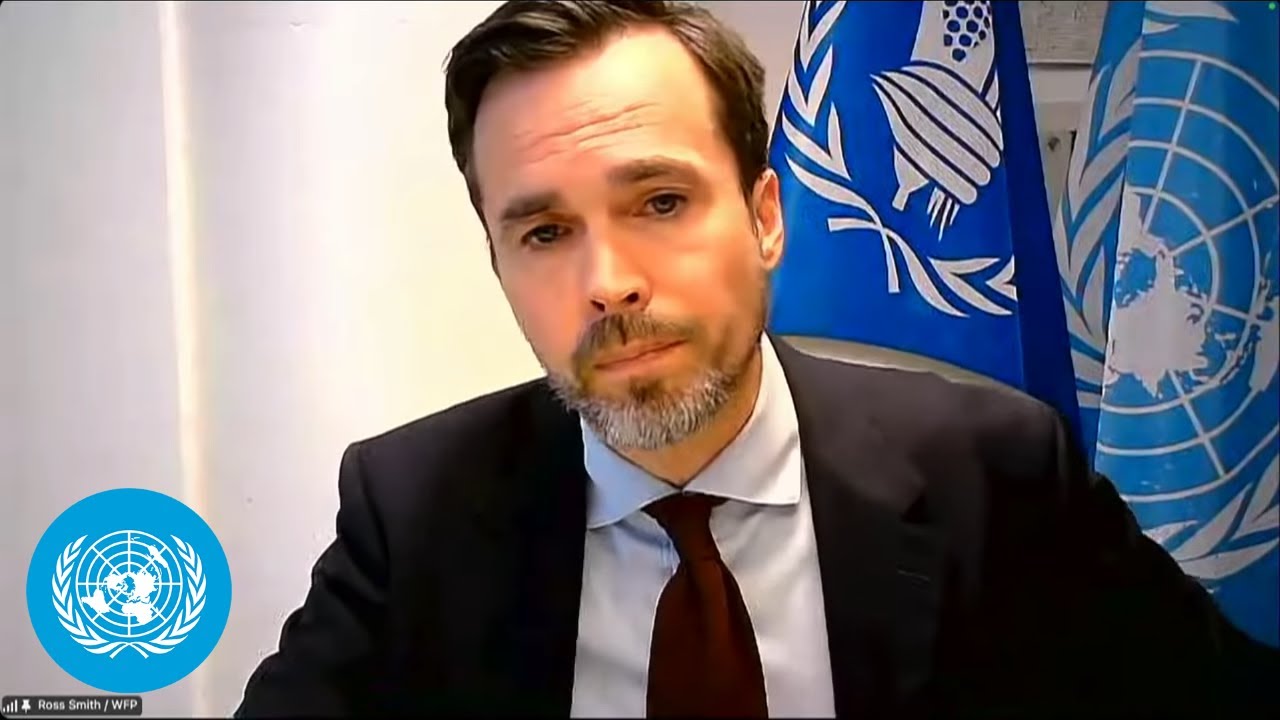
Ross Smith, the World Food Programme’s Director of Emergency Preparedness and Response, briefed reporters on the situation in Gaza and the incidents around the WFP convoy that happened over the weekend. He briefed from Rome.
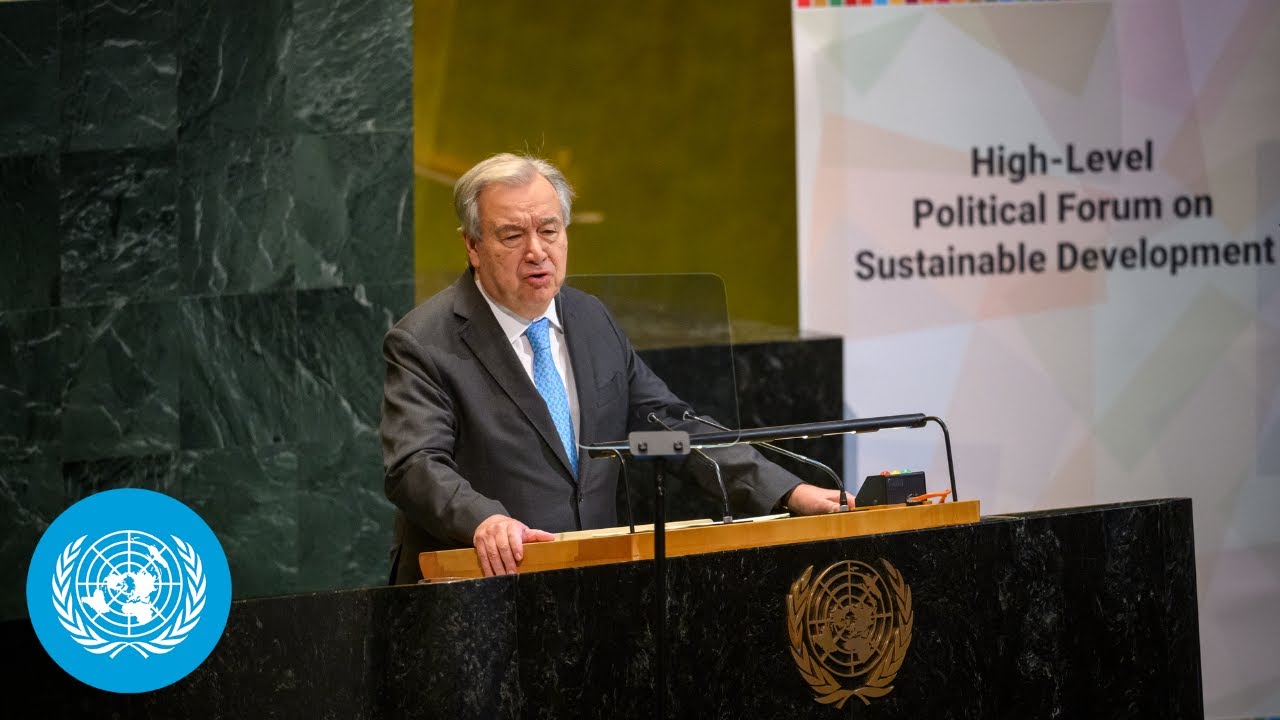
Addressing the opening of the Ministerial Segment of the High-Level Political Forum 2025 (HPLF 2025), Secretary-General Antonio Guterres today (21 Jul) said the Sustainable Development Goals (SDGs) “are not a dream. They are a plan” stressing that they are “still within reach if we act with urgency and ambition.”
Opening the session, the President of the Economic and Social Council (ECOSOC), Bob Rae, said, “we need to reaffirm the relevance of the UN through results, by showing that multilateralism delivers real, tangible benefits for people at every level of society.”
This, he said, “means we have to work more closely with civil society, more closely with the private sector, with youth, indigenous peoples, and especially more closely with national and, yes, local governments. Because that’s where the goals we’ve set out are in fact implemented.”
Stressing the importance of multilateralism and cooperation Rae said, “the founding generation of the United Nations know perfectly well the consequences of depression, the consequences of excessive nationalism, the consequences of tariffs that keep out trade and don’t promote trade. These were all the consequences of that terrible dark valley of the 1920s and the 1930s. We must not return to that valley again from now on. We must learn the lessons of the past.”
Guterres, for his part said, “people win when we channel our energy into development” and highlighted the achievements on the SDGs since 2015.
He said, “millions more people have access to electricity, clean cooking, and the internet. Social protection now reaches over half the world’s population — up from just a quarter a decade ago. More girls are completing school. Child marriage is declining. Women’s representation is growing – from the boardrooms of business to the halls of political power. But we must face a tough reality; only 35 percent of SDG targets are on track or making moderate progress.”
Guterres said, “the global economy is slowing. Trade tensions are rising. Inequalities are growing. Aid budgets are being decimated while military spending soars. And mistrust, division and outright conflicts are placing the international problem-solving system under unprecedented strain. We cannot sugarcoat these facts. But we must not surrender to them either.”
General Assembly President Philémon Yang said, “we have the tools and ambition to deliver. We have the actions set out in the Pact for the Future and the promises made in the Sevilla Commitment.”
He said, “let us use this Forum to recommit to science, to solidarity, and to leaving no one behind.”
The HLPF is convening from Monday, 14 July, until Wednesday 23 July under the auspices of the ECOSOC. The three-day ministerial segment takes place from 21 to 23 July.
The theme of HLPF 2025 is “Advancing sustainable, inclusive, science- and evidence-based solutions for the 2030 Agenda for Sustainable Development and its Sustainable Development Goals for leaving no one behind.”
Noon Briefing by Stéphane Dujarric, Spokesperson for the Secretary-General.
Highlights:
– Secretary-General/Clean Energy Age
– Secretary-General/Security Council
– Secretary-General/High-Level Political Forum
– Occupied Palestinian Territory
– Gaza Statement
– Yemen
– Lebanon/Israel
– Syria
– Democratic Republic of the Congo
– Sudan
– Ukraine
– Guests
SECRETARY-GENERAL/CLEAN ENERGY AGE
Tomorrow, at 9:00 a.m., here at UN Headquarters, the Secretary-General will deliver a special address entitled ‘Moment of Opportunity: Supercharging the Clean Energy Age’. This is a follow-up to his Moment of Truth speech last year on climate.
In his address, Mr. Guterres will highlight that the clean energy future is no longer a promise, it’s a fact, and no government, no industry, and no special interest can stop it. Although unstoppable, the energy transition is not yet fast enough or fair enough, as he is expected to tell you.
He will also share new data from a specialized technical report prepared by his Climate Action Team with the support of various UN agencies, funds and programmes as well as leading international institutions.
The report, which will be released tomorrow, shows the latest available science and evidence on the progress, opportunities, and benefits of the emerging clean energy economy. The speech will be broadcast live on UN Web TV.
SECRETARY-GENERAL/SECURITY COUNCIL
At 10:00 a.m., tomorrow, the Secretary-General will deliver remarks at the Security Council’s open debate on Maintenance of international peace and security: Promoting international peace and security through multilateralism and the peaceful settlement of disputes. He is expected to note that around the world, we can see an utter disregard for — if not outright violations of international law, including international human rights law, international refugee law, international humanitarian law, and the UN Charter itself, and all of this without any accountability. The Secretary-General is expected to highlight that diplomacy may not have always succeeded in preventing conflicts, violence and instability, but it still holds the power to stop them.
He is also expected to speak to the situation in Gaza in his remarks tomorrow.
SECRETARY-GENERAL/HIGH-LEVEL POLITICAL FORUM
This morning, in the General Assembly Hall, the Secretary-General spoke to the High-level Political Forum. He underscored that this year, the Forum arrives at a time of profound challenges, but also real possibility. Mentioning the Pandemic Agreement adopted by the World Health Organization, government commitments at the Third UN Ocean Conference and also the Fourth International Financing for Development Conference, where countries agreed to a new vision for global finance, he noted that these are not isolated wins.
The Secretary-General also highlighted that they are signs of momentum, signs that multilateralism can deliver, and that transformation is not only necessary, it is possible.
Full Highlights: https://www.un.org/sg/en/content/noon-briefing-highlight?date%5Bvalue%5D%5Bdate%5D=21%20July%202025
Today’s youth generation is the largest the world has ever seen. Half of the world’s population is under 30 and this is expected to reach 57 per cent by the end of 2030. Nearly 90 per cent of the world’s youth live in developing countries. They are often the majority in conflict-affected areas.
In this Expert Take, one of Africa’s youngest-ever cabinet ministers at 26, Botswana’s Honourable Minister for Youth and Gender Affairs Lesego Chombo, talks about her journey that showcases the immense potential within younger generations and demonstrates how youth can drive significant political change.
Chombo isn’t just breaking barriers; she’s actively showing other young people that their voices matter and that they, too, can step up and shape the future.
The United Nations marked Nelson Mandela International Day with a call to carry forward the late South African leader’s commitment to justice, dignity, and peace. “Madiba’s extraordinary life was a triumph of the human spirit,” said UN Secretary-General António Guterres. “He endured the brutal w Madiba’s extraordinary life was a triumph of the human spirit. He endured the brutal weight of oppression, and emerged not with a vision of vengeance and division — but of reconciliation, peace and unity.”
Speaking at the General Assembly today (Jul 18), Guterres underscored that Mandela’s “legacy is now our responsibility.” He added, “One of the central lessons of Mandela’s life was that power is not a personal possession, to be hoarded. Power is about lifting others up. It is about what we can achieve with one another, and for one another. Power is about people.”
The General Assembly President, Philemon Yang, opened the commemorative event by honoring Mandela’s courage and his “lifelong commitment to unity across Africa.” He said, “Madiba embodied the values of peace, equality, human rights, and service to others. He reminded us that freedom is meaningless without justice. That justice is the bedrock of peace.”
South Africa’s former Minister of International Relations and Cooperation, Naledi Pandor, echoed that message, saying Mandela had “an enduring appreciation for the bold role the United Nations played in advancing South Africa’s liberation struggle.” She noted that the UN “stood against apartheid domination, not through arms, but through bringing its undeniable moral weight into combat against injustice. That boldness, that courage, is needed more and more today.”
This year’s event also celebrated the 2025 laureates of the UN Nelson Mandela Prize: Brenda Reynolds of Canada and Kennedy Odede of Kenya.
Reynolds, a Saulteaux member from Fishing Lake First Nation and a social worker, was recognized for transforming personal trauma into national advocacy. “She turned her struggle against the most hideous of crimes against children into a national force for change,” Guterres said, praising her work to support survivors of Canada’s residential school system.
Reynolds said, “When I first found out that I was one of the two laureates for this year’s Nelson Mandela awards, I was speechless and couldn’t believe that I was selected. And even though I speak two languages, I still cannot find the words to express the depth of my gratitude and the humility I have to accept the United Nations Nelson Mandela prize. And happy birthday to him in the heavens today, because now he is one of our ancestors.”
Odede, a longtime community activist raised in Nairobi’s Kibera slum, was honored for his work uniting grassroots groups to provide education, water, and essential services to more than 2.4 million people across Kenya.
He reflected on Mandela’s resilience, quoting the poem Invictus: “’I am the master of my fate. I am the captain of my soul.’” Odede also said, “These words reminded him that even in captivity, his soul remained free. Mandela understood that poetry – and the act of turning within – possess great power. He observed that poetry bears witness to injustice, and in doing inner work, Mandela cultivated what he called “a flower in a graveyard.” For him, Invictus became that flower – an affirmation of unbreakable human dignity.”
Both laureates, Guterres noted, embody Mandela’s own words, which are engraved on the prize: “What counts in life is not the mere fact that we have lived. It is what difference we have made to the lives of others.”
Cookies are used on our website to make your use as comfortable as possible. These so-called essential cookies are stored in your browser because they are essential for the basic functions of the website.
We also use third-party cookies for online advertising on our sites. These cookies are only stored in your browser with your consent. By clicking here you agree to the use of these additional cookies or you can reject them:
This website uses cookies to improve your experience while you navigate through the website. Out of these, the cookies that are categorized as necessary are stored on your browser as they are essential for the working of basic functionalities of the website. We also use third-party cookies that help us analyze and understand how you use this website. These cookies will be stored in your browser only with your consent. You also have the option to opt-out of these cookies. But opting out of some of these cookies may affect your browsing experience.
Necessary cookies are absolutely essential for the website to function properly. These cookies ensure basic functionalities and security features of the website, anonymously.
Cookie
Duration
Description
cookielawinfo-checkbox-analytics
11 months
This cookie is set by GDPR Cookie Consent plugin. The cookie is used to store the user consent for the cookies in the category "Analytics".
cookielawinfo-checkbox-functional
11 months
The cookie is set by GDPR cookie consent to record the user consent for the cookies in the category "Functional".
cookielawinfo-checkbox-necessary
11 months
This cookie is set by GDPR Cookie Consent plugin. The cookies is used to store the user consent for the cookies in the category "Necessary".
cookielawinfo-checkbox-others
11 months
This cookie is set by GDPR Cookie Consent plugin. The cookie is used to store the user consent for the cookies in the category "Other.
cookielawinfo-checkbox-performance
11 months
This cookie is set by GDPR Cookie Consent plugin. The cookie is used to store the user consent for the cookies in the category "Performance".
viewed_cookie_policy
11 months
The cookie is set by the GDPR Cookie Consent plugin and is used to store whether or not user has consented to the use of cookies. It does not store any personal data.
Functional cookies help to perform certain functionalities like sharing the content of the website on social media platforms, collect feedbacks, and other third-party features.
Performance cookies are used to understand and analyze the key performance indexes of the website which helps in delivering a better user experience for the visitors.
Analytical cookies are used to understand how visitors interact with the website. These cookies help provide information on metrics the number of visitors, bounce rate, traffic source, etc.
Advertisement cookies are used to provide visitors with relevant ads and marketing campaigns. These cookies track visitors across websites and collect information to provide customized ads.