Haiti: UN official warns of worsening gang violence & underfunded aid response | United Nations

Haiti: UN official warns of worsening gang violence & underfunded aid response | United Nations

Hier klicken, um den Inhalt von YouTube anzuzeigen.
Learn more in YouTube’s privacy policy.

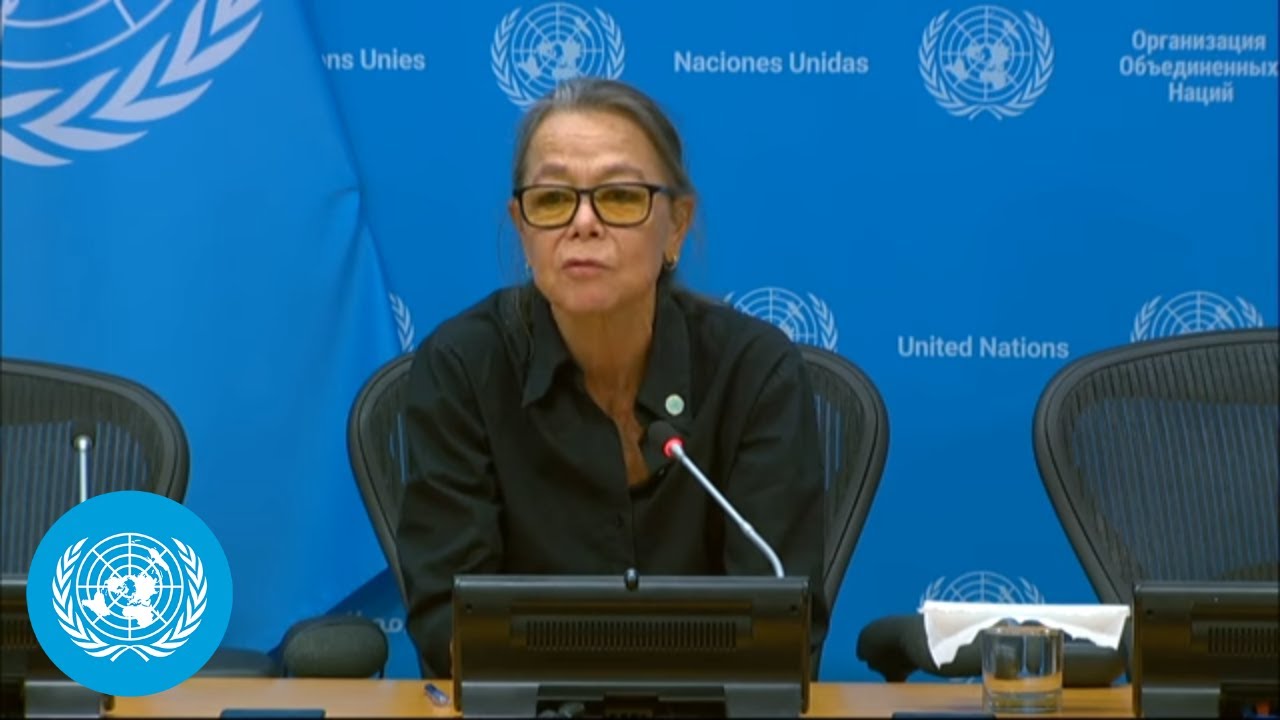
The United Nations Resident and Humanitarian Coordinator in Haiti, Ulrika Richardson, today (12 Aug) told reporters in New York that the situation is “strikingly horrific” in the country’s capital Port-au-Price with “3,000 people having been killed in gang related incidents since the beginning of the year.”

Briefing correspondents for the last time as the Deputy Special Representative of the Secretary-General for Haiti, Richardson said, “I often feel that I can’t even find words any longer to describe the situation. Is it alarming? Is it acute? Is it urgent? It’s all of that, and even more.”

She said, “we have 1.3 million people displaced currently, as a result of the gang violence, as the gangs have sort of rummaged the city. And half of them are children,” noting that 2 million people are in IPC four, meaning at an emergency level of food insecurity.

Richardson said, “all of that is just figures, in a way. And behind every figure there is, a woman, a mother, a child, a father, a young person.”

She said, “obviously children are particularly affected, particularly we have a malnutrition that is striking. We have children being recruited by the armed gangs. And of course, they fare really poorly, many of them also in terms of education. You can imagine, broken school years. We have generations that have not fulfilled an entire year of schooling.”

Richardson said, “we have a humanitarian response plan. It’s only funded 9 percent. It’s the lowest level of funding for any response plan in the world. And it’s 900 million. We are not talking about the biggest response plan either. So, that is of course a big frustration. But also, we have other; we have a sanctions regime that was introduced in 2022. We have an arms embargo, similarly, introduced in 2022. We have, the Multinational Security Support Mission that has been on the ground for a year but not given the tools or the sights needed to actually perform its role. So that is actually very frustrating. We have tools, but the response from the international community, is just not at par with the gravity on the ground.”

Secretary-General António Guterres appointed Richardson as his new Deputy Special Representative of the United Nations Support Mission in Libya (UNSMIL) and Resident Coordinator in Libya. She succeeds Aeneas Chuma of Zimbabwe.

She has been the Deputy Special Representative for the United Nations Integrated Office in Haiti (BINUH), Resident and Humanitarian Coordinator in Haiti since 2022, and was previously the Development Coordinator in Kosovo, working closely with the United Nations Interim Administration Mission in Kosovo (UNMIK) (2018-2022). Her earlier assignments include serving as the United Nations Resident Coordinator and Resident Representative of the United Nations Development Programme (UNDP), United Nations Children’s Fund (UNICEF) and United Nations Population Fund (UNFPA) in Cabo Verde (2013-2018), UNDP Resident Representative in Gabon (2012-2013), and Deputy Resident Representative in Türkiye (2007-2012) and in Cuba (2004-2007).

For more Information or to watch the video on YouTube, click here.

Peacekeepers respond to floods in Bentiu – UNMISS | United Nations

Peacekeepers respond to floods in Bentiu – UNMISS | United Nations

Hier klicken, um den Inhalt von YouTube anzuzeigen.
Learn more in YouTube’s privacy policy.

Since 2020, large parts of Bentiu in South Sudan have been submerged, leaving 300,000 people stranded on a narrow stretch of land.

To prevent further flooding, peacekeepers from the UN Mission in South Sudan (UNMISS) are working tirelessly to raise the dikes and monitor water levels weekly, providing early warnings to communities at risk.

As the climate crisis continues, peacekeepers, local authorities, and communities are joining forces to mitigate the impact and protect lives.

For more Information or to watch the video on YouTube, click here.
Yemen: Millions struggle with hunger as children face life-threatening malnutrition | United Nations

Yemen: Millions struggle with hunger as children face life-threatening malnutrition | United Nations

Hier klicken, um den Inhalt von YouTube anzuzeigen.
Learn more in YouTube’s privacy policy.

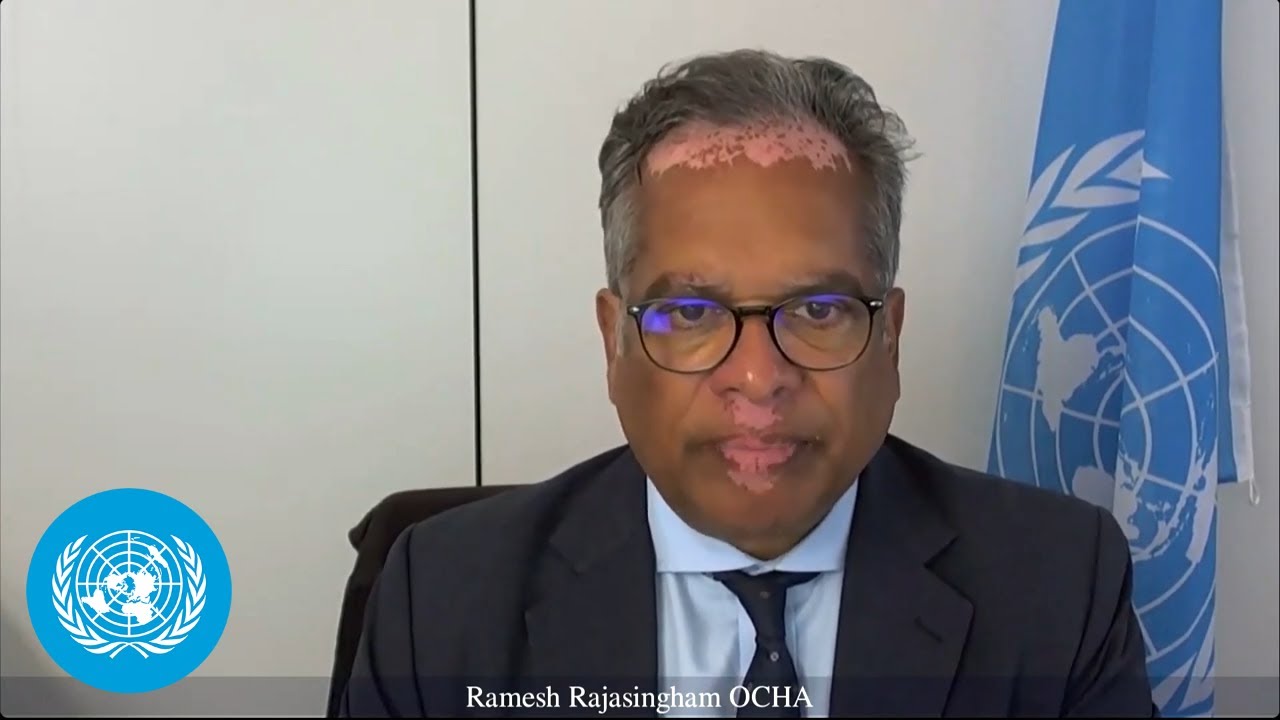
Ramesh Rajasingham, OCHA’s Director of the Coordination Division, told the Council that more than 17 million people, that’s nearly half of the population of Yemen, are estimated to be acutely hungry.

Rajasingham said, “Yemen is now one of the most food insecure countries in the world. As the economy continues to collapse and pressures on the food pipelines mount, many households with access to food can no longer afford it. Livelihoods across the public sector and agriculture and fisheries industries, among others, have been disrupted by ongoing conflict.”

He said, “half of the nation’s children under the age of 5 suffer from acute malnutrition, and nearly half suffer from stunting. This means developmental delays and infections, and a risk of death from common illnesses nine to 12 times higher than average. In a context where healthcare is desperately inadequate, and where support services are unavailable to many, this is a life-or-death gamble for children.”

Rajasingham told the Council that the Yemen Humanitarian Fund will be releasing $20 million to address the negative impacts of continuing food insecurity in Yemen.

Yemeni Ambassador Abdullah Ali Fadhel Al-Saadi said, “Yemen today is at the threshold of a difficult era. After 11 years of war waged by the terrorist Houthi militias against the country, the state and its constitutional bodies, a war that has destroyed the hopes and aspirations of a people that aspire for security, stability and dignity, justice and equality. A people that strives to build a civil state befitting of their glorious history and their status in the region.”

Al-Saadi said, “the Presidential Leadership Council and the Yemeni government are exerting efforts to push forth the peace process and to positively deal with international and regional efforts, and with the United Nations efforts through its Special Envoy to Yemen, to put an end to this conflict. However, the Houthi militias continue to obstruct all of these efforts and undermine any chances for peace.”

For more Information or to watch the video on YouTube, click here.
Why I’ll always champion Afghan women, with Georgette Gagnon | DSRSG for Afghanistan |Awake at Night

Why I’ll always champion Afghan women, with Georgette Gagnon | DSRSG for Afghanistan |Awake at Night

Hier klicken, um den Inhalt von YouTube anzuzeigen.
Learn more in YouTube’s privacy policy.

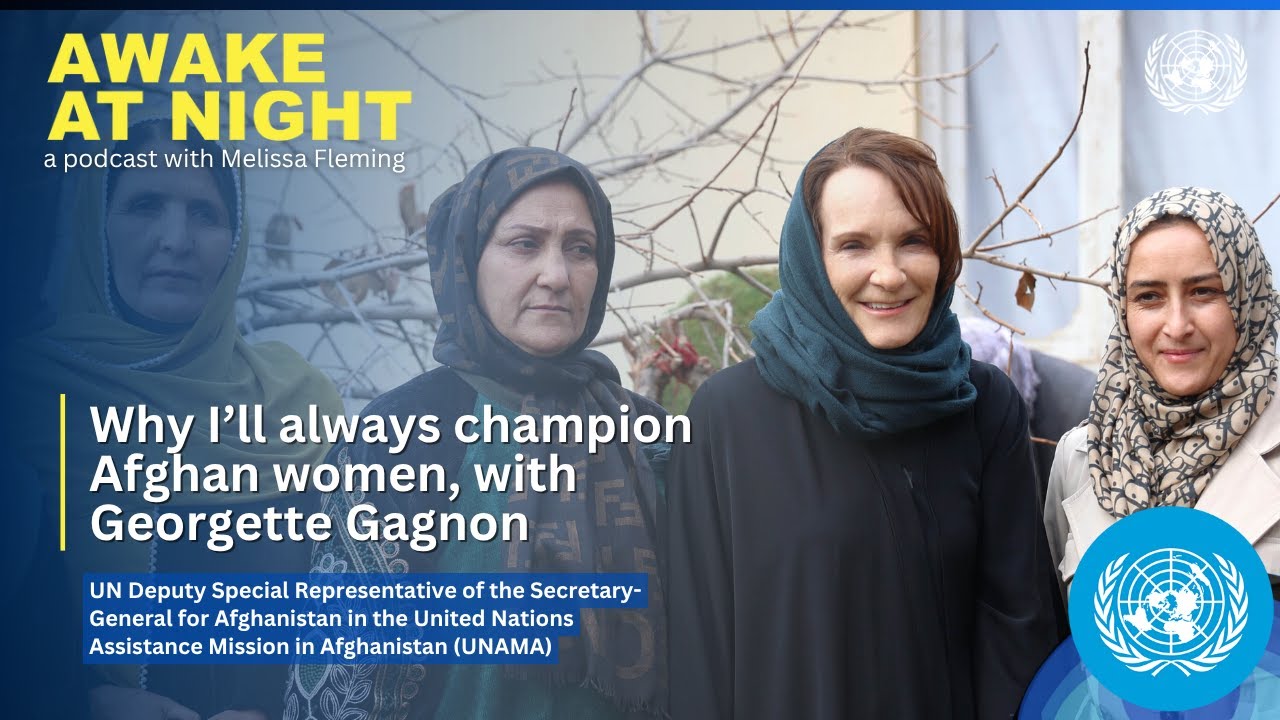
With her background in human rights law, Georgette Gagnon was once said to represent the conscience of war. Currently serving as the Secretary-General’s Deputy Special Representative for Afghanistan, she has been devastated by the sweeping loss of rights for women and girls there.

“You used to see across the country hundreds of girls going to school […] Now, of course, you don’t see that, and it’s heartbreaking. It’s such a huge loss for the entire society.”

Afghanistan faces the second biggest humanitarian crisis in the world today, while drastic cuts to humanitarian assistance will leave millions of vulnerable people without access to critical medical care.

In this episode, Georgette Gagnon shares her hopes and fears for a country close to her heart, and reflects on a career serving in some of the world’s toughest places, from Syria to Sudan and Libya.

[00:00] Introduction
[01:09] Returning to Afghanistan
[02:45] Halted humanitarian funding and its’ impact
[05:19] What keeps Georgette awake at night
[07:26] Girls’ determination to learn
[11:20] Navigating complexities
[13:22]The economic argument for women’s rights
[15:18] What brought Georgette back
[17:02] Working and living under restrictions
[17:48] A harrowing encounter in Syria
[19:46] Cautious hope for Syria
[21:10] The importance of accountability
[22:29] Bearing witness in conflict zones
[23:29] Georgette’s journey to the UN
[26:43] Family support and sacrifice
[30:04] What keeps Georgette going
[30:36] Closing remarks

Listen to more Awake at Night episodes: https://music.youtube.com/playlist?list=PLwoDFQJEq_0b6hu1e8oxsch9W0D7vkNqt

About Awake at Night
Hosted by Melissa Fleming, UN Under-Secretary-General for Global Communications, the podcast ‘Awake at Night’ is an in-depth interview series focusing on remarkable United Nations staff members who dedicate their career to helping people in parts of the world where they have the hardest lives – from war zones and displacement camps to areas hit by disasters and the devastation of climate change.

For more info, please visit: https://www.un.org/en/awake-at-night

For more Information or to watch the video on YouTube, click here.
Palestine, Sudan & other topics – Daily Press Briefing (12 August 2025) | United Nations

Palestine, Sudan & other topics – Daily Press Briefing (12 August 2025) | United Nations

Hier klicken, um den Inhalt von YouTube anzuzeigen.
Learn more in YouTube’s privacy policy.

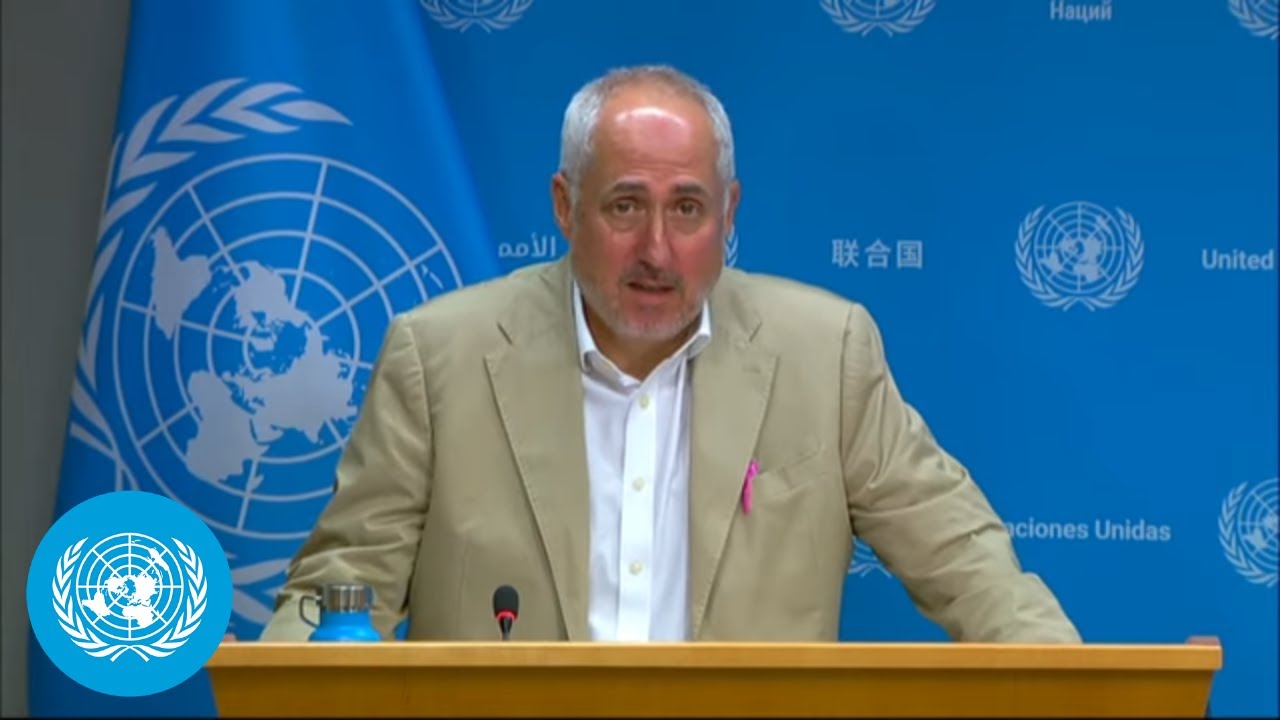
Noon Briefing by Stéphane Dujarric, Spokesperson for the Secretary-General.

Highlights:

Occupied Palestinian Territory
Sudan
Yemen
Myanmar
Colombia
Youth Advisory Group on Climate Change
UN General Assembly High-Level Week 2025

OCCUPIED PALESTINIAN TERRITORY

The World Food Programme (WFP) today warned that starvation and malnutrition are at the highest levels in Gaza since the conflict began in October 2023. Meanwhile, the Ministry of Health in Gaza reported that five people died over the past 24 hours due to malnutrition and starvation, bringing the total number of malnutrition-related deaths to 227 people, including 103 children. And again, those numbers are since October 2023.
Against this backdrop, humanitarian supplies entering Gaza remain far below the minimum required to meet people’s immense needs.
The UN and its humanitarian partners continue to do everything possible to bring assistance into Gaza. However, humanitarian movements still face significant delays and other impediments that prevent the UN from delivering aid at the scale that is needed.
Yesterday, the UN has requested to coordinate with the Israeli authorities 16 missions, including the collection of food, medical supplies and fuel – from the two operational crossings, Kerem Shalom and Zikim. Other missions involved moving goods and personnel within Gaza, from south to north and within the southern part of Gaza.
Out of the 16 missions, four were facilitated and three were denied; another four were impeded but eventually were fully accomplished.
Of the remaining five missions, two were cancelled by the respective organizations; another two missions that involved collection of food and health supplies from Kerem Shalom were impeded and unable to be completed, while another one was impeded but is still ongoing.
Efforts to coordinate humanitarian movements often drag on for hours due to unpredictable clearances by the Israeli authorities, wasting precious time.
In the West Bank, the United Nations Office for the Coordination of Humanitarian Affairs (OCHA) said that yesterday, another Palestinian Bedouin community was displaced due to violence by Israeli forces and settlers.
Israeli forces raided the community of Ein Ayoub in Ramallah governorate and ordered the immediate eviction of its approximately 100 Palestinian residents. OCHA reports that a lot of the evacuated residents have no alternative shelter.

SUDAN

The UN is deeply alarmed by reports of a large-scale attack yesterday on the El Fasher area, the besieged capital of North Darfur State. That also affected the adjoining Abu Shouk displacement camp.
The attack has been attributed by local sources to fighters from the Rapid Support Forces. According to them at least 40 civilians have been killed within Abu Shouk, and another 19 injured.
under siege and cutting them off from safety and aid. The situation remains tense and highly fluid, with insecurity displacing at least 500 people from Abu Shouk to other locations in North Darfur. That’s according to the International Organization for Migration (IOM).
The Acting Humanitarian Coordinator in Sudan said that the immediate provision of safe and unhindered passage for people seeking to flee El Fasher and other areas of active hostilities is critical. He also reiterated the Secretary-General’s repeated calls for a humanitarian pause in and around the city to allow for the delivery of food, delivery of water, delivery of medicine and other life-saving supplies that are so desperately needed. Those that are trapped in those areas are facing acute hunger and starvation.
Meanwhile, the UN also remains concerned about the situation and the violence in the Kordofan region. In South Kordofan State, the International Organization for Migration estimates that more than 3,000 people fled Kadugli town between August 6th and August 10th due to intensified insecurity. Humanitarian access to the town remains extremely limited, with virtually no road access. The primary supply route from Al Obeid in North Kordofan State is inaccessible due to active hostilities. This has worsened the already dire economic conditions and is leading to even more shortages of vital goods.
OCHA reminds all those engaged in the conflict of their obligations under international humanitarian law.
They must not direct attacks against civilians or civilian objects and must take constant care to spare them in all circumstances. They must also facilitate unimpeded humanitarian access to everyone in need of assistance.

Full Highlights: https://www.un.org/sg/en/content/noon-briefing-highlight

For more Information or to watch the video on YouTube, click here.

Organization of Islamic Cooperation on Palestine | United Nations

Organization of Islamic Cooperation on Palestine | United Nations

Hier klicken, um den Inhalt von YouTube anzuzeigen.
Learn more in YouTube’s privacy policy.

Statement by Ambassador Dr. Riyad Mansour, Permanent Observer of the State of Palestine, on behalf of the Organization of Islamic Cooperation at the Security Council Media Stakeout.

For more Information or to watch the video on YouTube, click here.
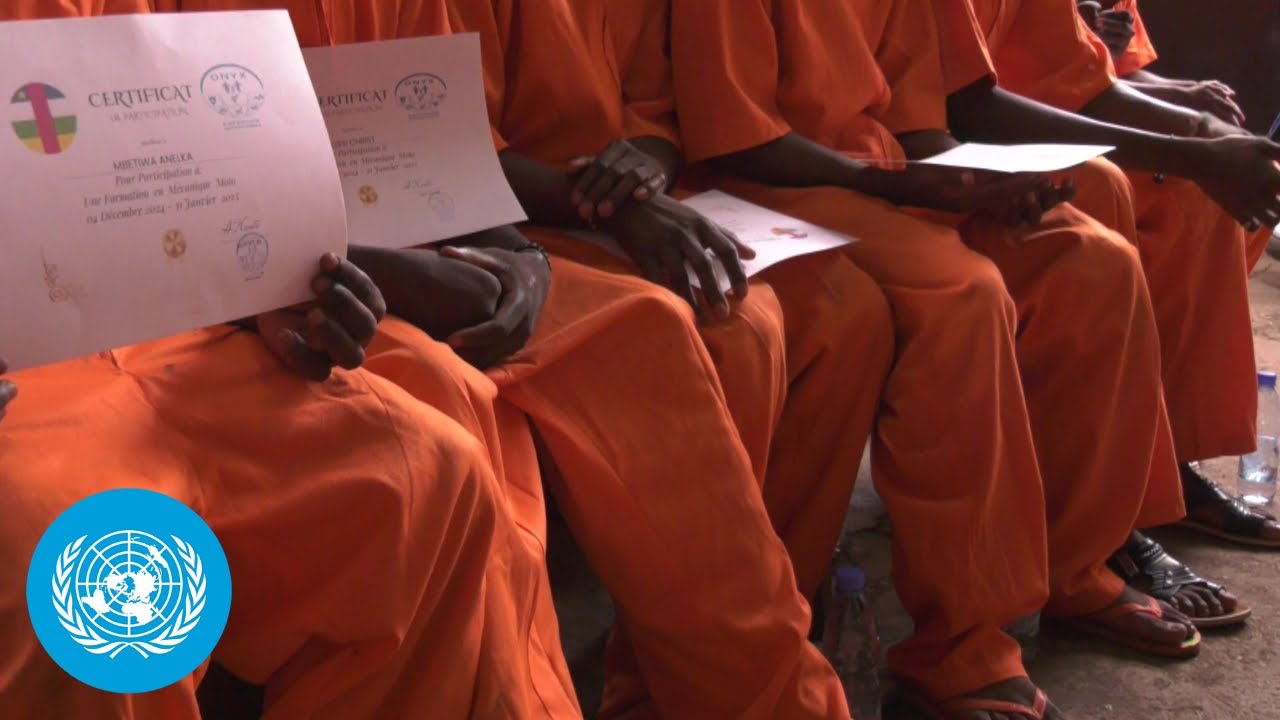
Vocational training gives new hope to inmates in the Central African Republic | United Nations

Vocational training gives new hope to inmates in the Central African Republic | United Nations

Hier klicken, um den Inhalt von YouTube anzuzeigen.
Learn more in YouTube’s privacy policy.

Learning new skills is key to helping prisoners successfully reintegrate into society after serving their sentence, and it’s one of the most effective ways to reduce the risk of reoffending.

The UN Mission in the Central African Republic is working with the Ngaragba Prison Administration to offer vocational training programs in sewing, carpentry, mechanics, and more. These programs give young detainees the tools they need to build a future, find employment, and support their families once they’re released.

This initiative is part of the UN’s broader efforts to strengthen rule of law and promote lasting peace.

For more Information or to watch the video on YouTube, click here.
Maritime security is key to economic stability & sustainable development -IMO Chief | United Nations

Maritime security is key to economic stability & sustainable development -IMO Chief | United Nations

Hier klicken, um den Inhalt von YouTube anzuzeigen.
Learn more in YouTube’s privacy policy.

“The safety and security of the maritime sector is fundamental to economic stability, sustainable maritime development and to livelihoods,” said Arsenio Domínguez, Secretary-General of the International Maritime Organization (IMO).

As the UN Security Council opened a high-level debate today (Aug 11) on emerging challenges to global maritime security, Domínguez said threats to shipping “are ever present,” noting that in 2024 nearly 150 incidents of piracy and armed robbery were reported, with the highest numbers in the Straits of Malacca and Singapore, the Indian Ocean, and West Africa.

The meeting, titled “Maritime Security: Prevention, Innovation, and International Cooperation to Address Emerging Challenges,” was chaired by Panamanian President José Raúl Mulino as the signature event of Panama’s August presidency of the Council.

Panama Canal Authority CEO Ricaurte Vásquez Morales said the canal’s constitutional commitment to equal access “in times of peace or war” has helped shield it from geopolitical tensions. Over 25 years under Panamanian administration, the canal has doubled its capacity, expanded locks, and enhanced security, he said, with revenues reinvested to maintain operations and fund social projects in Panama.

INTERPOL Secretary-General Valdecy Urquiza warned that piracy and armed robbery are resurging in parts of Southeast Asia, with continued threats in the Gulf of Guinea, Singapore Straits, the Red Sea, and the Somali coast. He said maritime crime is increasingly linked to terrorism, with groups using sea routes to move weapons, operatives, and illicit goods, and pointed to rising cyber vulnerabilities as ports adopt automated systems.

Panamanian President José Raúl Mulino emphasized Panama’s strategic location and long-standing role in maritime trade. “More than 80% of global trade, by volume, is transported via maritime routes,” he said, calling for “clear rules, cooperation, and respect” to safeguard global shipping.

For more Information or to watch the video on YouTube, click here.
Journalists, Gaza, Palestine & other topics – Daily Press Briefing (11 August 2025) | United Nations

Journalists, Gaza, Palestine & other topics – Daily Press Briefing (11 August 2025) | United Nations

Hier klicken, um den Inhalt von YouTube anzuzeigen.
Learn more in YouTube’s privacy policy.

Noon Briefing by Stéphane Dujarric, Spokesperson for the Secretary-General.

Highlights:
Journalists/Gaza
Occupied Palestinian Territory
Security Council/Gaza
Lebanon / Israel
Sudan
Democratic Republic of the Congo
Ukraine
Armenia/Azerbaijan
Afghanistan
Security Council
Steelpan Day
Guest Tomorrow

JOURNALISTS/GAZA
The Secretary-General condemns the killing of six Palestinian journalists in the Israeli strike in Gaza City on 10 August. These latest killings highlight the extreme risks journalists continue to face when covering the ongoing war. The Secretary-General calls for an independent and impartial investigation into these latest killings.
At least 242 Palestinian journalists have been killed in Gaza since the war began. The Secretary-General underscores that journalists and media workers must be respected and protected and allowed to carry out their work free from intimidation or harm.

OCCUPIED PALESTINIAN TERRITORY
OCHA reports that in an especially disturbing update today, the Ministry of Health confirmed that the number of children who have died from malnutrition [since October 2023] has now surpassed 100.
The World Food Programme said that more than a third of the population is not eating for days at a time and acute malnutrition is spiking with over 300,000 children at severe risk. Additionally, the UN Food and Agriculture Organization warned last week that a mere 1.5 per cent of cropland in Gaza is both accessible and undamaged, signaling a near-total collapse of the local food system.
Yesterday, we and partners collected food and hygiene kits from the Kerem Shalom/Karem Abu Salem crossing.
However, supplies were offloaded directly from these trucks [presumably by desperate people] before reaching their destination given the extreme desperation pervasive in Gaza today.
People need a predictable lifeline, not a trickle of aid. WFP says that just to cover basic humanitarian food assistance needs, more than 62,000 metric tons are required to enter Gaza every month, and so far, humanitarians have not been permitted to bring in enough supplies to support the survival of Palestinians there.
We can confirm that we collected fuel from the Kerem Shalom crossing yesterday. The Israeli authorities are allowing, on average, the entry of about 150,000 litres of fuel daily. However, this remains far below the minimum required to sustain life-saving operations.
For example, the Palestine Civil Defense warned yesterday that more than half of their ambulances have stopped operating across Gaza, due to the shortage of fuel and spare parts.
Israeli authorities must allow aid to enter through all crossings and via all available corridors so that we can deliver, at scale in a safe and dignified manner, to reach the most vulnerable, including women, children and older people.
A ceasefire is urgently needed to save lives. This would allow and speed up delivery of food for the hungry, health services for the sick and wounded, and shelter materials for displaced people, who have been forced to flee repeatedly since the onset of hostilities and that would also allow for the release of the remaining hostages who are being held in Gaza.

Full Highlights: https://www.un.org/sg/en/content/noon-briefing-highlight?date%5Bvalue%5D%5Bdate%5D=11%20August%202025

For more Information or to watch the video on YouTube, click here.
Gaza: UN Warns Escalation Risks Starvation, Mass Displacement, & Unprecedented Human Suffering | UN

Gaza: UN Warns Escalation Risks Starvation, Mass Displacement, & Unprecedented Human Suffering | UN

Hier klicken, um den Inhalt von YouTube anzuzeigen.
Learn more in YouTube’s privacy policy.

Briefing by Ramesh Rajasingham, Director of Coordination, United Nations Office for the Coordination of Humanitarian Affairs (OCHA), on the situation in the Middle East, including the Palestinian question – Security Council, 9975th meeting.

“Mr. President,
The suffering endured by Palestinians and Israelis over the past 22 months has been nothing short of soul-searing.

Our shared humanity demands that this catastrophe is brought to an immediate end.

Mr. President,

I will address three matters today:

First, I am extremely concerned over the prolonged conflict and further human toll that is likely to unfold following the Government of Israel’s decision to expand military operations in Gaza.

This marks a grave escalation in a conflict that has already inflicted unimaginable suffering.

For over 670 days, Palestinians in Gaza have endured daily killings and injuries. More than 61,000 people have been killed, including over 18,000 children, and 151,000 have been injured, according to Gaza’s Ministry of Health.

Meanwhile, 50 hostages are believed to remain in Gaza – with those still alive held in unthinkably inhumane and appalling conditions.

Thousands of Palestinians, including women and children, remain in Israeli detention – many held without charge or trial, or the required safeguards.

A grim milestone has also been crossed in the humanitarian community: Over 500 humanitarian workers have been killed in Gaza since hostilities escalated, including at least 167 women.

Smear campaigns against aid operations continue unabated. As we approach World Humanitarian Day, we must insist on the protection of all aid workers.

Mr. President,

Second, humanitarian conditions are beyond horrific. We have frankly run out of words to describe it. Whatever lifelines remain are collapsing under the weight of sustained hostilities, forced displacement and insufficient levels of life-saving aid.

Hunger-related deaths are rising, especially among children with severe malnutrition. Since the escalation of hostilities in October 2023, the health authorities in Gaza have documented the deaths of 98 children from severe acute malnutrition – 37 since 1 July. This is no longer a looming hunger crisis – this is starvation.

Each day brings harrowing images of men, women and children killed and injured while desperately seeking assistance. The situation is untenable, especially for older people, people with disabilities, children without parental care, and widowed women.

Gaza lies in ruins. Almost everyone in Gaza has been forcibly displaced at some point over the past two years. Palestinians in Gaza have been forced into an area that amounts to less than 14 per cent of the territory, in areas that are not safe and are lacking basic services or shelter. Further expansion of military operations will make these conditions even worse.

Families in Gaza are living in insecure, overcrowded conditions, many without shelter. Eleven per cent of some 6,500 households surveyed recently by humanitarian partners were reported to be living out in the open. No organization – UN or otherwise – has been able to bring shelter supplies into Gaza since 2 March. The lack of adequate shelter is particularly worrisome as we know that winter is soon upon us.

Given the scale of repeated displacement and current living conditions, preventing the entry of emergency shelter supplies defies the obligation to allow humanitarian relief for the population in need.

The health system effectively is collapsed. Hospitals are not protected, doctors have been killed or detained, and facilities are working without sufficient medical supplies.

Water and sanitation infrastructure are failing, and social cohesion is unraveling.

How are the people in Gaza expected to survive in these conditions?

Mr. President,

My third point: The recent military ‘tactical pauses’ have enabled some positive changes in humanitarian operations.

Limited amounts of fuel have been allowed in, and on 5 August, Israeli authorities approved a mechanism for the gradual resumption of controlled commercial goods into Gaza. This has resulted in different types of food returning to markets and a slight decrease in some prices.

Our teams on the ground caution us that despite these developments, meaningful change for the population remains elusive, as humanitarian conditions remain largely unchanged” (…). [Excerpt]

For all UN official languages, please visit: https://webtv.un.org/en/asset/k1v/k1vogrf1bv

For more Information or to watch the video on YouTube, click here.
Gaza: UN Warns Israeli Military Plans Risk Massive Displacement & Calls for Immediate Ceasefire | UN

Gaza: UN Warns Israeli Military Plans Risk Massive Displacement & Calls for Immediate Ceasefire | UN

Hier klicken, um den Inhalt von YouTube anzuzeigen.
Learn more in YouTube’s privacy policy.

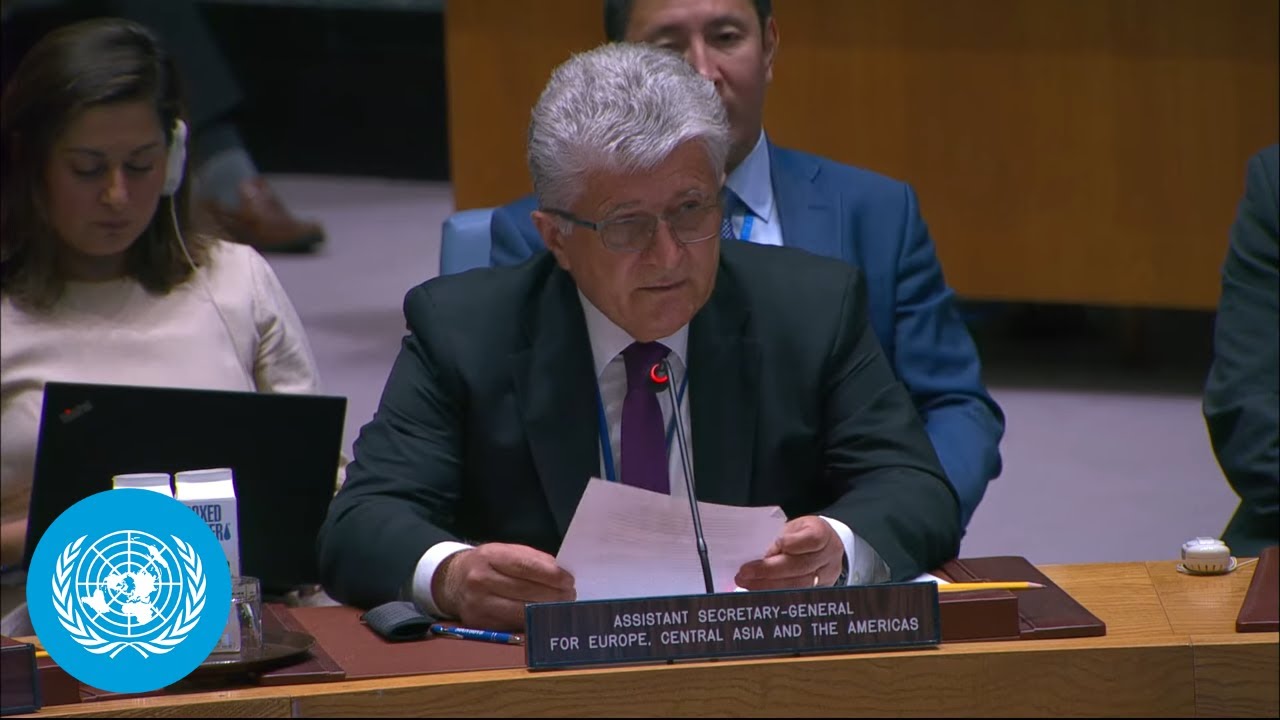
Briefing by Miroslav Jenča, Assistant Secretary-General for Europe, Central Asia and Americas, Departments of Political and Peacebuilding Affairs and Peace Operations, on the situation in the Middle East, including the Palestinian question – Security Council, 9975th meeting.

“Mr. President, Excellencies,

I brief you for the second time this week as the situation in Gaza continues to deteriorate, placing over two million Palestinians in even greater peril and further endangering the lives of the remaining hostages.

The latest decision by the Government of Israel risks igniting another horrific chapter in this conflict, with potential consequences beyond Israel and the Occupied Palestinian Territory.

On 8 August, Israel’s Security Cabinet reportedly approved Prime Minister Netanyahu’s proposed plan for “defeating Hamas” and endorsed five “principles for ending the war”: the disarmament of Hamas, the release of all hostages; the Gaza Strip’s demilitarization; Israeli security control over the Strip; and the establishment of an alternative civilian administration that is neither Hamas nor the Palestinian Authority.

The Prime Minister’s office also announced that the Israel Defence Forces (IDF) will prepare to take control of Gaza City, while providing humanitarian assistance outside combat zones. The IDF said that it is fully mobilized and preparing for an expanded military operation in Gaza.

This is yet another dangerous escalation of the conflict.

For now, we have limited official details of Israel’s military plans.

However, according to Israeli media reports, the government foresees the displacement of all civilians from Gaza City, by 7 October 2025 affecting some 800,000 people, many of them previously displaced. Reports indicate that the IDF would then surround the city for three months. This would then reportedly be followed by an additional two months to seize control of central Gaza’s camps and clear the entire area of Palestinian armed groups.

Mr. President,

We are already witnessing a humanitarian catastrophe of unimaginable scale in Gaza. Director Ramesh Rajasingham from OCHA will shortly provide you with the latest updates in this regard.

If these plans are implemented, they will likely trigger another calamity in Gaza, reverberating across the region and causing further forced displacement, killings, and destruction – compounding the unbearable suffering of the population. Last night thousands of protesters gathered in Tel Aviv and cities across Israel to call for a ceasefire and hostage release deal.

The UN has been unequivocal: the only way to stop the immense human suffering in Gaza is through a full, immediate, and permanent ceasefire. All hostages must be released immediately and unconditionally. Israel must comply with its obligations under international humanitarian law, allowing rapid, safe, unimpeded, and large-scale delivery of humanitarian aid to the population. Civilians – including humanitarian workers, and those seeking aid – must be protected.

Everyone, has the right to life, liberty, and security. Palestinians must be able to return to their homes. In its 19 July 2024 Advisory Opinion, the International Court of Justice stated that “Israel, as the occupying Power, has the obligation not to impede the Palestinian people from exercising its right to self-determination, including its right to an independent and sovereign State, over the entirety of the Occupied Palestinian Territory”.

Mr. President,

As I emphasized to this Council a few days ago, there is no military solution to the armed conflict in Gaza or the broader Israeli-Palestinian conflict. There will be no sustainable solution without an end to Israel’s unlawful occupation and the achievement of a viable two-State solution. Gaza is, and must remain, an integral part of a Palestinian State.

We must plan for Gaza’s future as we address the urgency of developments on the ground today.

We must establish political and security frameworks that can relieve the humanitarian catastrophe in Gaza, start early recovery and reconstruction, address the legitimate security concerns of Israelis and Palestinians, and forge a path for the realization of a viable two-State solution. In this regard I urge the immediate implementation of the political, humanitarian and security steps outlined in the New York Declaration on the Peaceful Settlement of the Question of Palestine and the Implementation of the Two-State Solution” (…). [Excerpt]

For all UN official languages, please visit: https://webtv.un.org/en/asset/k1r/k1rrwuxuqi

For more Information or to watch the video on YouTube, click here.
Slovenia on behalf of the E5 on Gaza – Joint Security Council Media Stakeout | United Nations

Slovenia on behalf of the E5 on Gaza – Joint Security Council Media Stakeout | United Nations

Hier klicken, um den Inhalt von YouTube anzuzeigen.
Learn more in YouTube’s privacy policy.

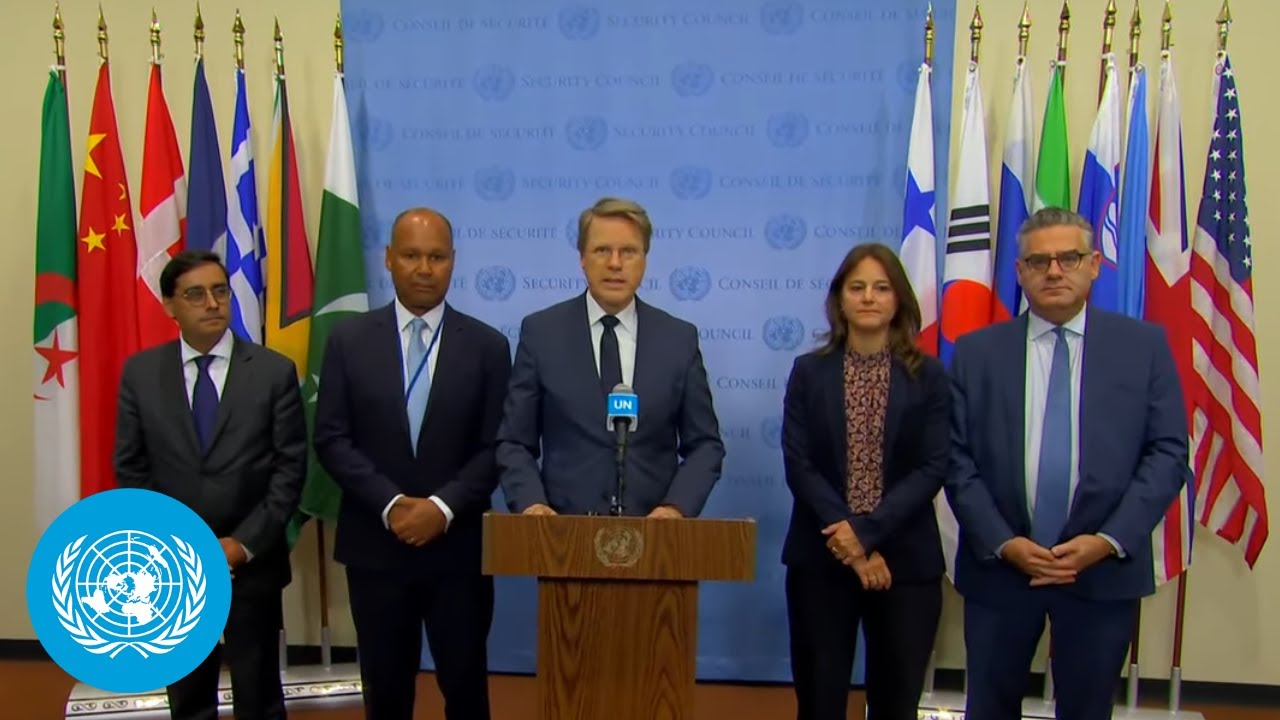
Comments to the media by Samuel Žbogar, Permanent Representative of Slovenia to the United Nations, on behalf of the E5 (United Kingdom, Denmark, France, Greece, and Slovenia), on the situation in Gaza.

For more Information or to watch the video on YouTube, click here.
Sudan: Humanitarian Situation – Press Conference | United Nations

Sudan: Humanitarian Situation – Press Conference | United Nations

Hier klicken, um den Inhalt von YouTube anzuzeigen.
Learn more in YouTube’s privacy policy.

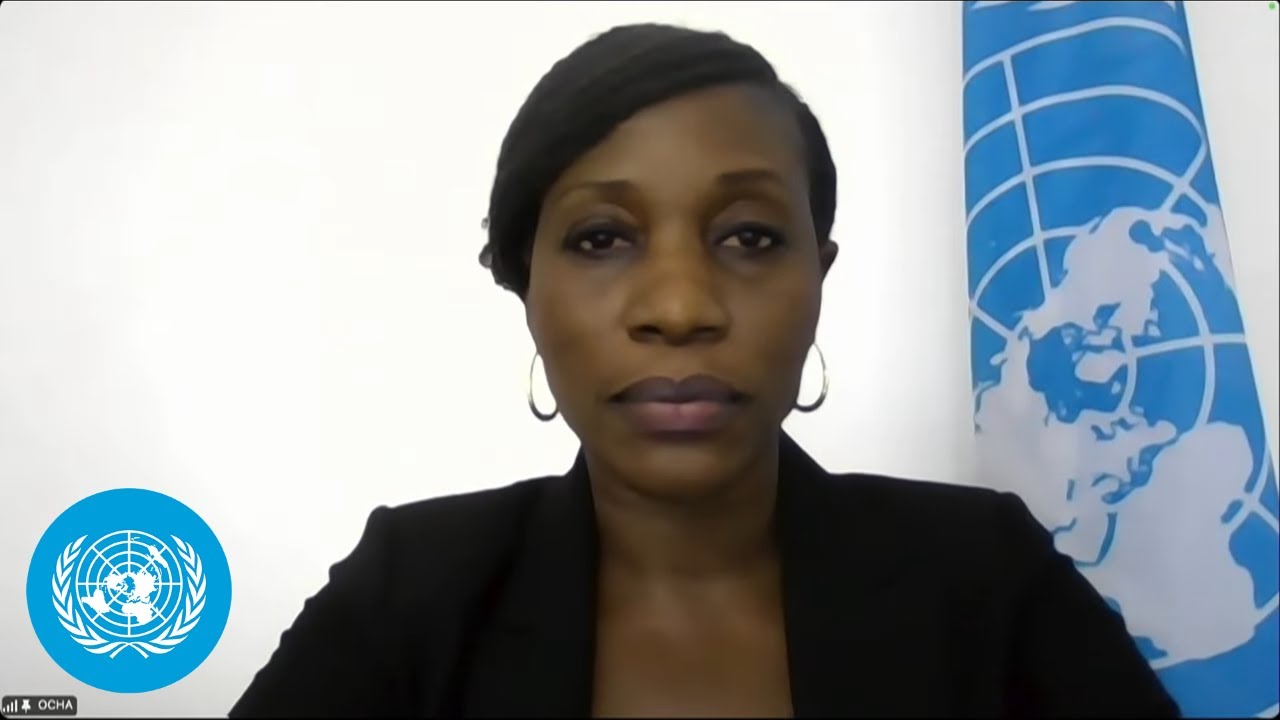
Briefing reporters virtually from Sudan, OCHA’s Director of Operations and Advocacy, Edem Wosornu, today (8 Aug) said, “what I saw in Khartoum was devastating. It was a decimated city, a Khartoum that was once buzzing with life, almost a ghost town, a Khartoum that is utterly destroyed.”

Wosornu described visiting OCHA’s offices in Khartoum and noted the team was not able to enter the premises “because of unexploded ordnance, explosive remnants of war not cleared by, of course, the United Nations by an action service who’ve been clearing different offices across the city.”

She said, “I have never seen anything like this before in my almost quarter of a century service to the United Nations and to humanitarian action, in several difficult, war-torn contexts. This is the worst I’ve seen it.”

On funding, the humanitarian official said, “what we’re asking for is basically 55 cents per day per person in Sudan. And that’s it. Right. So, where we have access, we are able to assist. Where we have safety and security assurances, we’re able to assist. Where we have enough supplies and funding, we’re able to assist.”

She said Sudan’s is “the largest displaced crisis, the largest health crisis, the largest number of people in need.”

Wosornu said, “wwe’ve received 23 percent of what we’re asking for. We’ve received almost a billion and we’ve been able to assist some 13 million people. So, you see, when we get the assistance in, when we get the flexible funding, we are able to mobilize. Certainly, the World Food Program, UNICEF, World Health Organization, UNFPA, IOM, all our UN agencies, funds and programs, as well as, of course, our international and national NGOs able to mobilize.”

Since April 2023, Sudan has faced an unprecedented humanitarian crisis driven by the ongoing conflict between the Sudanese Armed Forces and the Rapid Support Forces. Civilians continue to bear the brunt of violence, with nearly 9 million people displaced internally, making Sudan the world’s largest internal displacement crisis. An additional over 3 million people have fled to neighbouring countries.

Nearly two thirds of Sudan’s population is in dire need of humanitarian assistance, including 16 million children. Acute food insecurity has reached historic levels, with famine conditions confirmed in various parts of the country and millions at risk of starvation. Meanwhile, disease outbreaks are compounding the crisis, alongside worsening climate shocks.

Women and girls are particularly vulnerable, facing heightened risks of conflict-related sexual violence.

For more Information or to watch the video on YouTube, click here.
Empowering Women as Entrepreneurs in Bahrain | United Nations

Empowering Women as Entrepreneurs in Bahrain | United Nations

Hier klicken, um den Inhalt von YouTube anzuzeigen.
Learn more in YouTube’s privacy policy.

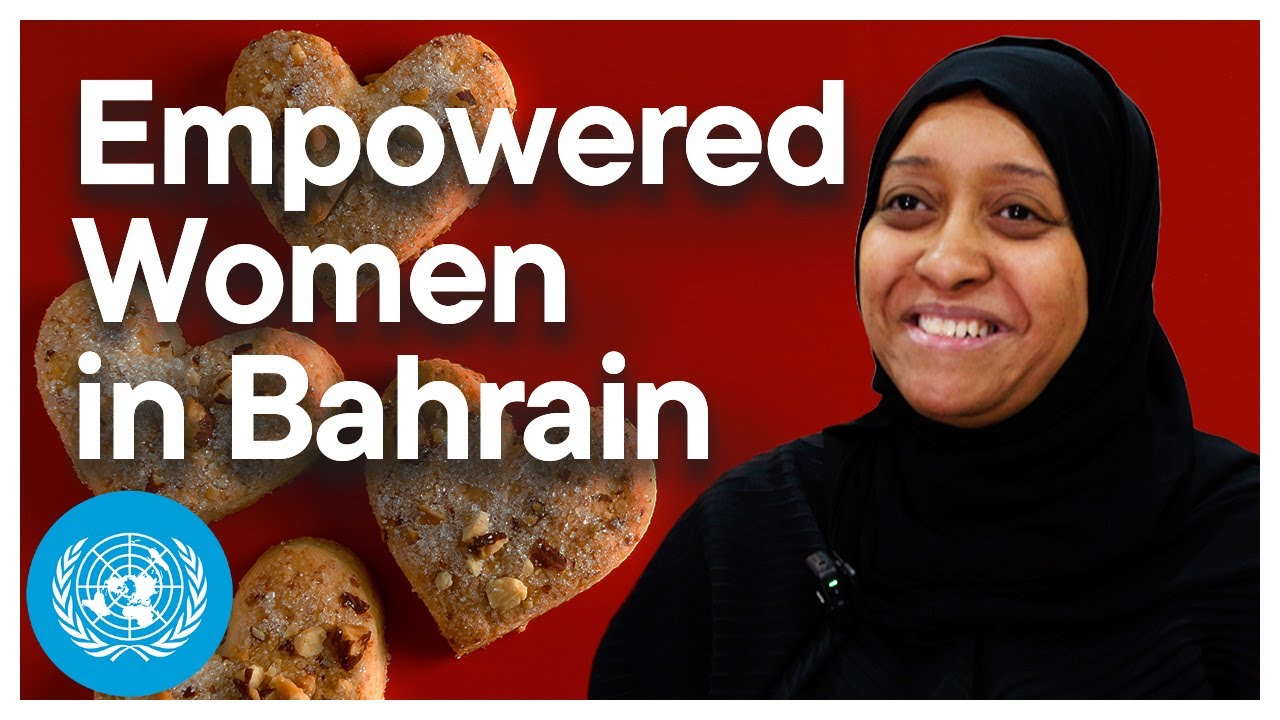
Eman Fareed and Noora Khalid Musaifer receive trainings to become successful entrepreneurs in Bahrain by Kaaf Humanitarian, a non-profit organization launched in 2021. The organization aims to empower individuals and communities for self-reliance and to contribute to form a humanitarian, integrated, and development-oriented society.
Kaaf Humanitarian was among the exhibitors at the 5th World Entrepreneurship Investment Forum (WEIF), held in Manama, Bahrain, in 2024 and facilitated by the UN Industrial Development Organization (UNIDO), ITPO Bahrain.

For more Information or to watch the video on YouTube, click here.
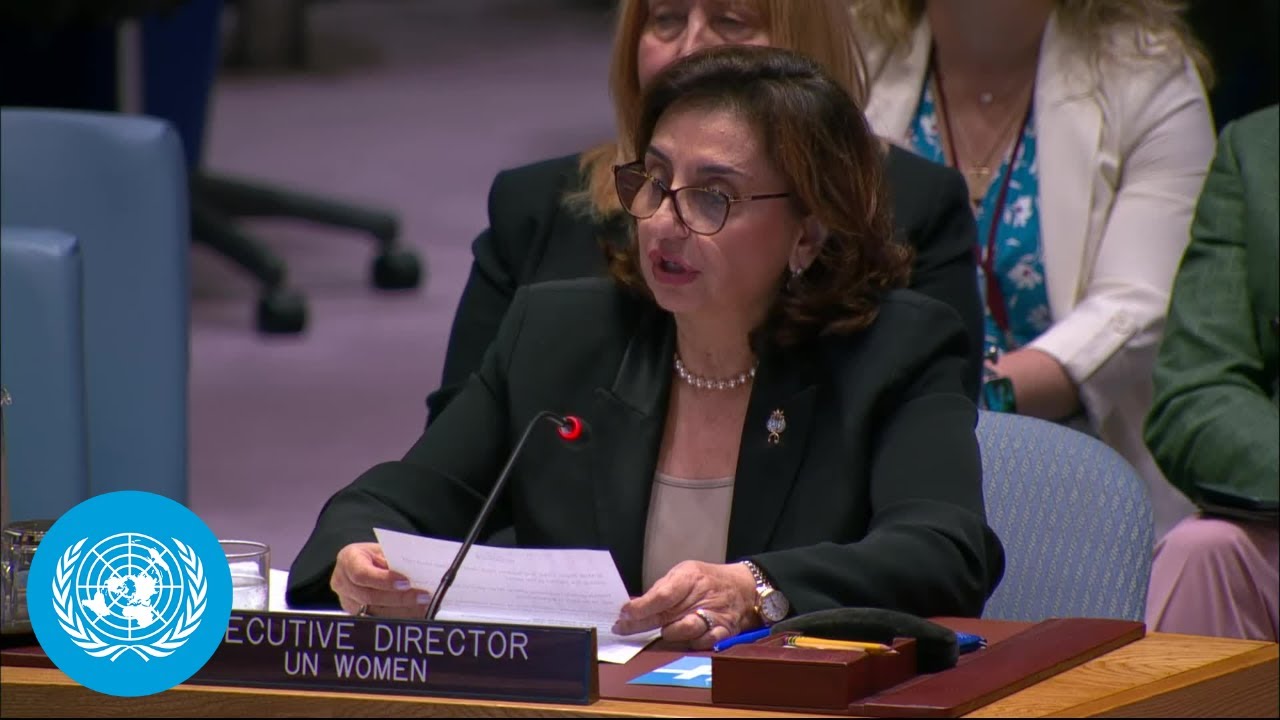
West Africa: Call for women’s inclusion in peace & security efforts– UN Women Chief | United Nations

West Africa: Call for women’s inclusion in peace & security efforts– UN Women Chief | United Nations

Hier klicken, um den Inhalt von YouTube anzuzeigen.
Learn more in YouTube’s privacy policy.

The UN Under-Secretary-General and UN Women Executive Director, Sima Bahous, today (7 Aug) called on Council members to urge governments and regional bodies to ensure women’s full, equal, meaningful, and safe participation in transitional governments and peace and security efforts.

She also called on Members “to urge governments and regional bodies to ensure women’s full, equal, meaningful, and safe participation in transitional governments and peace and security efforts; implement affirmative action laws, and ensure a safe, open space for civil society; invest at least 15 percent of violent extremism prevention funding in gender equality, and ask for engendered updates from sanctions and counterterrorism bodies; support the rapid deployment of Women Protection Advisors to UNOWAS to monitor sexual violence trends, engage with parties to conflict, and secure time-bound commitments; and, even in a challenging financial landscape, I urge international partners to provide direct, flexible, long-term funding to women-led and women’s rights organizations through mechanisms such as the Women’s Peace and Humanitarian Fund and the Peacebuilding Fund.”

Before the meeting, Panama’s Ambassador Eloy Alfaro, who is presiding the Council during the month of August, read a statement on behalf of the signatories of Shared Commitments on Women, Peace and Security (WPS).

He said, “this region is facing multiple interest acting challenges, the erosion of democratic governance and of the institutional regional architecture. Limited economic opportunity and water and food insecurity have led to persisting transnational crime and forced displacement. These issues, exacerbated by the growing threats of terrorism and the effects of climate change, pose urgent and significant threats to international peace and security, and disproportionately impact women and girls.”

Also speaking to reporters after the meeting, Sierra Leone’s Ambassador Michael Imran Kanu, speaking on behalf of the Permanent Representatives of ECOWAS on Combatting Terrorism through Regional Leadership and Multilateral Cooperation. Kanu said, “we strongly condemn all acts of terrorism and expressed grave concern over the use of unmanned aerial systems and aircraft capabilities and improvised explosive devices to target civilians and civilian infrastructure. The deliberate targeting of children, the equipment and radicalization of youth, attacks on schools and healthcare facilities, and restrictions on humanitarian access have compounded human suffering. This gets further aggravated by ethnic and communal tensions, particularly between herders and farmers, and exacerbated by the adverse effects of climate change, which perpetuate cycles of violence.”

For more Information or to watch the video on YouTube, click here.