Sexual Violence in Conflict Cases Surge 25% in 2024 – Security Council Briefing | United Nations

Sexual Violence in Conflict Cases Surge 25% in 2024 – Security Council Briefing | United Nations

Hier klicken, um den Inhalt von YouTube anzuzeigen.
Learn more in YouTube’s privacy policy.

“In the course of 2024, more than 4,600 cases of conflict-related sexual violence, including as a tactic of war, torture, terror and political repression, were documented, marking a staggering 25 percent increase from 2023, which was itself a 50 percent increase from the previous year,” the UN’s envoy on sexual violence in conflict told the Security Council.

Briefing the Council today (Aug 19), Pramila Patten, the Special Representative of the Secretary-General, warned that even as needs rise, funding for women’s frontline organizations is collapsing. “We are told there is no money for lifesaving aid, even as military expenditure soars, and the world spends more in 24 hours on arms than it does in a year on addressing gender-based violence in conflict,” she said.

Patten’s remarks drew on the Secretary-General’s latest annual report on conflict-related sexual violence, published on 14 August and covering the period from January to December 2024.

She noted that women and girls accounted for 92 percent of verified cases last year, with victims ranging in age from one to 75 years old. “Sexual violence against children increased by a shocking 35 percent over the past year, with incidents of gang-rape rising dramatically, inflicting enduring, generational harm,” she said.

From Darfur, Ikhlass Ahmed of the Darfur Advocacy Group described how sexual violence remains widespread. “Hardly a day goes by without a new report of rape of a woman or girl,” she told the Council, adding that more than 30 women and girls have been detained by the Rapid Support Forces in El Fasher for over seven months. “These stories and these numbers are just the tip of the iceberg, as survivors often remain silent due to stigma and fear of retaliation,” she said.

Ahmed also reported at least 174 attacks on health providers and facilities since the conflict began, including clinics serving survivors of sexual violence. “In April, the RSF burned down a women-led community kitchen in Zamzam Camp, deliberately killing volunteers Hasanat Musa, who was pregnant, and Nana Bahar Idris,” she added.

Before the debate, the signatories to the Shared Commitments on Women, Peace and Security – Denmark, France, Greece, Guyana, Panama, the Republic of Korea, Sierra Leone, Slovenia, the UK, and the US – delivered a joint statement on conflict-related sexual violence, at a stakeout ahead of the meeting.

Speaking on behalf of the group, Panama’s ambassador to the UN, Eloy Alfaro de Alba, called for accountability and greater support for survivors. “We call for an end to impunity for sexual and gender-based violence and demand accountability as the norm for these crimes,” he said. “We stress the urgent need for sustained, flexible and predictable funding for victims and survivor-centered responses, including through a multi-partner Trust Fund on CRSV.”

For more Information or to watch the video on YouTube, click here.

Wreath-laying ceremony for the observance of the 22nd anniversary of the bombing of UNHQ in Baghdad

Wreath-laying ceremony for the observance of the 22nd anniversary of the bombing of UNHQ in Baghdad

Hier klicken, um den Inhalt von YouTube anzuzeigen.
Learn more in YouTube’s privacy policy.

The commemoration of the bombing of the United Nations headquarters in Baghdad will be observed with a brief ceremony organized by the UN Staff Union’s Standing Committee on the Security and Independence of the International Civil Service.

Mr. Atul Khare, Under-Secretary-General, Department of Operational Support (accompanied by survivors of that bombing) will lead the Wreath-laying ceremony, he will lay a wreath in front of the plaque honouring those who lost their lives in Baghdad, followed by a moment of silence.

The ceremony also marks the observance of World Humanitarian Day designated by the General Assembly in 2008 to coincide with the date of the bombing in Baghdad. The Day also honours humanitarian aid workers who have been killed or injured in the course of their work.

For more Information or to watch the video on YouTube, click here.
World Humanitarian Day 2025 – USG Message | United Nations

World Humanitarian Day 2025 – USG Message | United Nations

Hier klicken, um den Inhalt von YouTube anzuzeigen.
Learn more in YouTube’s privacy policy.

On World Humanitarian Day, USG Gilles Michaud speaks from Gaza, honoring humanitarian workers and calling for their protection. Local colleagues—who make up 90% of the workforce—are the backbone of life-saving operations worldwide.

For more Information or to watch the video on YouTube, click here.
Conflict-Related Sexual Violence – Joint Security Council Media Stakeout | United Nations

Conflict-Related Sexual Violence – Joint Security Council Media Stakeout | United Nations

Hier klicken, um den Inhalt von YouTube anzuzeigen.
Learn more in YouTube’s privacy policy.

Comments to the media by Eloy Alfaro de Alba, Permanent Representative of Panama to the United Nations, and Security Council President for the month of August, on behalf of the signatories of the Shared Commitments on Women, Peace and Security (WPS), on Conflict-Related Sexual Violence.

For more Information or to watch the video on YouTube, click here.
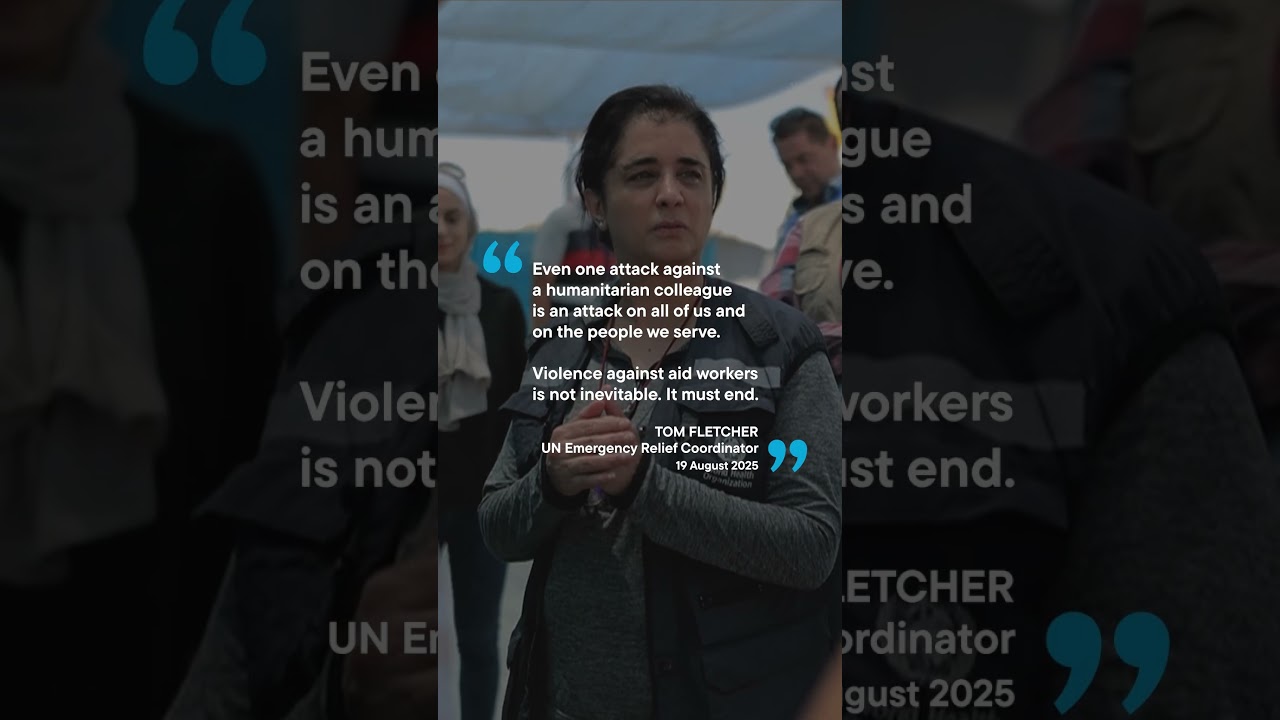
World Humanitarian Day: Attacks on aid workers hit new records

World Humanitarian Day: Attacks on aid workers hit new records

Hier klicken, um den Inhalt von YouTube anzuzeigen.
Learn more in YouTube’s privacy policy.

On this World Humanitarian Day, aid workers and their supporters commemorate those killed and stand in solidarity with those serving people in need, demanding urgent protection for civilians and aid operations.

Attacks on humanitarian workers, assets and operations violate international humanitarian law and undermine the lifelines that sustain millions of people trapped in war and disaster zones.

For more Information or to watch the video on YouTube, click here.
World Humanitarian Day 2025 – UN Chief message | United Nations

World Humanitarian Day 2025 – UN Chief message | United Nations

Hier klicken, um den Inhalt von YouTube anzuzeigen.
Learn more in YouTube’s privacy policy.

Video message by António Guterres, Secretary-General of the United Nations, on World Humanitarian Day 2025.

“Humanitarian workers are the last lifeline for over 300 million people caught in conflict or disaster.
Yet, funding for that lifeline is drying up.

And those who provide humanitarian aid are increasingly under attack.
Last year, at least 390 aid workers – a record high – were killed across the world.

From Gaza to Sudan to Myanmar and beyond.
International law is clear: humanitarians must be respected and protected. They can never be targeted.

This rule is non-negotiable and is binding on all parties to conflict, always and everywhere.
Yet red lines are crossed with impunity.

Governments have pledged action – and the Security Council has laid out a path to protect
humanitarians and their lifesaving work.

The rules and tools exist. What is missing is political will – and moral courage.

On this World Humanitarian Day, let’s honour the fallen with action:

To protect every aid worker – and invest in their safety.
To stop the lies that cost lives.

To strengthen accountability and bring perpetrators to justice.
To end arms flows to parties that violate international law.

Together, let us say in one voice: An attack on humanitarians is an attack on humanity.
And let’s ”.

More info: https://www.un.org/en/observances/humanitarian-day

For more Information or to watch the video on YouTube, click here.
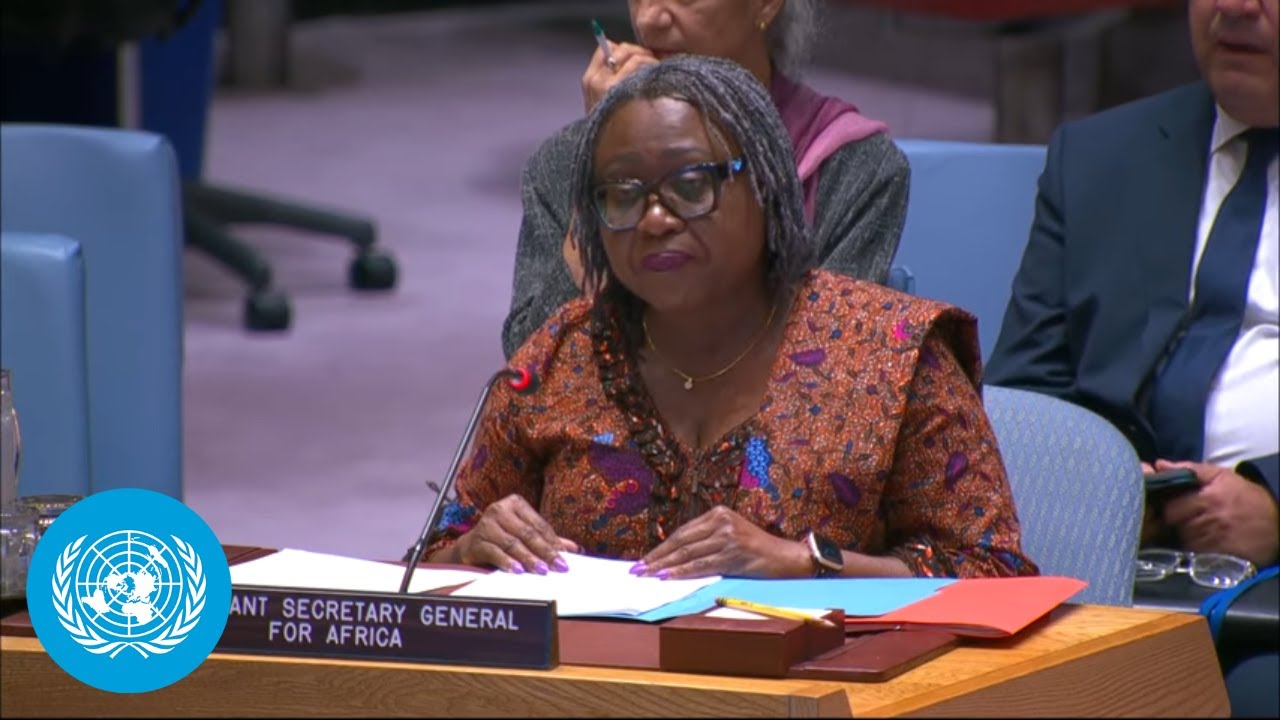
Sudan/South Sudan: Escalating Violence & Stalled Peace Process | United Nations

Sudan/South Sudan: Escalating Violence & Stalled Peace Process | United Nations

Hier klicken, um den Inhalt von YouTube anzuzeigen.
Learn more in YouTube’s privacy policy.

The Assistant Secretary-General for Africa Martha Ama Akyaa Pobee today (18 Aug) told the Security Council that there has been “a continued erosion of the gains previously made in the peace process” in South Sudan, including “an escalation of political and subnational violence and stagnation in the implementation of the Peace Agreement.”

Pobee said the international community has “repeatedly called for a cessation of hostilities, de-escalation and return to dialogue. However, she added, they “have not yielded any concrete response” and instead, “a pattern of violations and unilateral actions persists, which continues to undermine the ability of the Government of national unity to implement the Agreement.”

If this trend continues, she said, “it will likely lead to a shift in conflict dynamics, from subnational and community-based violence to a more complex landscape shaped by ethnic divisions involving signatory parties and other actors, including those from neighbouring countries.”

Pobee called on the parties “to unblock the current political deadlock by fully recommitting to the Cessation of Hostilities Agreement, releasing the political detainees, engaging in direct high-level dialogue, and recommit implementing an inclusive peace process, particularly on key issues such as transitional security arrangements, transitional justice, constitution-making, and elections.”

The Interim Chairperson of the Reconstituted Joint Monitoring and Evaluation Commission (RJMEC) George Aggrey Owinow, briefing remotely from Juba, said, “the current situation and trajectory of the country, if not urgently addressed, risks to reverse all that has been gained and may lead to a collapse” of the peace agreement, “which could return the country back to an armed conflict.”

The RJMEC and its partners, Aggrey Owinow said, “have repeatedly called for constructive dialog, de-escalation of tensions, addressed the issues of detainees and returned to full and implementation” of the agreement.

For his part, South Sudan’s Ambassador Sabino Edward Nyawella Amaikweytold the Council that “South Sudan remains committed to ensuring that any obstacles – real or perceived – to and UNMISS operations are addressed in good faith and without delay.”

Nyawella Amaikweytold confirmed that “any such situations could either be attributed to our efforts to ensuring safety of the mission’s assets and or personnel, or they are merely due to lack of information sharing, or the capacity of the individuals involved. It is never a policy of the government of the Republic of South Sudan to hinder UNMISS mandate.”

The Agreement on the Roadmap to a Peaceful and Democratic End of the Transitional Period of the Agreement on the Resolution of the Conflict in the Republic of South Sudan (R-ARCSS) was concluded and signed on 12 September 2018 and was scheduled to end after a period of 44 months.

For more Information or to watch the video on YouTube, click here.
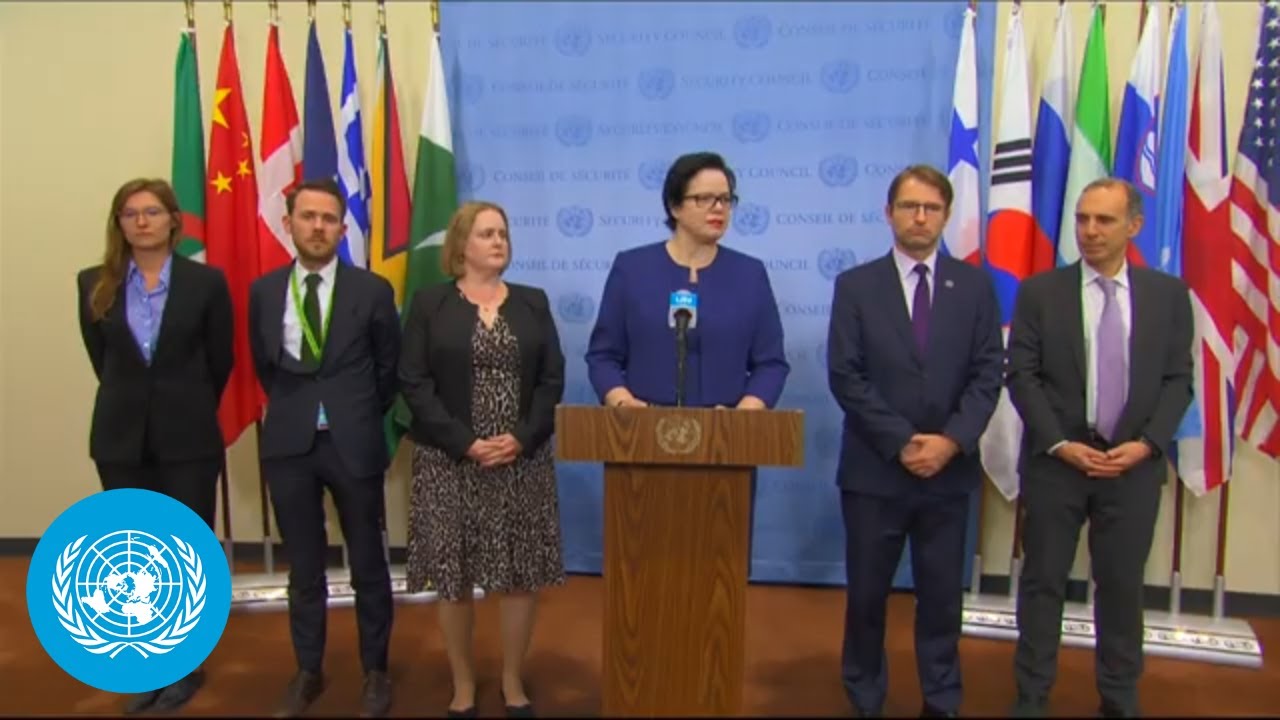
Georgia – Joint Security Council Media Stakeout | United Nations

Georgia – Joint Security Council Media Stakeout | United Nations

Hier klicken, um den Inhalt von YouTube anzuzeigen.
Learn more in YouTube’s privacy policy.

Joint press encounter by the E5 with statement read by Ms. Ondina Blokar Drobič, Deputy Permanent Representative of Slovenia to the United Nations, on the situation in Georgia – Security Council Media Stakeout.

For more Information or to watch the video on YouTube, click here.
Japan, Palestine & other topics – Daily Press Briefing (18 August 2025) | United Nations

Japan, Palestine & other topics – Daily Press Briefing (18 August 2025) | United Nations

Hier klicken, um den Inhalt von YouTube anzuzeigen.
Learn more in YouTube’s privacy policy.

Noon Briefing by Stéphane Dujarric, Spokesperson for the Secretary-General.

Highlights:
Secretary-General/Travels
Occupied Palestinian Territory
Lebanon
Ukraine
Sudan
South Sudan
Secretary-General/Flooding in India and Pakistan
United Nations Support Office In Somalia (UNSOS)
Resident Coordinator

SECRETARY-GENERAL/TRAVELS
Today, the Secretary-General will leave New York for Japan to attend the Ninth Tokyo International Conference on African Development (TICAD 9) in Yokohama and the UN Special Day at Expo 2025 in Osaka.
Mr. Guterres is scheduled to hold a meeting with the Prime Minister of Japan, Shigeru Ishiba, as well as other officials including the Minister for Foreign Affairs of Japan, Iwaya Takeshi,
This will be the Secretary-General’s seventh visit to Japan. It will highlight the cooperative relationship between the UN and Japan. TICAD is also a very important platform to discuss ways to support Africa.

OCCUPIED PALESTINIAN TERRITORY
The Office for the Coordination of Humanitarian Affairs (OCHA) warns that the situation is beyond catastrophic in the Gaza Strip. Amid ongoing hostilities and extreme hunger, more deaths are recorded every day. Hunger-related deaths continue to be reported, including among children.
Partners say that, last week, in the north and the south of Gaza, more than 80 community kitchens were able to produce some 380,000 meals each day. Back in April, the daily tally of community kitchens was more than a million meals each day. Communities rely on hot meals once a day from these kitchens – but the amount they’re able to cook remains insufficient to meet the needs of the population in Gaza.
The World Food Programme (WFP) said that its teams are doing everything they can to deliver food to people. But the supplies remain far below standards – less than half of WFP daily target.
The agency said that organized distributions, WFP-supported hot meals, and bakeries, depend on far more aid that is actually getting into Gaza.
The Ministry of Health in Gaza said that five people, including two children, died over the past 24 hours due to malnutrition and starvation.
To prevent such deaths, and as we’ve been saying repeatedly humanitarians must be able to deliver food at scale, and consistently, through all available crossings and routes to reach the population of 2.1 million people, half of whom are children.
Yesterday, eight out of the 12 missions requiring coordination with Israeli authorities were facilitated without impediments. They included the transfer of nutritional supplies and fuel to the north.
One mission was to replace a water pipeline in Deir al Balah, and that mission was denied. Three others were impeded but eventually fully accomplished, including the collection of food aid from the Zikim crossing and the Kerem Shalom/ Karem Abu Salem crossing.
Movement restrictions also included holding points and long waiting lines inside the Strip, hinder the delivery of aid and supplies to people who are in desperate need.
We have seen the Israeli authorities’ announcement that they will lift the ban on shelter supplies, which have not been allowed to enter the Gaza Strip in five months. This is a welcome development, as the need for shelter and household items has increased. UN partners estimate that at least 1.35 million people need emergency shelter and some 1.4 million need essential household items. This represents an increase of about 4 and 8 per cent, respectively, compared with just June, a few months ago.
However, we are also concerned that the announcement by the Israeli authorities comes in connection with the looming announced expansion of the military activities in the Gaza city. This would displace thousands of people, once again, into an overcrowded area in the south of the Strip, which is almost devoid of the most basic infrastructure and services, including water, food and medical services.
Since early March, when the Israeli shelter ban came into force, more than 780,000 displacements have taken place. Existing shelters have deteriorated or been left behind amid repeated displacement orders.
Yet again, we repeat that it will not participate in any forced displacement of people. The UN and its partners reiterate our commitment to serve people wherever they are.
All civilians must be protected, whether they choose to stay or whether they choose to move. Those who decide to move must have their essential needs met, and they must be able to voluntarily return when the situation allows.
We also need unimpeded humanitarian access across all of Gaza, including community-based distributions and supplies entering at scale through all possible crossings, as we have been saying. All available supplies must be let into Gaza, including through the northern crossings.

Full highlights: https://www.un.org/sg/en/content/noon-briefing-highlight?date%5Bvalue%5D%5Bdate%5D=18%20August%202025

For more Information or to watch the video on YouTube, click here.
5 Facts – UNIFIL | United Nations

5 Facts – UNIFIL | United Nations

Hier klicken, um den Inhalt von YouTube anzuzeigen.
Learn more in YouTube’s privacy policy.

UNIFIL is in south Lebanon to support Lebanon and Israel in the implementation of Security Council resolution 1701 (2006), and to monitor and report violations of the resolution.

For more Information or to watch the video on YouTube, click here.
Climate, Peace and Security in South Sudan – Joint Security Council Media Stakeout | United Nations

Climate, Peace and Security in South Sudan – Joint Security Council Media Stakeout | United Nations

Hier klicken, um den Inhalt von YouTube anzuzeigen.
Learn more in YouTube’s privacy policy.

Joint press encounter by Security Council members who are pledges of CPS of Shared Commitments on Climate, Peace and Security (CPS) in South Sudan, led by Ambassador Eloy Alfaro de Alba, Permanent Representative of Panama to the United Nations, and President of the Security Council President for the month of August, at the Security Council Stakeout.

For more Information or to watch the video on YouTube, click here.
Afghanistan: Four-year Mark of the Taliban Takeover – Press Conference | United Nations

Afghanistan: Four-year Mark of the Taliban Takeover – Press Conference | United Nations

Hier klicken, um den Inhalt von YouTube anzuzeigen.
Learn more in YouTube’s privacy policy.

Virtual briefing by Susan Jane Ferguson, UN Women Representative in Afghanistan, from Kabul, on the four-year mark of the Taliban takeover.

For more Information or to watch the video on YouTube, click here.
Plastic Pollution Treaty & other topics -Daily Press Briefing (15 August 2025) | United Nations

Plastic Pollution Treaty & other topics -Daily Press Briefing (15 August 2025) | United Nations

Hier klicken, um den Inhalt von YouTube anzuzeigen.
Learn more in YouTube’s privacy policy.

Noon Briefing by Stéphane Dujarric, Spokesperson for the Secretary-General.

Secretary-General / Plastic Pollution Treaty
Secretary – General / Trip Announcement
Trip Announcement / Peace Operations
Senior Personnel Appointment
Occupied Palestinian Territory
Ukraine
Afghanistan
Democratic Republic of the Congo
Central Emergency Response Fund
Financial Contribution

SECRETARY-GENERAL/PLASTIC POLLUTION TREATY
In a statement issued today, the Secretary-General said that he deeply regrets that, despite earnest efforts, negotiations to reach an international legally binding instrument on plastic pollution, including in maritime environment, concluded without achieving a consensus. The Secretary-General welcomed the determination of Member States in continuing to work to beat plastic pollution and keep engaged on the process, united in purpose, to deliver the treaty the world needs to tackle these monumental challenges to people and the environment.

OCCUPIED PALESTINIAN TERRITORY
The UN once again warns that the already dire situation could worsen without a reliable, rapid, safe and unrestricted flow of supplies into the Gaza Strip. The UN and its humanitarian partners report that ongoing delays and other impediments, including bottlenecks at holding points and interference in the loading process at the platforms, are impacting our efforts to collect supplies from the crossings and bring them to people in need.
Yesterday, five out of 12 missions requiring coordination with Israeli authorities were facilitated without impediments. They included the collection of supplies from Kerem Shalom/Karem Abu Salem and the transfer of fuel to the north. Four missions were canceled by the organizers and three others were impeded and only eventually fully accomplished – these included the collection of food aid from Zikim and Kerem Shalom crossings.
And on the starvation crisis in Gaza, more deaths are being reported, including many children, who are regularly admitted to hospitals for malnutrition. The World Health Organization (WHO) warns that many healthcare facilities have run out of bedspace to treat malnourished patients. Access to healthcare must be restored immediately.
The UN continues to receive extremely disturbing reports of aid seekers being killed and injured. Between May 27th and August 8th, the Red Cross Field Hospital in Rafah treated more than 4,500 wounded patients, most of whom reported that they were injured while trying to reach food distribution sites. People also report being injured in the crush of the crowd or being beaten and robbed of their supplies immediately after receiving them.
It is imperative that the UN and its humanitarian partners are enabled to deliver aid at scale, using community-based mechanisms to reach the most vulnerable.
Without these conditions in place, and if military operations continue or escalate, more deaths, forced displacement and destruction are inevitable, and this could prolong the ordeal of the hostages also being held in the Strip. The UN also calls again for their immediate and unconditional release.
One can only imagine that people in Gaza are gravely concerned by the potential impact of an expansion of operations in Gaza city. We reiterate that the UN will not participate in any forced displacement of the population. Fleeing civilians must be protected and the must have their essential needs met, and they must be able to voluntarily return when the situation allows. And if they choose to stay, they should not be threatened or put at risk.
And just to note that although the slight easing on the entry of commercial supplies has led to food price drops that we have been telling you, energy prices on the other hand have skyrocketed.
Cooking gas has not been available in markets for the past five months, and firewood has become even less affordable. More people are resorting to using waste and scrap wood as alternative fuel sources for cooking, which only makes worse health and protection risks, and causes environmental hazards. Partners working on food security warn that both the quantity and quality of supplies entering Gaza remain far below the minimum requirements to meet most people’s needs.

Full Highlihts: https://www.un.org/sg/en/content/noon-briefing-highlight?date%5Bvalue%5D%5Bdate%5D=15%20August%202025

For more Information or to watch the video on YouTube, click here.
Why I’ll always champion Afghan women | United Nations ‘Awake at Night’ podcast teaser

Why I’ll always champion Afghan women | United Nations ‘Awake at Night’ podcast teaser

Hier klicken, um den Inhalt von YouTube anzuzeigen.
Learn more in YouTube’s privacy policy.

@unitednations
▶ https://youtu.be/6UQcxNLPAnk
Why I’ll always champion Afghan women, with Georgette Gagnon | United Nations ‘Awake at Night’ podcast teaser


With her background in human rights law, Georgette Gagnon was once said to represent the conscience of war. Currently serving as the Secretary-General’s Deputy Special Representative for Afghanistan, she has been devastated by the sweeping loss of rights for women and girls there.

“You used to see across the country hundreds of girls going to school… Now, of course, you don’t see that, and it’s heartbreaking. It’s such a huge loss for the entire society,” she says.

Afghanistan has one of the highest numbers of people in need of humanitarian support, and drastic cuts to humanitarian assistance affect access to critical care for millions. In this episode, Georgette Gagnon shares her hopes and fears for a country close to her heart, and reflects on a career serving in some of the world’s toughest places, from Syria to Sudan and Libya.

For more Information or to watch the video on YouTube, click here.
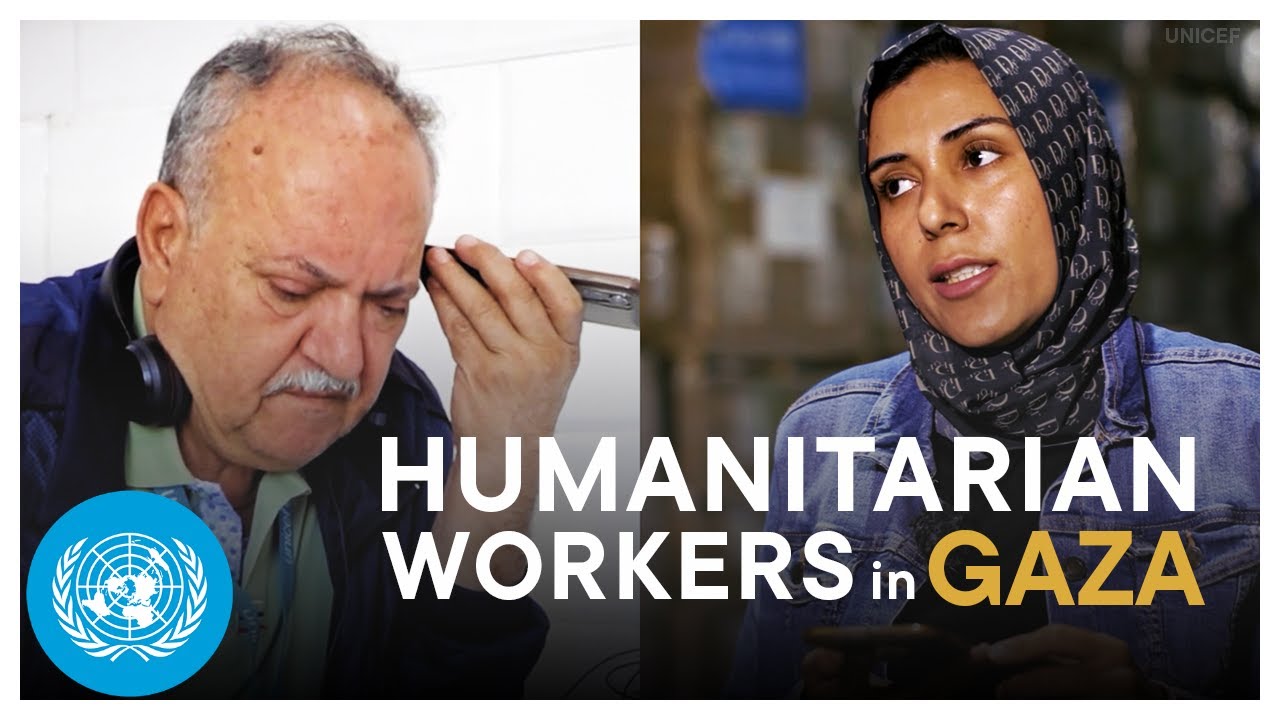
Life of Humanitarians in Gaza | United Nations

Life of Humanitarians in Gaza | United Nations

Hier klicken, um den Inhalt von YouTube anzuzeigen.
Learn more in YouTube’s privacy policy.

UNICEF’s documentary Gaza’s Silent Threat offers a powerful and rare glimpse into the challenges of conducting an emergency vaccination campaign in Gaza, through the personal accounts of two humanitarian workers, Dr. Younis Awadallah and Fairuz AbuWarda. The film highlights the profound direct and indirect impacts of conflict on children’s health and underscores the critical importance of a well-coordinated emergency response.

UN Video interviewed the director/producer of the filim, Ms. Maria Fernanda Lauret of UNICEF in time for the release of the documentary and for World Humanitarian Day 2025.

The 2024 polio vaccination campaign in the Gaza Strip was a collaborative effort of the Palestinian Ministry of Health, the United Nations Children’s Fund (UNICEF), the United Nations Relief and Works Agency for Palestine Refugees in the Near East (UNRWA), the World Health Organization (WHO), and countless humanitarian actors, health workers and social mobilizers on the ground.

For more Information or to watch the video on YouTube, click here.